比較
比較級 + than / the + 最上級 / as 〜 as = くらべる言い方
1比較級:〜より…
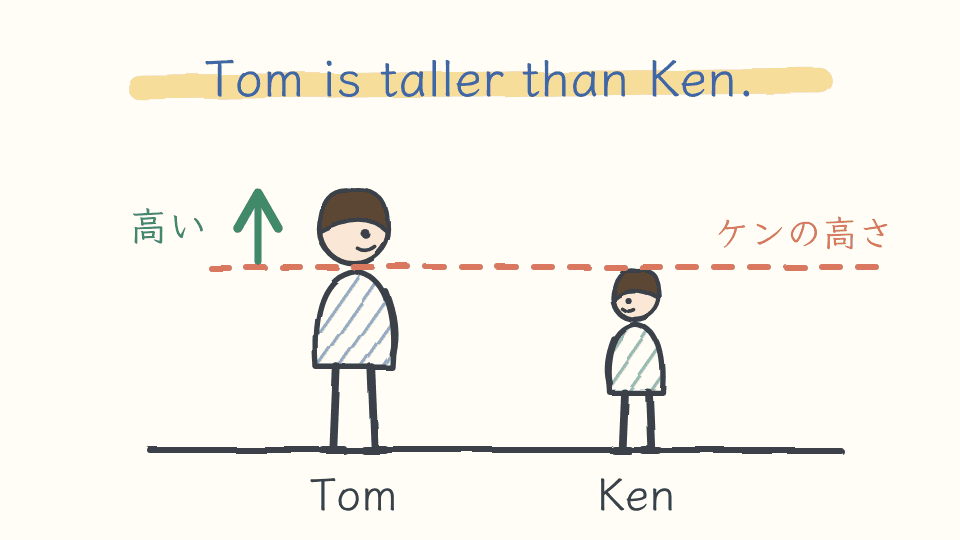
2つのものをくらべて「〜より…だ」と言うときは、〈形容詞・副詞の比較級 + than 〜〉を使います。比較級は、ふつう形容詞・副詞に er をつけてつくります。
| きまり | 例 |
|---|---|
| ふつうは er をつける | tall → taller、fast → faster、old → older |
| e で終わる語は r だけ | large → larger、nice → nicer |
| 「子音字+y」は y を i にかえて er | early → earlier、easy → easier |
| 「短い母音+子音字1つ」は子音字を重ねて er | big → bigger、hot → hotter |
Tom is taller than Ken.
トムはケンより背が高いです。
This bag is bigger than that one.
このかばんはあのかばんより大きいです。
My brother runs faster than my father.
兄(弟)は父より速く走ります。
The train came earlier than usual.
電車はいつもより早く来ました。
2more を使う語・形が変わる語
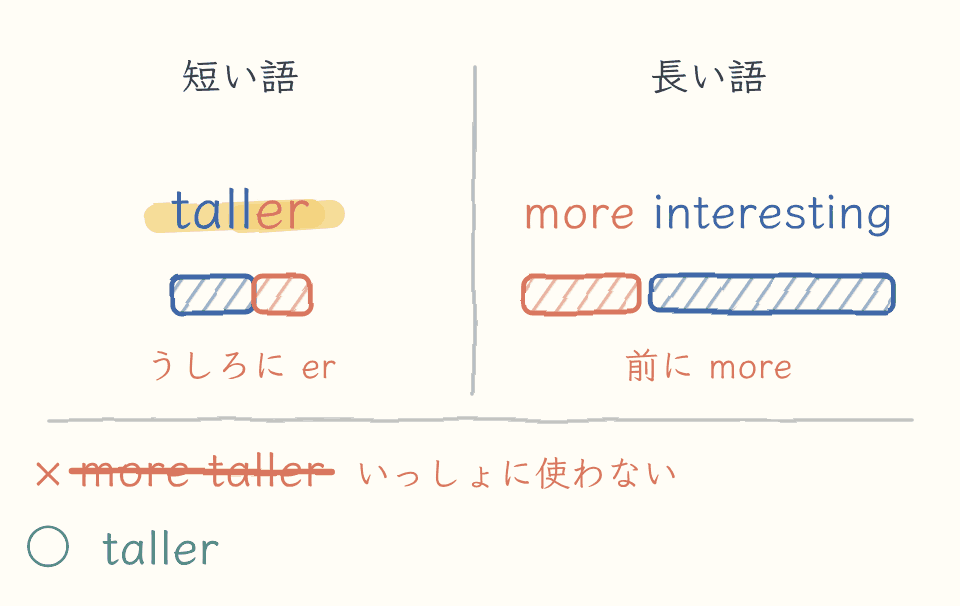
interesting、popular、difficult のような長い語は、er をつけずに前に more を置きます(最上級は most)。また、good や many のように、形が変わる語もあります。
| 原級 | 比較級 | 最上級 |
|---|---|---|
| good(よい)/ well(上手に) | better | best |
| bad(悪い) | worse | worst |
| many / much(多い) | more | most |
| interesting(おもしろい) | more interesting | most interesting |
| popular(人気のある) | more popular | most popular |
| difficult(むずかしい) | more difficult | most difficult |
This book is more interesting than that one.
この本はあの本よりおもしろいです。
Soccer is more popular than baseball in my class.
私のクラスでは、サッカーは野球より人気があります。
Your idea is better than mine.
あなたの考えは私のよりよいです。
3最上級:いちばん…
3つ以上の中で「いちばん…だ」と言うときは、〈the + 最上級〉を使います。最上級は est(長い語は most)でつくります。「〜の中で」は、場所や集団なら in(in Japan、in my class)、数や all なら of(of the three、of all)を使います。
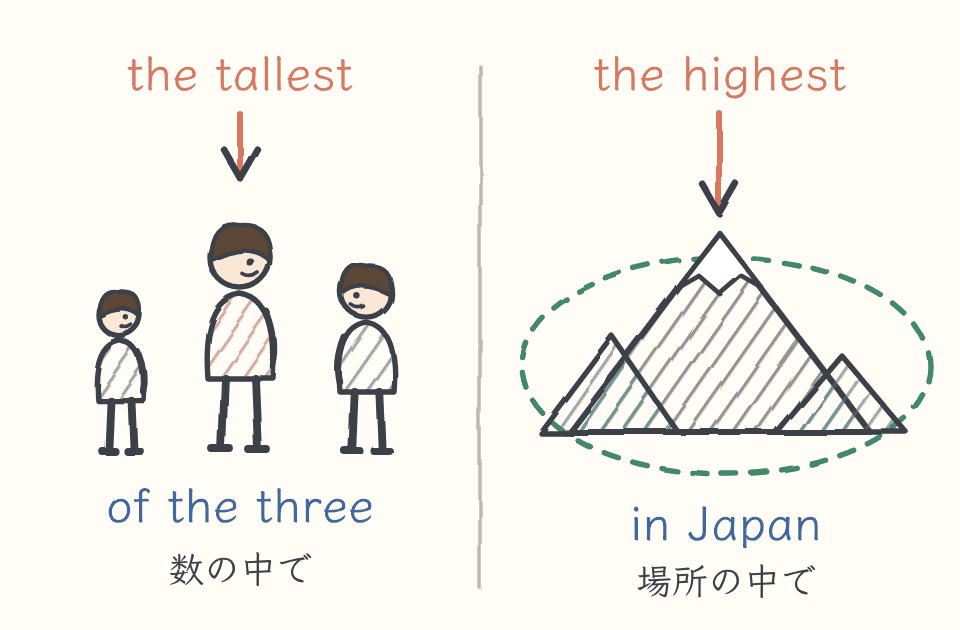
This is the tallest building in the city.
これはこの町でいちばん高いビルです。
Mt. Fuji is the highest mountain in Japan.
富士山は日本でいちばん高い山です。
Ken is the tallest of the three.
ケンは3人の中でいちばん背が高いです。
This is the most popular song in our school.
これは私たちの学校でいちばん人気のある歌です。
Kyoto is one of the most famous cities in Japan.
京都は日本で最も有名な都市の1つです。
〈one of the + 最上級 + 名詞の複数形〉で「最も〜な…の1つ」という意味になります。名詞は複数形(cities)にします。
4as 〜 as:同じくらい…
〈as + 形容詞・副詞の原級 + as 〜〉で「〜と同じくらい…」を表します。as と as の間には、er や est のつかないもとの形(原級)を置きます。not as 〜 as は「〜ほど…ではない」です。
I am as tall as my father.
私は父と同じくらいの背の高さです。
This movie is not as long as that one.
この映画はあの映画ほど長くありません。
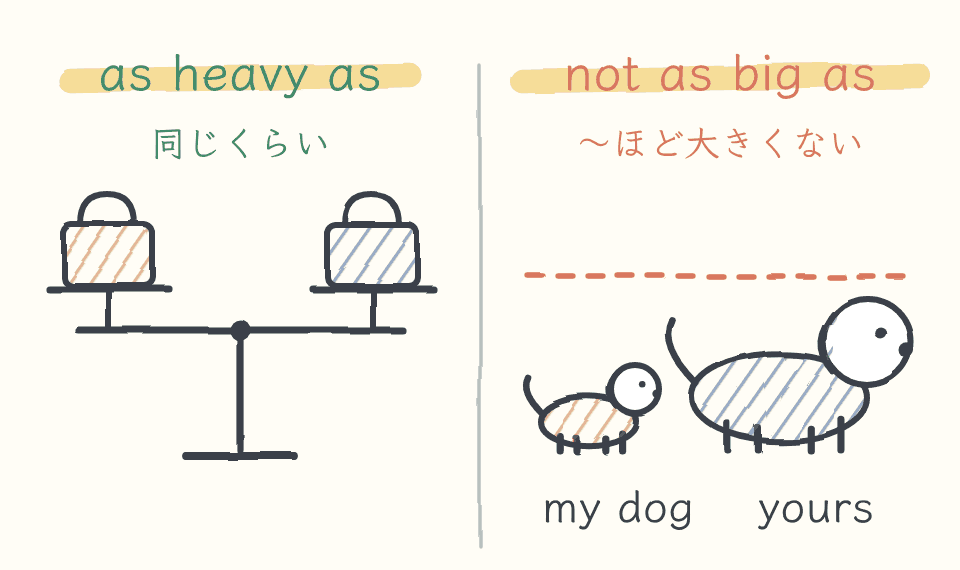
This bag is as heavy as that one.
このかばんはあのかばんと同じくらい重いです。
My dog is not as big as yours.
私の犬はあなたの犬ほど大きくありません。
5くらべる疑問文
「A と B ではどちらがより…ですか」は、〈Which(人なら Who)+ 比較級, A or B?〉でたずねます。「どちらが好きですか」は like 〜 better、「いちばん好き」は like 〜 the best(the をつけずに best とも言います)です。
Which is longer, the Shinano River or the Tone River?
信濃川と利根川では、どちらが長いですか。
The Shinano River is.
信濃川です。
Who runs faster, Ken or Yuta?
ケンとユウタでは、どちらが速く走りますか。
Ken does.
ケンです。
Which do you like better, tea or coffee?
紅茶とコーヒーでは、どちらが好きですか。
I like tea better.
紅茶のほうが好きです。
Which season do you like the best?
あなたはどの季節がいちばん好きですか。
6more than + 数:〜を超える
〈more than + 数〉は「〜より多い・〜を超える」です。その数ちょうどはふくみません。日本語の「〜以上」は、その数をふくむので、厳密には少しちがいます。反対に less than 〜 は「〜より少ない(〜未満)」です。
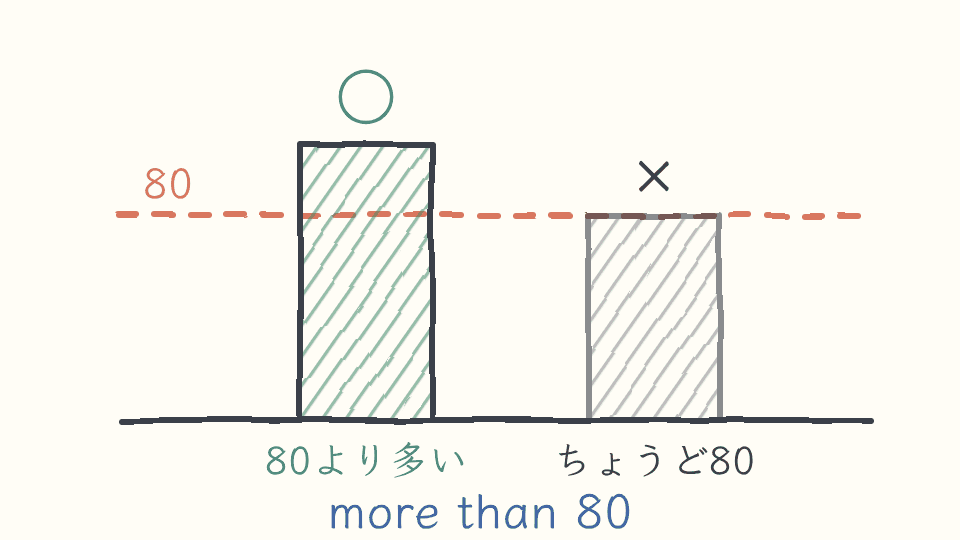
ニュースでは、数字や去年とのちがいを伝えるときに比較の表現がよく使われます。
More than 100 people came.
100人を超える人が来ました。
More than 80 percent of the students use smartphones.
80パーセントを超える生徒がスマートフォンを使っています。
This summer was hotter than usual.
今年の夏はいつもより暑かったです。
Food prices are higher than last year.
食べ物の値段は去年より高くなっています。
The trip took less than an hour.
その移動は1時間もかかりませんでした。
7よくある間違い
| × まちがい | ○ 正しい形 | ポイント |
|---|---|---|
| He is more taller than Ken. | He is taller than Ken. | er と more をいっしょに使わない |
| This box is biger. | This box is bigger. | big は g を重ねる |
| This is gooder than that. | This is better than that. | good は better に形が変わる |
| Soccer is popularer than tennis. | Soccer is more popular than tennis. | 長い語は more を使う |
| Mt. Fuji is the highest mountain of Japan. | Mt. Fuji is the highest mountain in Japan. | 場所の中でくらべるときは in |
| I am as taller as Ken. | I am as tall as Ken. | as 〜 as の間は原級 |
8確認問題
old を正しい形にして ( ) に入れなさい。My brother is three years ( ) than Ken.
答えを見る
older
difficult を使って ( ) に入る2語を書きなさい。This question is ( ) ( ) than that one.
答えを見る
more difficult
長い語は more を前に置く。
high を正しい形にして ( ) に入れなさい。Mt. Fuji is the ( ) mountain in Japan.
答えを見る
highest
fast を正しい形にして ( ) に入れなさい。I can run as ( ) as Ken.
答えを見る
fast
as 〜 as の間は原級のまま。
並べかえなさい。( better / which / like / you / do ), dogs or cats?
答えを見る
Which do you like better, dogs or cats?
英語にしなさい。「この本はあの本よりおもしろい。」
答えを見る
This book is more interesting than that one.
9ニュースで出てきた比較
ニュースでは、数字をくらべたり「〜を超える(more than)」と伝えたりするときに比較の表現が使われます。
Mr. Motegi pointed out that the G20 countries account for more than 80 percent of the world's GDP and energy consumption.
茂木大臣は、G20の国々が世界のGDPとエネルギー消費の8割以上を占めていると指摘しました。
茂木大臣は、G20の国々が世界のGDPとエネルギー消費の8割以上を占めていると指摘しました。point out that は「〜だと指摘する」。account for は、割合を言うときは「〜を占める」という意味です。
Mr. Motegi said that the G20 countries use more than 80 percent of the world's energy.
茂木大臣は、G20の国々が世界のエネルギーの8割以上を使っていると述べました。
茂木大臣は、G20の国々が世界のエネルギーの8割以上を使っていると述べました。said that のあとに、言った内容を続けます。more than 80 percent は、8割以上です。
Motegi noted that G20 members account for more than 80 percent of both global GDP and energy consumption.
茂木氏は、G20のメンバーが世界のGDPとエネルギー消費の両方で8割以上を占めていると述べました。
茂木氏は、G20のメンバーが世界のGDPとエネルギー消費の両方で8割以上を占めていると述べました。note that は、ここでは「〜だと述べる」。both A and B で「AとBの両方」です。global は world の言い換えで、ニュースでよく使われます。