事件・裁判のことば
suspect(容疑者)→ arrest(逮捕)→ charge(起訴)→ trial(裁判)→ verdict(評決・判決)→ sentence(刑の言い渡し)→ appeal(控訴)
1逮捕から判決までのおおまかな流れ
事件のニュースは、事件が起きてから判決が出るまで、何回かに分けて報道されます。それぞれの段階でよく使われる英語を、おおまかな順番に並べると次のようになります。
| 段階 | 英語 | 意味 |
|---|---|---|
| 捜査 | investigate / investigation | 捜査する/捜査 |
| 容疑者 | suspect | 容疑者(罪を犯した疑いのある人) |
| 逮捕 | arrest | 逮捕する/逮捕 |
| 起訴 | charge / indict | (罪に)問う、起訴する |
| 裁判 | trial | 裁判、公判 |
| 評決・判決 | verdict / ruling | 有罪・無罪の判断/裁判所の判断 |
| 刑の言い渡し | sentence | 刑を言い渡す/刑 |
| 控訴 | appeal | 控訴する、上訴する/控訴 |
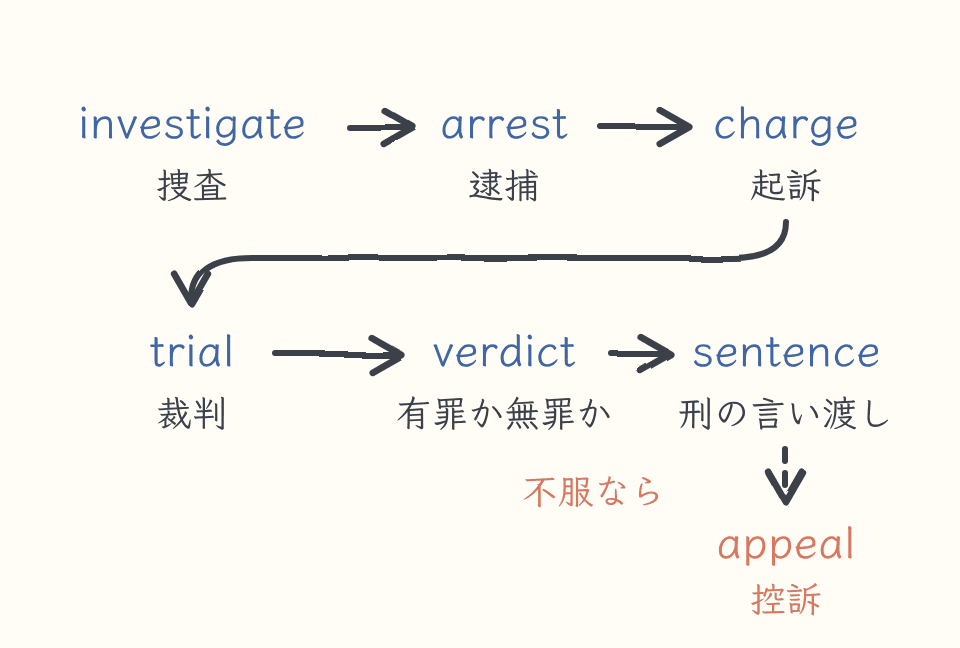
手続きの細かい順番や、だれが起訴するか、陪審(jury)があるかどうかなどは、国によってちがいます。この単元では、英語のニュースでよく使われる語の意味と使い方を中心に学びます。
次の例文は、1つの事件を段階ごとに伝えたニュースの文です。
Police are investigating a robbery at a convenience store in Yokohama.
警察は、横浜のコンビニエンスストアで起きた強盗事件を捜査している。
A 28-year-old man was arrested on suspicion of robbery on Wednesday.
水曜日、28歳の男が強盗の疑いで逮捕された。
Prosecutors charged him with robbery and assault.
検察は、男を強盗と暴行の罪で起訴した。
His trial began in March.
男の裁判は3月に始まった。
The court found him guilty and sentenced him to five years in prison.
裁判所は男に有罪を言い渡し、懲役5年の刑を科した。
His lawyer said he would appeal the ruling.
男の弁護士は、判決を不服として控訴すると述べた。
2捜査と逮捕のことば
事件の最初の報道では、suspect(容疑者)、victim(被害者)、witness(目撃者)などの語がよく出ます。逮捕されたばかりの人は、まだ罪が決まっていないので criminal(犯罪者)とは言わず、suspect と言います。
| 英語 | 意味 | 例 |
|---|---|---|
| suspect | 容疑者 | The suspect was arrested near his home. |
| victim | 被害者 | The victim was taken to a hospital. |
| witness | 目撃者 | Witnesses said they heard a loud noise. |
| arrest 人 on suspicion of 〜 | 〜の疑いで人を逮捕する | arrested on suspicion of theft |
| allegation | (証明されていない)疑い、申し立て | denied the allegations |
| detain | (身柄を)拘束する | Two people were detained for questioning. |
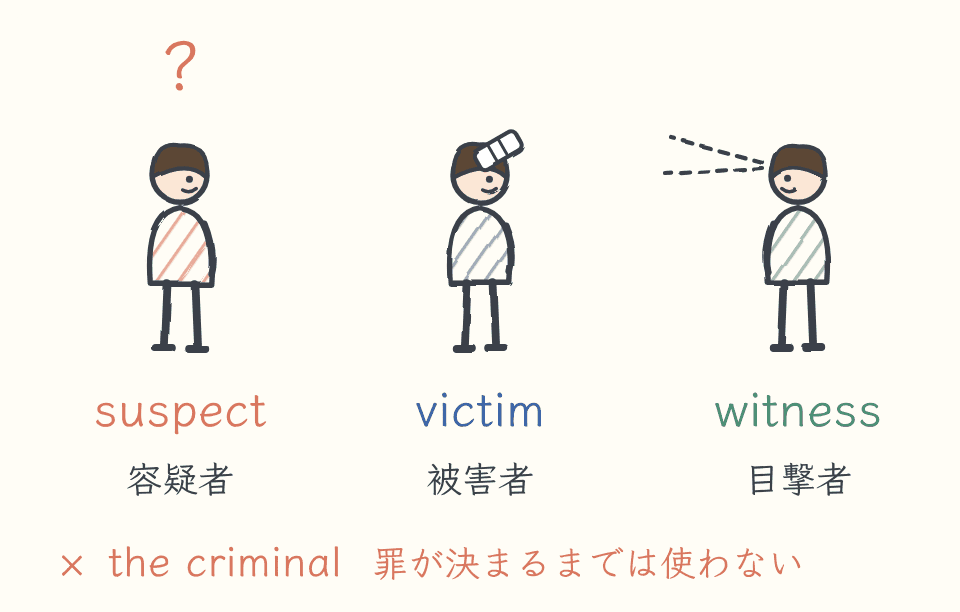
The suspect was arrested near his home.
容疑者は自宅の近くで逮捕された。
The victim was taken to a hospital with minor injuries.
被害者は軽いけがで病院に運ばれた。
Witnesses said they heard a loud noise before the fire started.
目撃者は、火事が起きる前に大きな音を聞いたと話した。
Police said the man denied the allegations.
警察によると、男は容疑を否認しているという。
3起訴のことば:charge と indict
charge 人 with 罪は「人を〜の罪に問う、起訴する」という意味で、ニュースではとてもよく使われます。受け身の be charged with の形もよく出ます。indict も「起訴する」と訳されることが多い語で、charge より正式な言い方です。名詞は indictment(起訴、起訴状)です。
The man was charged with stealing a car.
その男は車を盗んだ罪で起訴された。
The former manager was indicted on fraud charges.
元責任者は詐欺の罪で起訴された。
The company was charged with violating safety rules.
その会社は安全規則に違反した罪に問われた。
Police arrested the man on Monday.
警察は月曜日にその男を逮捕した。
The man was charged with theft on Friday.
その男は金曜日に窃盗の罪で起訴された。
indict は発音に注意します。c は発音せず、「インダイト」のように読みます。
4裁判のことば
裁判(trial)が始まると、prosecutor(検察官)、defense lawyer(弁護人)、judge(裁判官)、jury(陪審)などの語が出てきます。被告は defendant です。
| 英語 | 意味 |
|---|---|
| court | 裁判所、法廷 |
| judge | 裁判官 |
| jury | 陪審(員団) |
| prosecutor / prosecutors | 検察官/検察 |
| defendant | 被告、被告人 |
| defense lawyer | 弁護人 |
| plead guilty / plead not guilty | 罪を認める/無罪を主張する |
| testify | 証言する |
| evidence | 証拠 |
The man pleaded not guilty at the first hearing.
男は初公判で無罪を主張した。
A witness testified that she saw the suspect leave the building.
目撃者は、容疑者が建物から出ていくのを見たと証言した。
Prosecutors are seeking a 10-year prison sentence.
検察は懲役10年を求刑している。
5判決と刑のことば:verdict と sentence
verdict は、有罪(guilty)か無罪(not guilty)かの判断のことで、とくに陪審が出す判断を「評決」と言います。sentence は、有罪のあとに言いわたされる刑の内容です。sentence 人 to 〜 で「人に〜の刑を言いわたす」となります。ruling は裁判所の判断・決定を広く表す語です。
| 英語 | 意味 | 例 |
|---|---|---|
| find 人 guilty / not guilty | 人を有罪/無罪とする | The court found him guilty. |
| acquit 人 (of 〜) | 人を(〜について)無罪にする | She was acquitted of all charges. |
| sentence 人 to 〜 | 人に〜の刑を言いわたす | sentenced to five years in prison |
| suspended sentence | 執行猶予つきの刑 | a three-year suspended sentence |
| fine | 罰金(を科す) | was fined 500,000 yen |
| life sentence / life in prison | 終身刑 | was sentenced to life in prison |
The jury reached a verdict after three days.
陪審は3日後に評決に達した。
The court acquitted the woman of all charges.
裁判所はその女性をすべての罪について無罪とした。
He was sentenced to three years in prison, suspended for five years.
男は懲役3年、執行猶予5年の判決を受けた。
The driver was fined 500,000 yen.
運転手は50万円の罰金を科された。
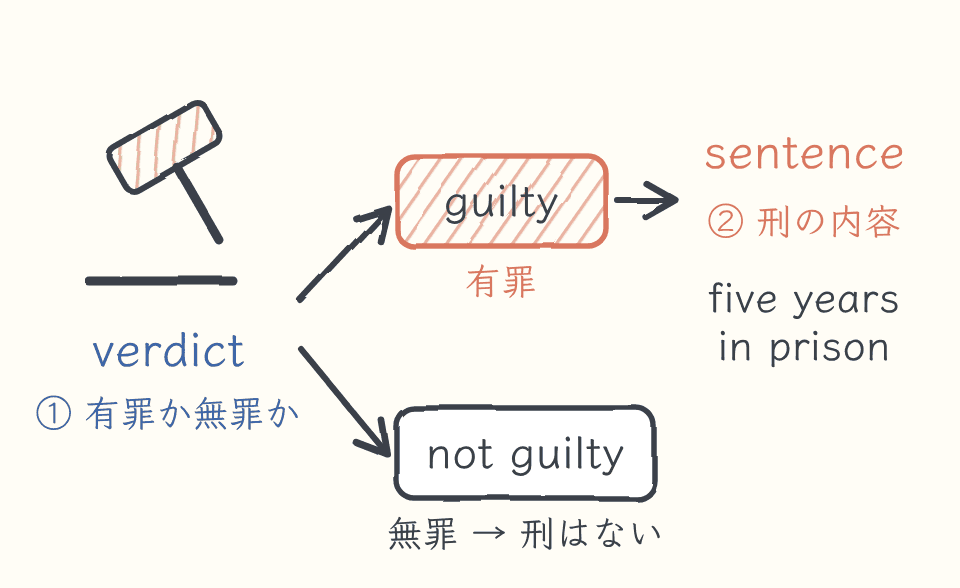
verdict と sentence は別のものです。「有罪の評決(guilty verdict)」が出たあとに、「どんな刑にするか(sentence)」が決まります。
6控訴とその後のことば
判決に不服があるとき、上の裁判所に判断を求めることを appeal(控訴・上訴)と言います。上の裁判所が前の判決を取り消すことを overturn、そのまま認めることを uphold と言います。
The defendant plans to appeal to a higher court.
被告は上級の裁判所に控訴する予定だ。
The high court overturned the lower court's ruling.
高等裁判所は、下級の裁判所の判決を取り消した。
The Supreme Court upheld the ruling on Tuesday.
最高裁判所は火曜日、その判決を支持した。
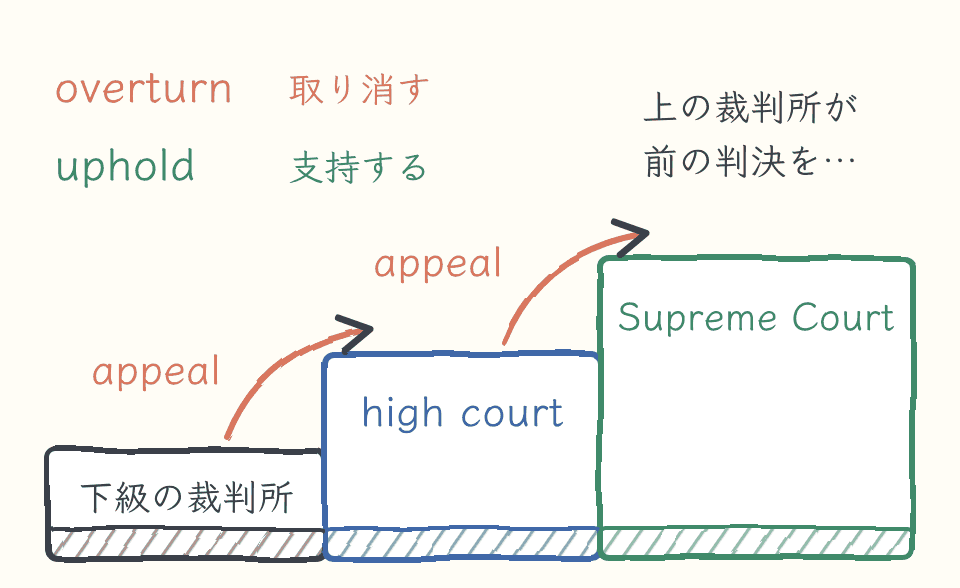
- appeal(控訴(する)、上訴(する))
- high court(高等裁判所)
- Supreme Court(最高裁判所)
- overturn((判決を)くつがえす、取り消す)
- uphold((判決を)支持する、維持する)
7よくある間違い
| × まちがい | ○ 正しい形 | ポイント |
|---|---|---|
| The man was arrested for suspicion of theft. | The man was arrested on suspicion of theft. | 「〜の疑いで」は on suspicion of |
| The man was charged of theft. | The man was charged with theft. | charge 人 with 罪 |
| 逮捕されたばかりの人を the criminal とよぶ | the suspect | 罪が決まるまでは suspect |
| He was sentenced for five years. | He was sentenced to five years in prison. | sentence 人 to 刑 |
| charge を「料金」、sentence を「文」と読む | 事件の記事では「起訴する」「刑」 | 同じつづりでも意味がちがう |
| verdict と sentence を同じものと考える | verdict = 有罪か無罪か、sentence = 刑の内容 | 順番は verdict → sentence |
| indict を「インディクト」と読む | 「インダイト」 | c は発音しない |
8確認問題
( ) に入る前置詞を書きなさい。A woman was arrested ( ) suspicion of fraud.
答えを見る
on
on suspicion of = 〜の疑いで。
( ) に入る前置詞を書きなさい。He was charged ( ) stealing money from his company.
答えを見る
with
charge 人 with 罪。
( ) に入る語を選びなさい(verdict / sentence / suspect)。The jury returned a guilty ( ).
答えを見る
verdict
有罪・無罪の判断は verdict。
和訳しなさい。The court sentenced the man to seven years in prison.
答えを見る
裁判所はその男に懲役7年の刑を言いわたした。
英語にしなさい。「その男は無罪を主張した。」
答えを見る
The man pleaded not guilty.
plead の過去形は pleaded(pled とも)。
並べかえなさい。( to / plans / appeal / the defendant ) the ruling.
答えを見る
The defendant plans to appeal the ruling.
9ニュースで出てきた事件・裁判のことば
この単元に関係する英文がニュースに出てきたら、ここに自動で追加されます。