強調・倒置
It is … that 〜 で一部を目立たせる・否定語を文頭に出して倒置する
1強調構文 It is … that 〜
〈It is + 強調したい語句 + that 〜〉で、「〜なのは…だ」と文の一部を目立たせます。強調できるのは、主語・目的語・時や場所を表す語句などです。過去のことなら It was を使います。強調するものが人のときは、that の代わりに who も使えます。
| 強調するところ | 強調構文(もとの文:Ken broke the window yesterday.) |
|---|---|
| 主語 Ken | It was Ken that (who) broke the window yesterday. |
| 目的語 the window | It was the window that Ken broke yesterday. |
| 時 yesterday | It was yesterday that Ken broke the window. |
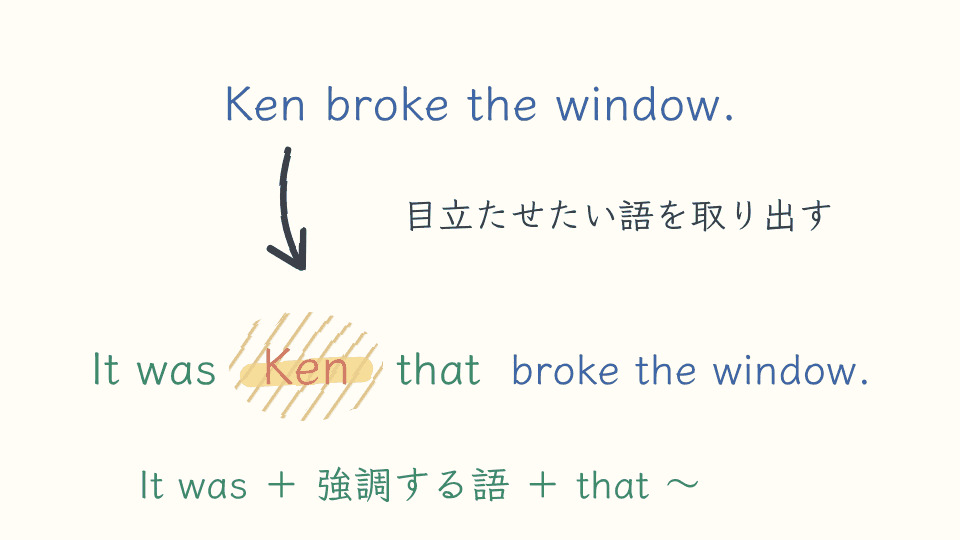
It was Ken that broke the window.
窓を割ったのはケンだった。
It is in summer that this town is busiest.
この町がいちばんにぎわうのは夏だ。
It was the city council that approved the new plan.
新しい計画を承認したのは市議会だった。
It was not until last week that the results were announced.
結果が発表されたのは、先週になってからだった。
〈It is not until … that 〜〉は「…になって初めて〜する」という決まった言い方です。
2強調構文と形式主語の見分け方
〈It is … that 〜〉の形でも、It が that 以下を指す形式主語の文のことがあります。It is と that を外して、残りで文が完成すれば強調構文です。完成しなければ形式主語の文です。
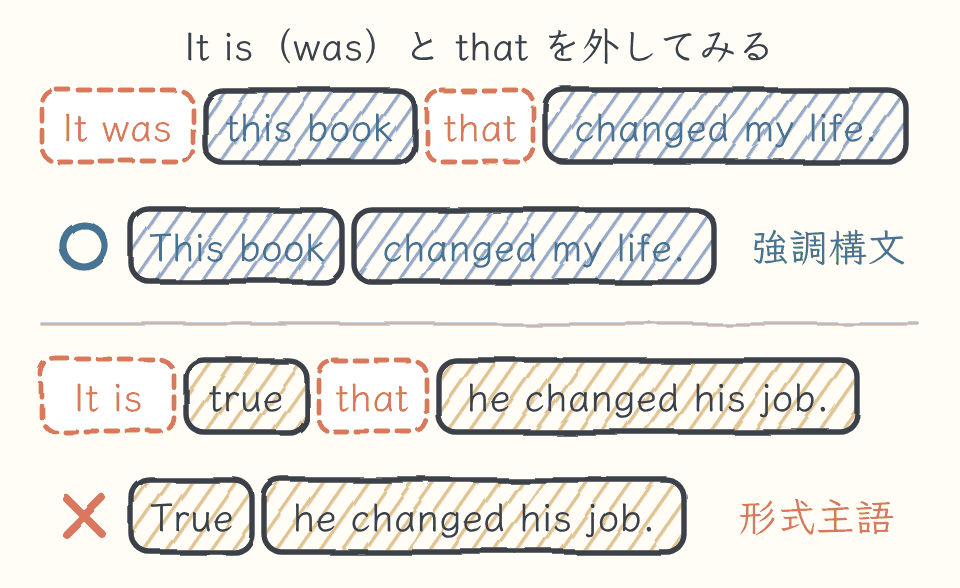
It was this book that changed my life.
私の人生を変えたのは、この本だった。
It is true that he changed his job.
彼が仕事を変えたのは本当だ。
| 英文 | It is(was)と that を外すと | 種類 |
|---|---|---|
| It was this book that changed my life. | This book changed my life. → 文が完成する | 強調構文 |
| It is true that he changed his job. | True he changed his job. → 文にならない | 形式主語(that 以下が本当の主語) |
3do / does / did で動詞を強調する
動詞の前に do / does / did を置くと、「本当に〜する」「確かに〜した」と動詞の意味を強めます。do / does / did のあとの動詞は原形にします。命令文の前に Do を置くと「ぜひ〜して」という意味になります。
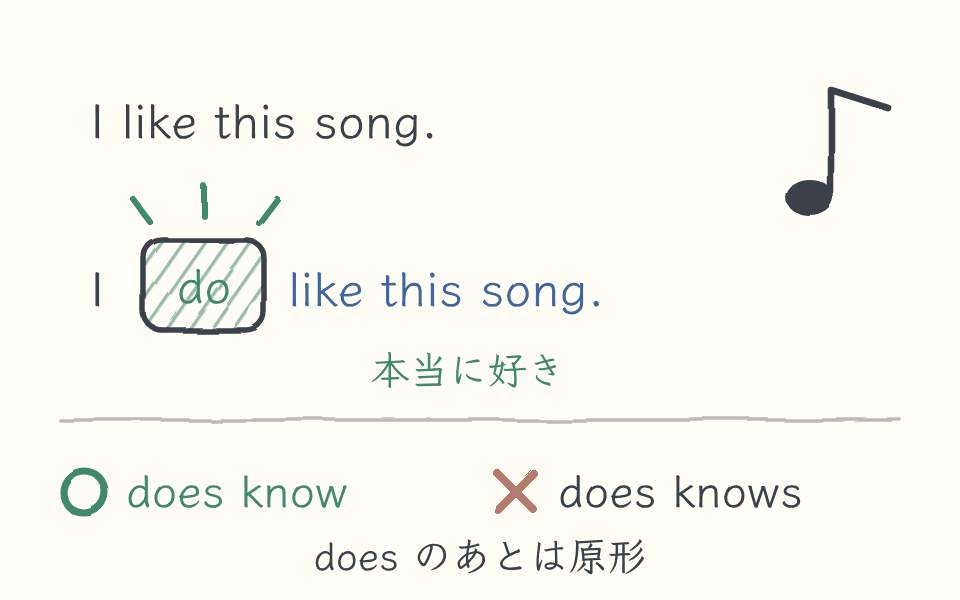
I do like this song.
この歌は本当に好きです。
She does know the answer.
彼女は本当に答えを知っている。
We did call you, but nobody answered.
確かに電話したのですが、だれも出ませんでした。
Do come again.
ぜひまた来てください。
4否定語で始まる倒置
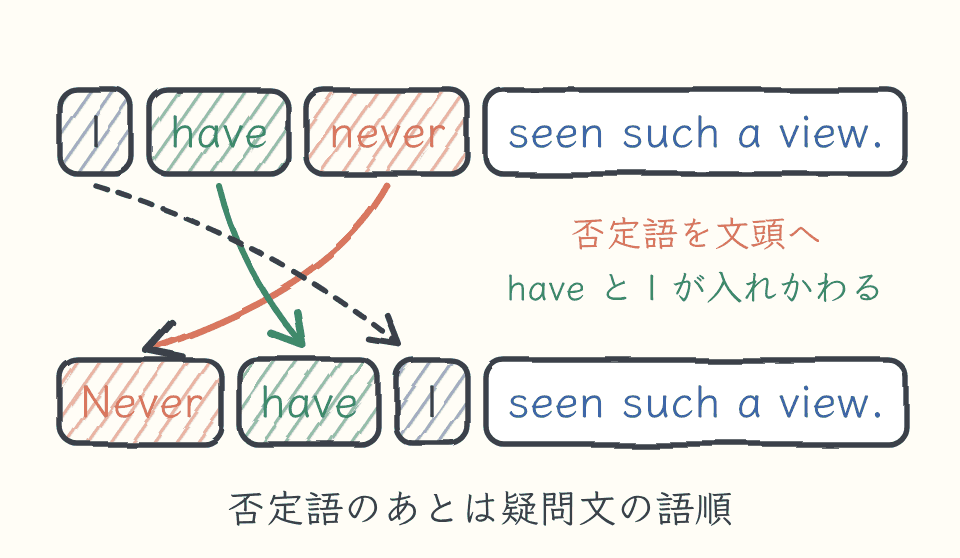
never、little、rarely、hardly、not only、only + 時を表す語句などを文の最初に出すと、そのあとが疑問文と同じ語順になります。改まった文や演説、ニュースの記事で使われます。一般動詞の文では do / does / did を使います。
| ふつうの語順 | 倒置 |
|---|---|
| I have never seen such a view. | Never have I seen such a view. |
| He not only won but also set a record. | Not only did he win, but he also set a record. |
| It rarely snows in this city. | Rarely does it snow in this city. |
| I had hardly sat down when the phone rang. | Hardly had I sat down when the phone rang. |
Never have I seen such a beautiful view.
こんなに美しい景色は見たことがない。
Not only did he win, but he also set a record.
彼は勝っただけでなく、記録も作った。
Little did we know what would happen next.
次に何が起こるか、私たちは少しも知らなかった。
Rarely does it snow in this city.
この市で雪が降ることはめったにない。
Only after the meeting did the company explain the problem.
会議のあとになって初めて、その会社は問題を説明した。
Hardly had the game started when it began to rain.
試合が始まったとたんに、雨が降り出した。
5So / Neither と場所の語句で始まる倒置
相手の言ったことに「私も〜だ」と答えるときは〈So + 助動詞・be動詞 + 主語〉、「私も〜ない」なら〈Neither + 助動詞・be動詞 + 主語〉を使います。また、場所を表す語句や Here / There を文頭に出すと、〈動詞 + 主語〉の順になることがあります。
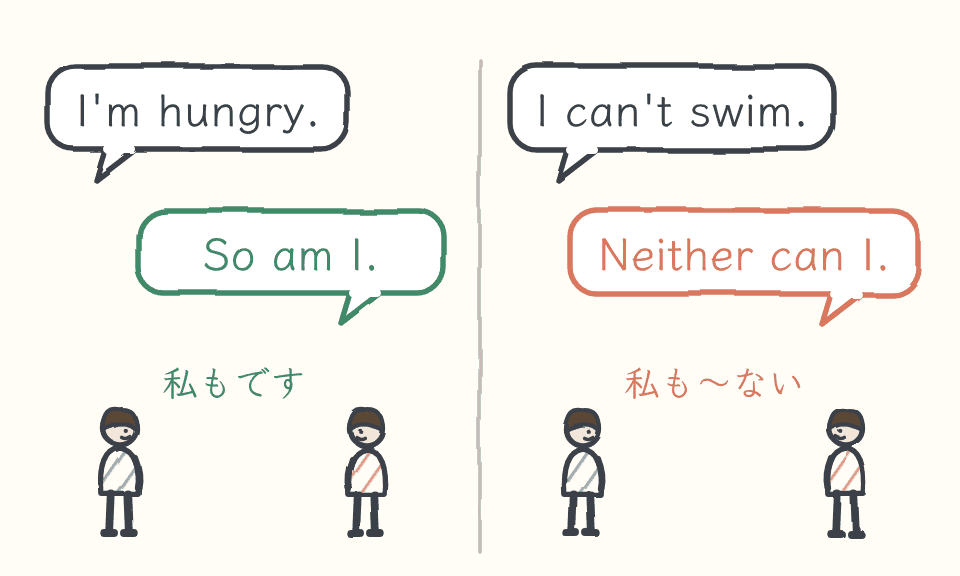
I'm interested in science.
私は科学に興味があります。
So am I.
私もです。
I can't swim.
私は泳げません。
Neither can I.
私も泳げません。
Here comes the bus.
ほら、バスが来た。
On the hill stands an old castle.
丘の上に古い城が立っている。
Here / There や場所の語句で始まる文では、主語が代名詞のときは倒置しません。× Here comes it. → ○ Here it comes.(ほら、来たよ)
6よくある間違い
| × | ○ | ポイント |
|---|---|---|
| Never I have seen such a view. | Never have I seen such a view. | 否定語のあとは疑問文の語順 |
| Not only he won, but he also set a record. | Not only did he win, but he also set a record. | 一般動詞は did などを前に出す |
| She does knows the answer. | She does know the answer. | do / does / did のあとは原形 |
| It was Ken which broke the window. | It was Ken that (who) broke the window. | 人を強調するときは which を使わない |
| Here comes it. | Here it comes. | Here で始まる文で主語が代名詞なら倒置しない |
7確認問題
( ) ( ) the city council that approved the plan.(承認したのは市議会だった)
答えを見る
It was
並べかえ:( I / have / seen / never ) such a beautiful view.(否定語を文頭に)
答えを見る
Never have I seen such a beautiful view.
否定語のあとは have I の語順になります。
Not only ( ) she speak English, but she also speaks Chinese.
答えを見る
does
主語が she で現在の文なので does を使います。
和訳:It was not until yesterday that I heard the news.
答えを見る
昨日になって初めて、私はそのニュースを聞いた。
"I'm hungry." "So ( ) I."
答えを見る
am
I'm hungry. の be動詞 am を使います。
8ニュースで出てきた強調・倒置
この単元に関係する英文がニュースに出てきたら、ここに自動で追加されます。