否定
not all =「すべてが〜とはかぎらない」(部分否定)、否定語を使わない否定まで
1否定語と否定の強さ
否定の意味は not だけで表すのではありません。no・never・nobody・nothing のような語や、hardly・few・little のように「ほとんど〜ない」を表す語もあります。not … any は no とほぼ同じ意味です。
| 語 | 意味 | 注意 |
|---|---|---|
| not … any = no | まったく〜ない | I don't have any money. = I have no money. |
| never | 決して〜ない、一度も〜ない | 頻度・経験の否定 |
| hardly / scarcely | ほとんど〜ない(程度) | それ自体が否定。not といっしょに使わない |
| rarely / seldom | めったに〜ない(頻度) | それ自体が否定 |
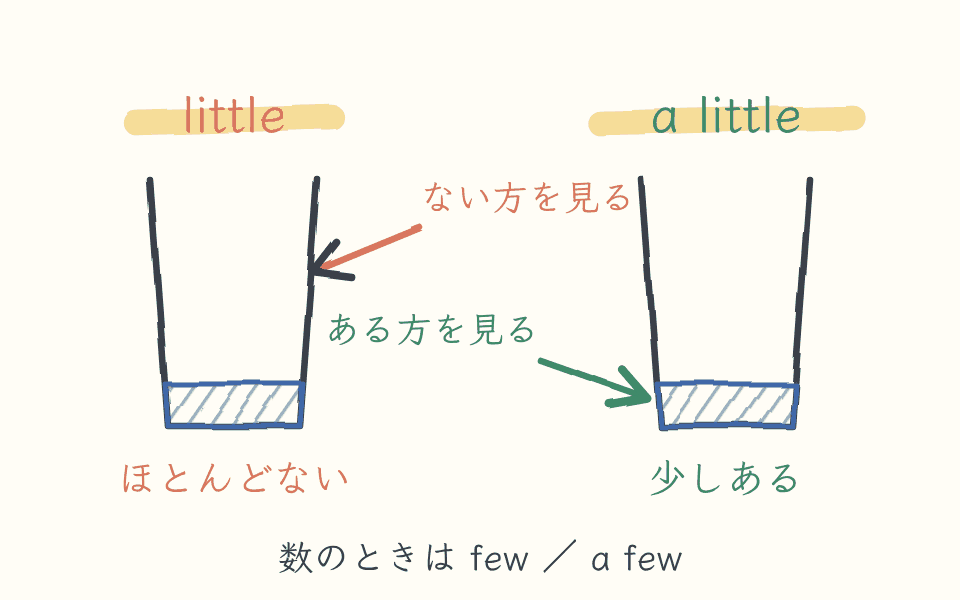
| few + 数えられる名詞 | ほとんど〜ない(数) | a few なら「少しある」 |
| little + 数えられない名詞 | ほとんど〜ない(量) | a little なら「少しある」 |
I don't have any money.
私はお金をまったく持っていない。
I have no money.
私はお金をまったく持っていない。
I can hardly believe it.
私はそれをほとんど信じられない。
Few people came to the meeting.
その会議にはほとんど人が来なかった。
There is little water in the bottle.
びんの中に水はほとんどない。
2部分否定と全体否定
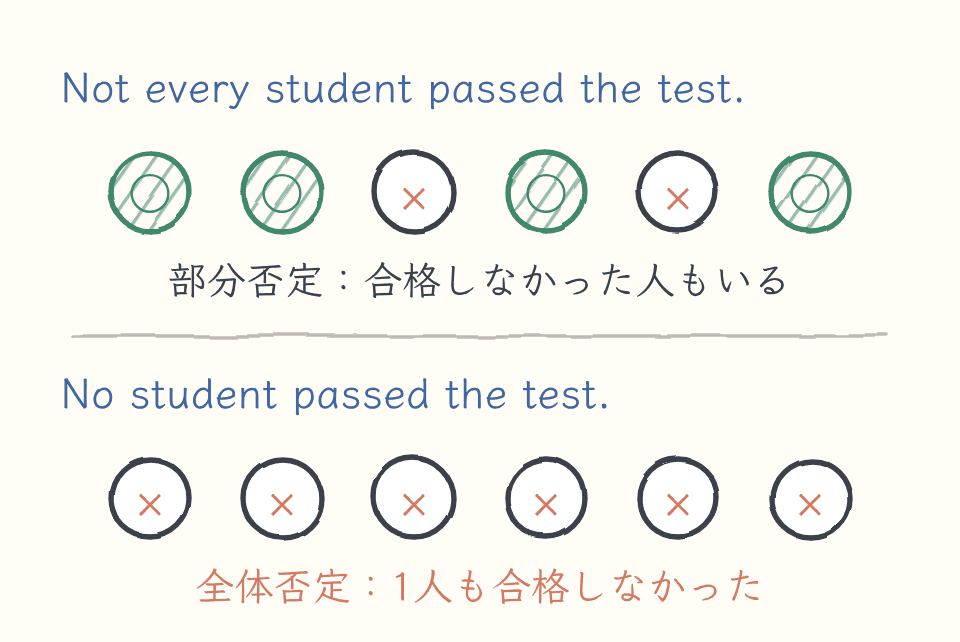
all・every・both・always・necessarily・completely のような「全部・いつも・必ず」を表す語を not で否定すると、「すべてが〜というわけではない」という部分否定になります。「1つも〜ない」という全体否定には、no・none・never・neither・not … any などを使います。
| 部分否定(〜とはかぎらない) | 全体否定(まったく〜ない) |
|---|---|
| not all 〜 / not every 〜(すべてが〜というわけではない) | no 〜 / none of 〜(1つも〜ない) |
| not both(両方とも〜というわけではない) | neither / not … either(どちらも〜ない) |
| not always(いつも〜とはかぎらない) | never(決して〜ない) |
| not necessarily(必ずしも〜ではない) | not … at all(まったく〜ない) |
| not completely(完全に〜というわけではない) | — |
Not every student passed the test.
すべての生徒がテストに合格したわけではない。
No student passed the test.
テストに合格した生徒は1人もいなかった。
Not all students like math.
すべての生徒が数学を好きなわけではない。
The rich are not always happy.
お金持ちがいつも幸せだとはかぎらない。
I don't know both of them.
私は2人とも知っているわけではない(1人しか知らない)。
What the newspaper says is not necessarily true.
新聞が言うことが必ずしも本当だとはかぎらない。
I don't completely agree with you.
私はあなたに完全に賛成というわけではない。
All the students didn't pass. のように all を主語にして not を置く文は、部分否定とも全体否定とも読めてしまいます。「1人も合格しなかった」と言いたいときは No student passed. や None of the students passed. を使いましょう。
3二重否定
否定語を2つ重ねると、強い肯定の意味になります。never … without 〜ing(〜すると必ず…する)、no … without 〜(〜のない…はない)、not + 否定の意味の形容詞(〜でないわけではない)などがよく使われます。
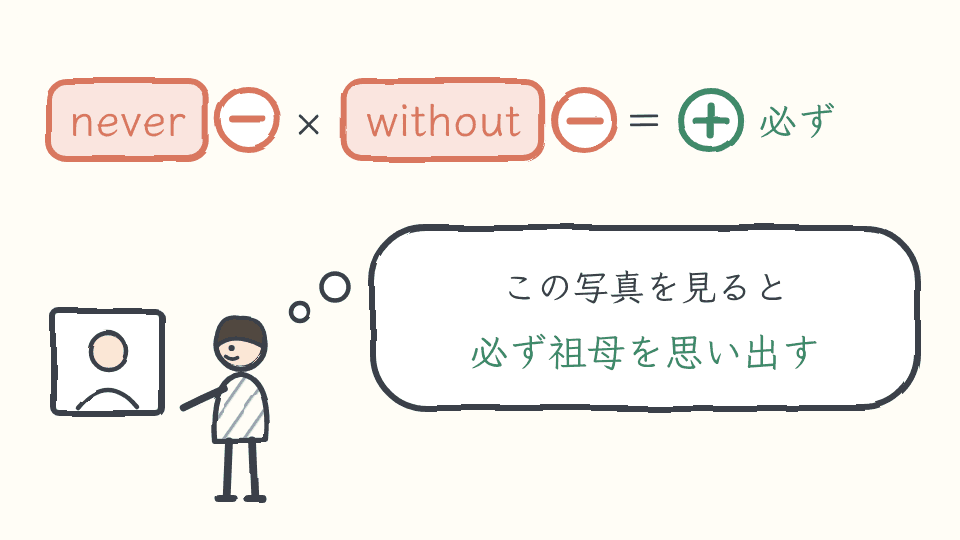
I never see this photo without thinking of my grandmother.
この写真を見ると、私は必ず祖母のことを思い出す。
There is no rule without exceptions.
例外のない規則はない。
Nobody can live without water.
水なしで生きられる人はいない。
It is not impossible to finish the work by Friday.
金曜日までにその仕事を終えるのは不可能ではない。
She is not unfriendly.
彼女は無愛想というわけではない。
4否定語を使わない否定
not や no を使わなくても、否定の意味を表す決まった言い方があります。形は肯定文なので、読みまちがえないようにしましょう。
| 表現 | 意味 | 例 |
|---|---|---|
| far from 〜 | 決して〜ではない、〜からほど遠い | far from clear |
| anything but 〜 | 決して〜ではない | anything but easy |
| the last 人 to 〜 | 最も〜しそうにない人 | the last person to tell a lie |
| have yet to 〜 / be yet to 〜 | まだ〜していない | have yet to find the cause |
| fail to 〜 | 〜しない、〜できない | fail to arrive on time |
| beyond 〜 | 〜をこえている(〜できない) | beyond description |
| too … to 〜 | …すぎて〜できない | too tired to walk |
| free from 〜 | 〜がない | free from worry |
His explanation was far from clear.
彼の説明は決してわかりやすいものではなかった。
The test was anything but easy.
そのテストは決して簡単ではなかった。
He is the last person to tell a lie.
彼は決してうそをつくような人ではない。
The scientists have yet to find the cause.
科学者たちはまだ原因を見つけていない。
The train failed to arrive on time.
電車は時間どおりに到着しなかった。
The beauty of the view was beyond description.
その景色の美しさは言葉では表せないほどだった。
anything but(決して〜ではない)と nothing but(〜だけ、〜ばかり = only)は形が似ていますが、意味は反対に近いので注意しましょう。
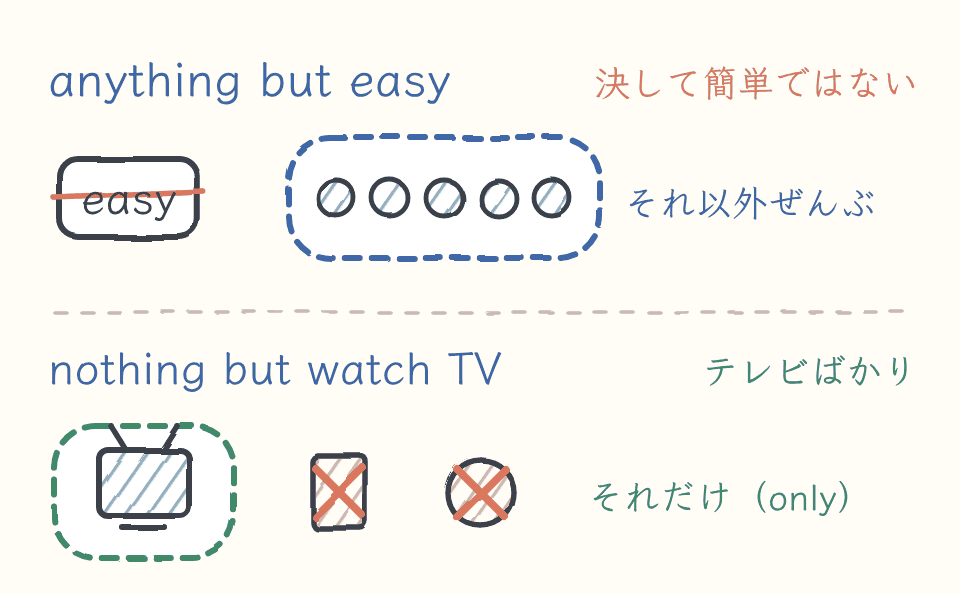
He did nothing but watch TV all day.
彼は一日中テレビを見てばかりいた。
5否定の強調と倒置
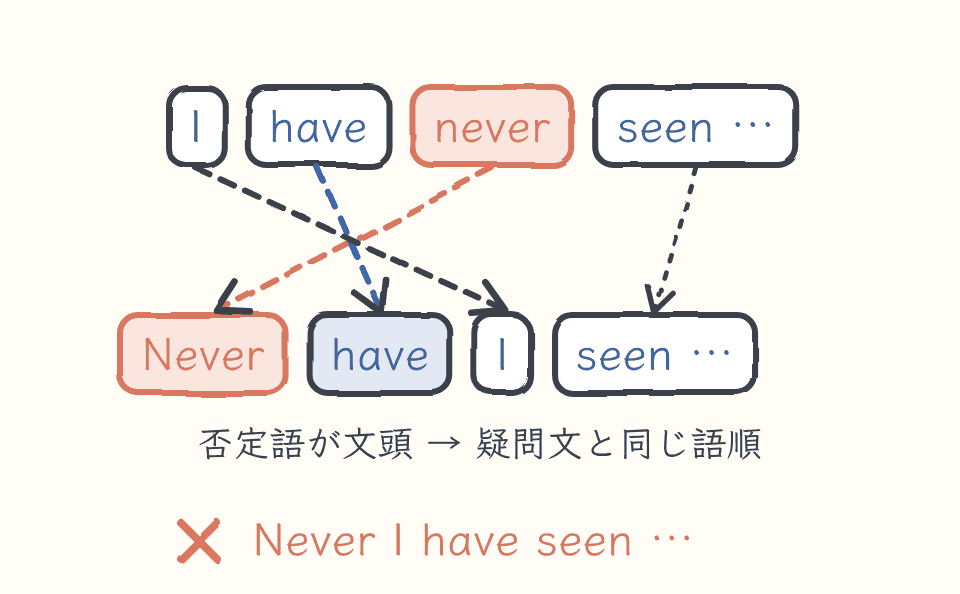
否定を強めるには not … at all(まったく〜ない)、by no means(決して〜ない)などを使います。また、never などの否定語を文の最初に出すと、後ろが疑問文と同じ語順(倒置)になり、かたく強い言い方になります。
I'm not tired at all.
私はまったく疲れていない。
This plan is by no means perfect.
この計画は決して完ぺきではない。
Never have I seen such a beautiful sunset.
あれほど美しい夕日は一度も見たことがない。
6ニュースの中の否定
ニュースでは、けが人の有無、原因がまだわかっていないこと、交渉がまとまらなかったことなどを伝えるときに、no one・not yet・have yet to・fail to などがよく使われます。
No one was injured in the fire.
その火事でけが人はいなかった。
The cause of the accident is not yet known.
事故の原因はまだわかっていない。
The two sides failed to reach an agreement.
両者は合意に達しなかった。
The man has yet to be identified.
その男性の身元はまだわかっていない。
Not all of the flights were canceled.
すべての便が欠航したわけではない。
7よくある間違い
| × まちがい | ○ 正しい形 | ポイント |
|---|---|---|
| I don't know both of them.(どちらも知らない、の意味で) | I know neither of them. / I don't know either of them. | not both は部分否定 |
| All the students didn't pass.(1人も合格しなかった、の意味で) | No student passed. / None of the students passed. | 全体否定は no / none |
| I hardly don't eat breakfast. | I hardly eat breakfast. | hardly 自体が否定。not はいらない |
| He did anything but watch TV.(テレビばかり見ていた、の意味で) | He did nothing but watch TV. | 「〜ばかり」は nothing but |
| Never I have seen such a sunset. | Never have I seen such a sunset. | 否定語が文頭なら倒置 |
8確認問題
日本語にしなさい。Not all birds can fly.
答えを見る
すべての鳥が飛べるわけではない。
部分否定。
( ) に入る1語を書きなさい。His answer was ( ) from perfect.(彼の答えは決して完ぺきではなかった)
答えを見る
far
( ) に入る1語を書きなさい。He is the ( ) person to break a promise.(彼は決して約束を破るような人ではない)
答えを見る
last
( ) に入る1語を書きなさい。The police have ( ) to find the missing boy.(警察はまだ行方不明の少年を見つけていない)
答えを見る
yet
never … without を使って、ほぼ同じ意味の文にしなさい。Whenever I hear this song, I remember my school days.
答えを見る
I never hear this song without remembering my school days.
英語にしなさい。「この本は決して易しくない。」(anything but を使って)
答えを見る
This book is anything but easy.
far from easy を使っても同じ意味。
9ニュースで出てきた否定
この単元に関係する英文がニュースに出てきたら、ここに自動で追加されます。