省略・挿入
くり返しを省く・文の途中に説明をはさむ
1くり返しになる語の省略
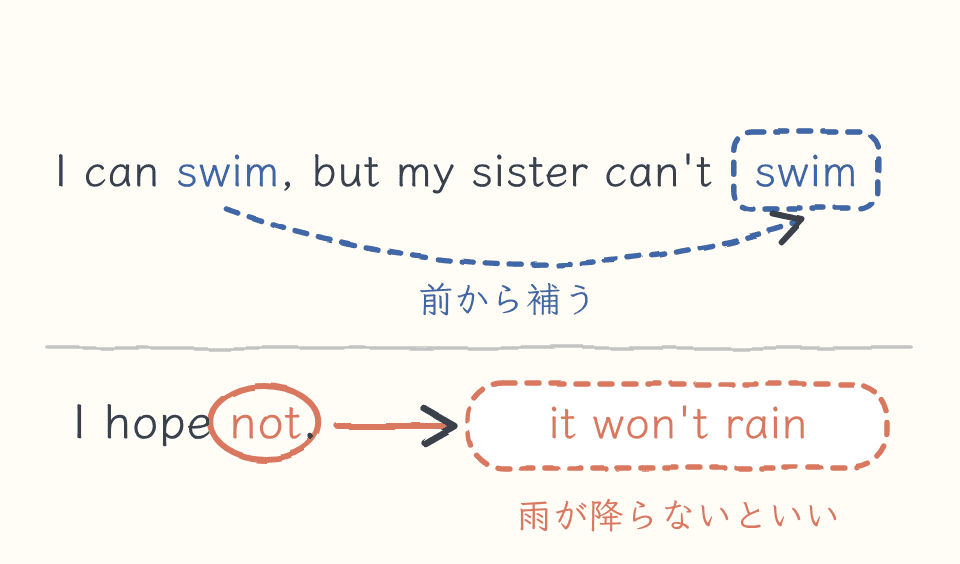
英語では、前に出た語をくり返さずに省くことがよくあります。省かれた部分は、前の文から補って読みます。I think so. / I hope not. のように、so や not で前の内容を受ける言い方もあります。
I can swim, but my sister can't.
私は泳げるが、妹は泳げない。
Tom has finished his homework, and Mary has, too.
トムは宿題を終えたし、メアリーも終えた。
Some students went by bus, and others by train.
バスで行った生徒もいれば、電車で行った生徒もいた。
Will it rain tomorrow?
明日は雨が降るかな。
I hope not.
降らないといいね。
| 省略のある文 | 補うと |
|---|---|
| … but my sister can't. | my sister can't swim |
| … and Mary has, too. | Mary has finished her homework, too |
| … and others by train. | others went by train |
| I hope not. | I hope it won't rain. |
| I think so. | I think it will rain. |
2to だけを残す言い方
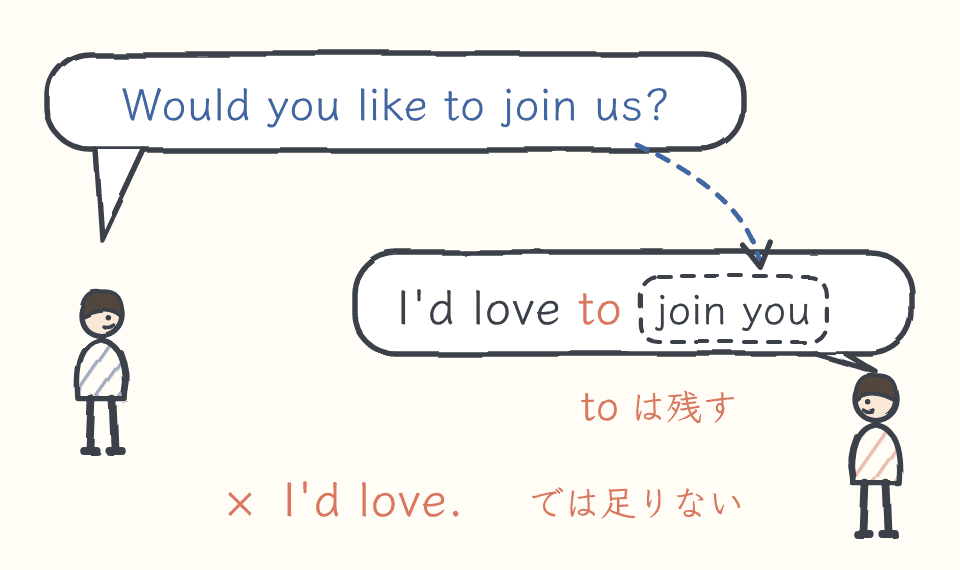
前に出た動詞をくり返さずに、to だけを残すことがあります。to のあとに何が省かれているかを、前の文から考えます。
You can come with us if you want to.
よければ、私たちと一緒に来てもいいですよ。
I wanted to call her, but I forgot to.
彼女に電話したかったが、忘れてしまった。
Would you like to join us?
私たちと一緒にどうですか。
I'd love to.
ぜひそうしたいです。
3接続詞のあとの〈主語+be動詞〉の省略
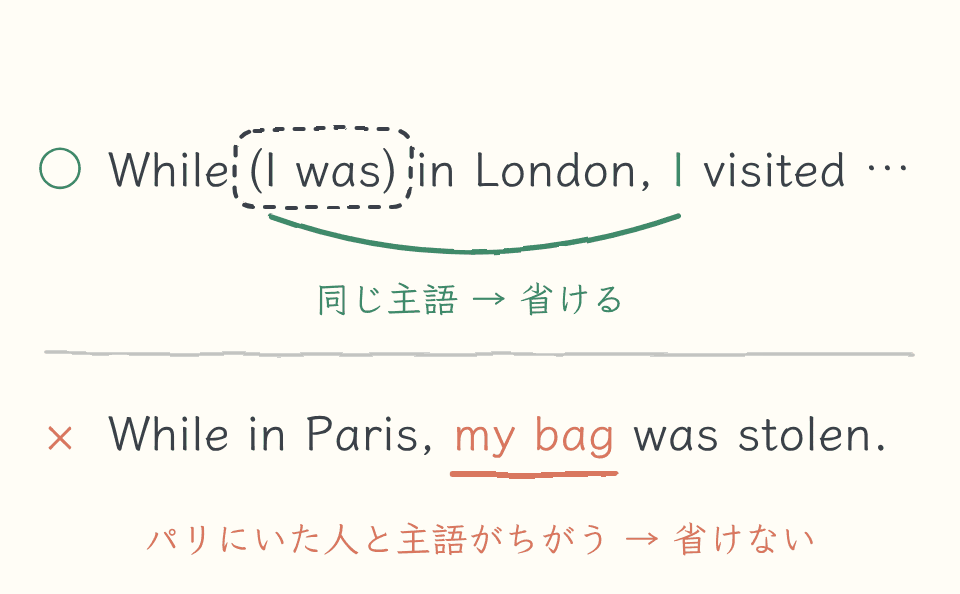
when / while / if / though などのあとの〈主語 + be動詞〉は、主節と主語が同じときに省くことができます。if necessary(必要なら)、if possible(できれば)のように決まった言い方もあります。
While in London, I visited the museum.
ロンドンにいる間に、私はその博物館を訪れた。
When asked about the plan, the minister did not answer.
計画について聞かれると、大臣は答えなかった。
Fill in the form if necessary.
必要なら、用紙に記入してください。
Though tired, she kept working.
疲れていたが、彼女は働き続けた。
| 省略のある形 | 補うと |
|---|---|
| While in London, … | While I was in London, … |
| When asked about the plan, … | When he was asked about the plan, … |
| … if necessary. | … if it is necessary. |
| Though tired, … | Though she was tired, … |
4コンマ・ダッシュではさむ挿入
文の途中に、コンマ(,)やダッシュ(—)で説明や意見をはさむことがあります。はさまれた部分をいったん外すと、文の骨組みが見えます。ニュースでは、情報の出どころ(according to 〜)をはさむ形がよく使われます。
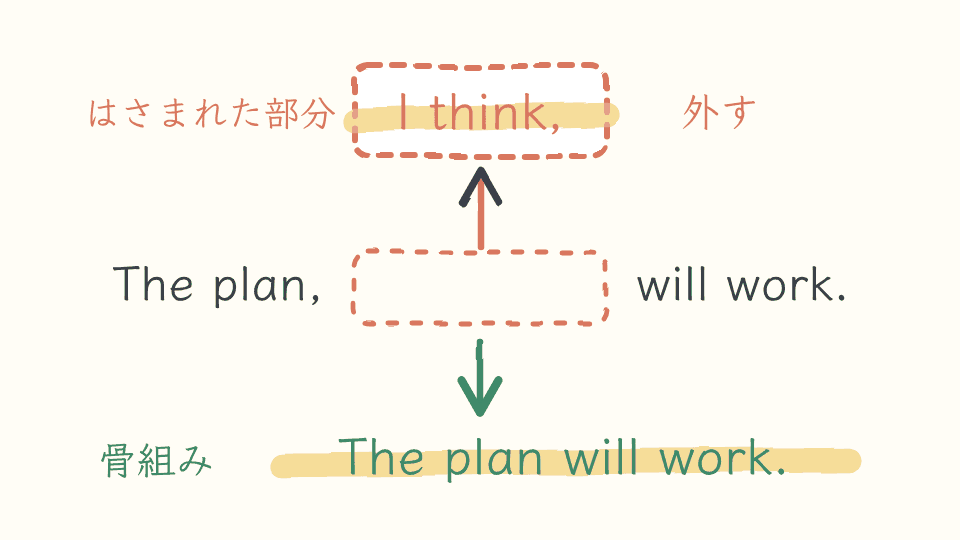
The plan, I think, will work.
その計画は、私が思うに、うまくいくだろう。
Tokyo, the capital of Japan, is a huge city.
日本の首都である東京は、巨大な都市だ。
The new bridge, according to the city, will open next spring.
市によると、新しい橋は来年の春に開通する。
The festival — the biggest in the region — attracted thousands of visitors.
その祭りはこの地域で最大のもので、何千人もの観光客を集めた。
Prices, however, did not fall.
しかし、物価は下がらなかった。
5関係詞のあとの I think など
〈関係代名詞 + I think(they believe など)+ 動詞〉の形では、I think がはさまっていると考えます。I think を外すと、関係代名詞が主語の働きをしているのがわかります。
He is the person who I think is best for the job.
彼こそ、その仕事にいちばん合っていると私が思う人だ。
The team that experts believed would win lost its first game.
専門家が勝つだろうと考えていたチームが、初戦で負けた。
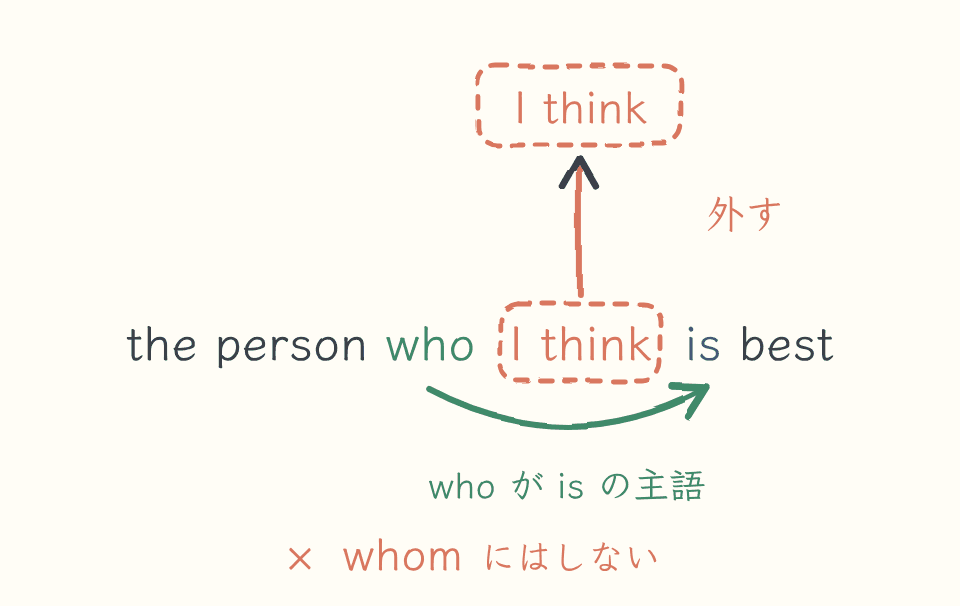
who I think is best の who は is の主語です。I think を外すと the person who is best となるので、whom にはしません。
6よくある間違い
| × | ○ | ポイント |
|---|---|---|
| While was in London, I visited the museum. | While in London, I visited the museum. | 〈主語+be動詞〉はセットで省く |
| While in Paris, my bag was stolen. | While I was in Paris, my bag was stolen. | 主節と主語がちがうときは省略できない |
| "Would you like to come?" "I'd love." | "Would you like to come?" "I'd love to." | to は残す |
| "Will it rain?" "I don't hope so." | "Will it rain?" "I hope not." | 「〜でないといい」は I hope not |
| He is the person whom I think is best. | He is the person who I think is best. | I think を外して考える |
7確認問題
"Are you coming to the party?" "I'd love ( )."
答えを見る
to
When ( ) about the accident, the driver said nothing.(聞かれると)
答えを見る
asked
When he was asked の he was が省かれています。
省略された語を補う:While in Kyoto, we visited many temples.
答えを見る
While we were in Kyoto, we visited many temples.
はさまれた部分を外して、文の骨組みを書く:The museum, according to the report, will close in March.
答えを見る
The museum will close in March.
"Will the train be late?" "I hope ( )."(遅れないといい)
答えを見る
not
8ニュースで出てきた省略・挿入
この単元に関係する英文がニュースに出てきたら、ここに自動で追加されます。