無生物主語
物・事が主語の文 = 主語を「原因・手段・条件」として訳す
1無生物主語とは
英語では、物や事を主語にして「〜が(人に)…させる」と言うことがよくあります。日本語に直訳すると不自然になるので、主語を原因・手段・条件として、「〜のために」「〜すれば」と訳すと自然です。
Because of the heavy rain, we couldn't go out.
大雨のため、私たちは出かけられなかった。
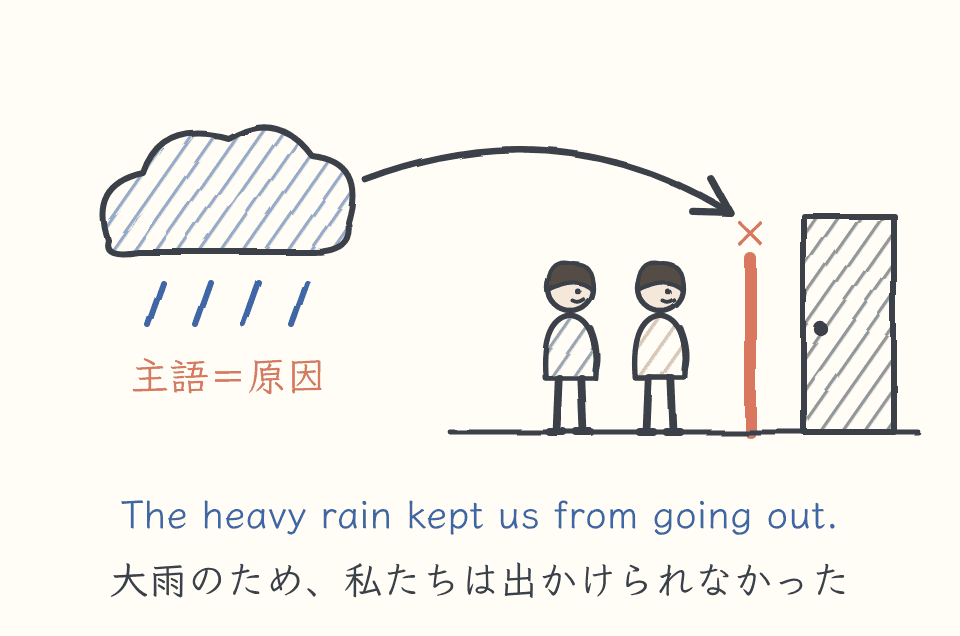
The heavy rain kept us from going out.
大雨のため、私たちは出かけられなかった。
| 英文 | 直訳 | 自然な訳 |
|---|---|---|
| This bus will take you to the station. | このバスがあなたを駅に連れていく | このバスに乗れば駅に行けます |
| The news made her happy. | その知らせが彼女をうれしくした | その知らせを聞いて彼女は喜んだ |
| Heavy rain prevented us from going out. | 大雨が私たちが出かけるのを妨げた | 大雨のため出かけられなかった |
2「連れていく・導く」型(take / bring / lead)
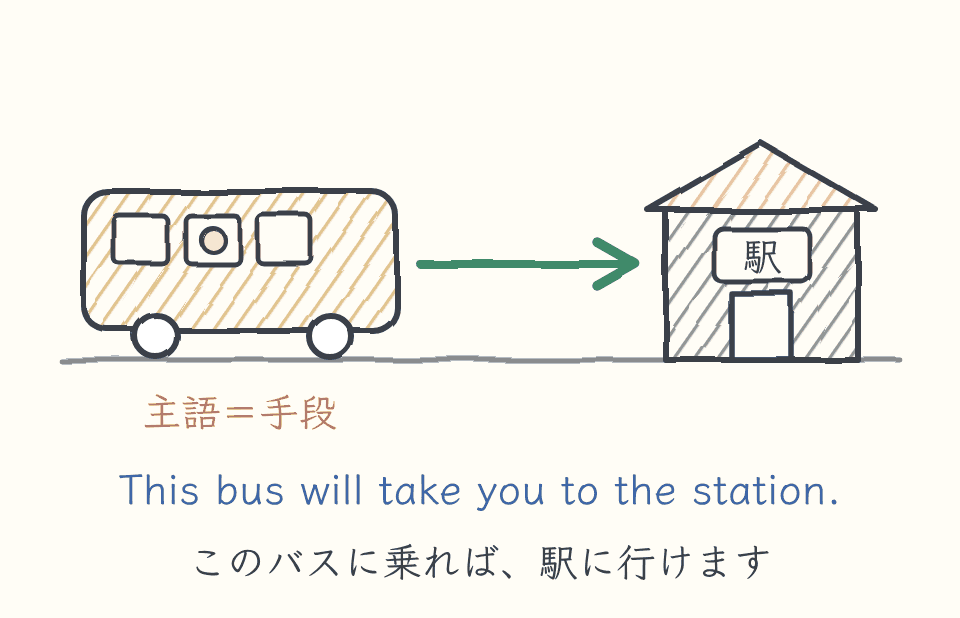
〈主語 + take / bring + 人 + to 場所〉は、「〜すれば(人は)…に行ける・着く」と訳します。主語が手段・条件になる型です。
This bus will take you to the station.
このバスに乗れば、駅に行けます。
A short walk will bring you to the beach.
少し歩けば、浜辺に着きます。
The data led scientists to a new idea.
そのデータから、科学者たちは新しい考えにたどり着いた。
3「させる」型(make / cause / allow / force)
〈主語 + make + 人 + 動詞の原形・形容詞〉や〈主語 + cause / allow / force + 人 + to 動詞〉は、主語を原因として訳します。make のあとは to をつけない原形です。
| 動詞 | 形 | 訳し方 |
|---|---|---|
| make | make + 人 + 動詞の原形/形容詞 | 〜のせいで(おかげで)人は…する |
| cause | cause + 人・物 + to 動詞 | 〜が原因で…する |
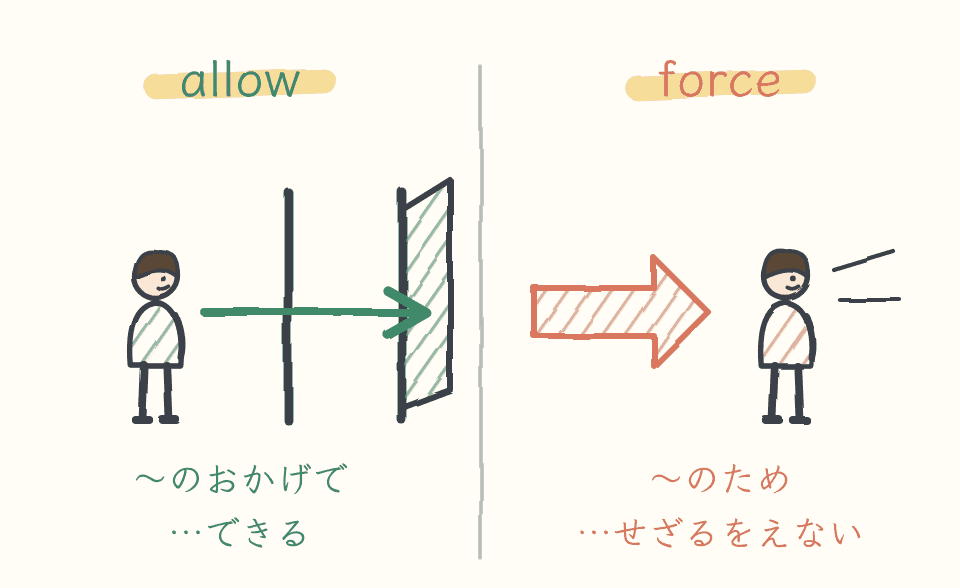
| allow / enable | allow + 人 + to 動詞 | 〜のおかげで人は…できる |
| force | force + 人 + to 動詞 | 〜のため人は…せざるをえない |
The news made her happy.
その知らせを聞いて、彼女は喜んだ。
What made you change your mind?
どうして気が変わったのですか。
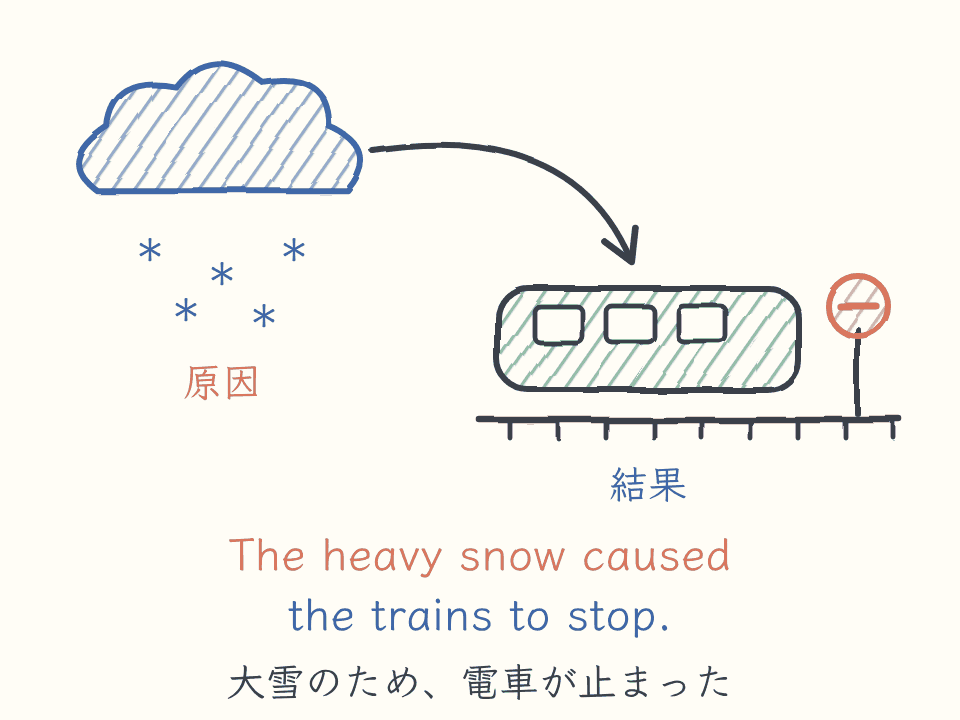
The heavy snow caused the trains to stop.
大雪のため、電車が止まった。
The new system allows users to pay by smartphone.
新しいシステムで、利用者はスマートフォンで支払いができる。
Rising costs forced the restaurant to close.
費用が上がったため、そのレストランは閉店に追いこまれた。
4「妨げる」型(prevent / keep / stop + 人 + from 〜ing)
〈主語 + prevent / keep / stop + 人 + from 〜ing〉は、「〜のため、人は…できない」と訳します。from のあとは動詞の ing 形です。
Heavy rain prevented us from going out.
大雨のため、私たちは出かけられなかった。
The noise kept me from sleeping.
騒音のせいで、私は眠れなかった。
Strong winds stopped the ferry from leaving the port.
強風のため、フェリーは港を出られなかった。
Illness kept her from attending the meeting.
病気のため、彼女は会議に出られなかった。
5「見せる・教える・思い出させる」型(show / tell / remind / say)
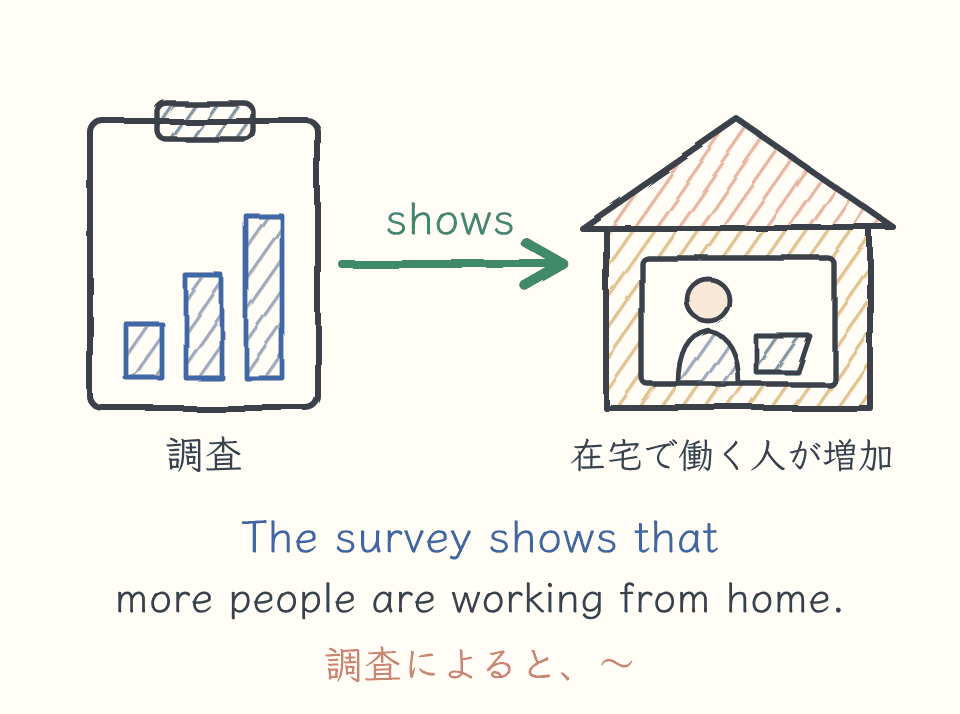
調査・写真・看板などが主語のときは、「〜によると」「〜を見ると」と訳すと自然です。ニュースでは The survey shows that 〜(調査によると〜)がよく使われます。
The survey shows that more people are working from home.
調査によると、在宅で働く人が増えている。
This photo reminds me of my school days.
この写真を見ると、学生時代を思い出す。
The sign says that the shop opens at ten.
看板には、その店は10時に開くと書いてある。
A quick look at the map will tell you where the station is.
地図をちょっと見れば、駅の場所がわかります。
| 英文の形 | 自然な訳 |
|---|---|
| The survey shows that 〜 | 調査によると〜 |
| This photo reminds me of 〜 | この写真を見ると〜を思い出す |
| The sign says (that) 〜 | 看板には〜と書いてある |
| What made you 〜? | どうして〜したのですか |
6よくある間違い
| × | ○ | ポイント |
|---|---|---|
| The rain prevented us to go out. | The rain prevented us from going out. | prevent は from 〜ing |
| The news made me to cry. | The news made me cry. | make のあとは to をつけない原形 |
| This photo reminds me my childhood. | This photo reminds me of my childhood. | remind 人 of 〜 |
| (訳)このバスがあなたを駅に連れていく。 | (訳)このバスに乗れば駅に行けます。 | 主語を手段・条件として訳す |
7確認問題
The heavy rain prevented us ( ) going out.
答えを見る
from
The news made me ( ).(泣く)
答えを見る
cry
make + 人 + 動詞の原形です。
自然な日本語に:Ten minutes' walk will take you to the station.
答えを見る
10分歩けば、駅に着きます。
並べかえ:( you / what / made / come ) here?(どうしてここに来たのですか)
答えを見る
What made you come here?
This song reminds me ( ) my grandmother.
答えを見る
of
8ニュースで出てきた無生物主語
この単元に関係する英文がニュースに出てきたら、ここに自動で追加されます。