関係詞(非制限用法)
コンマ + who / which = 前の名詞や文に情報をつけ足す
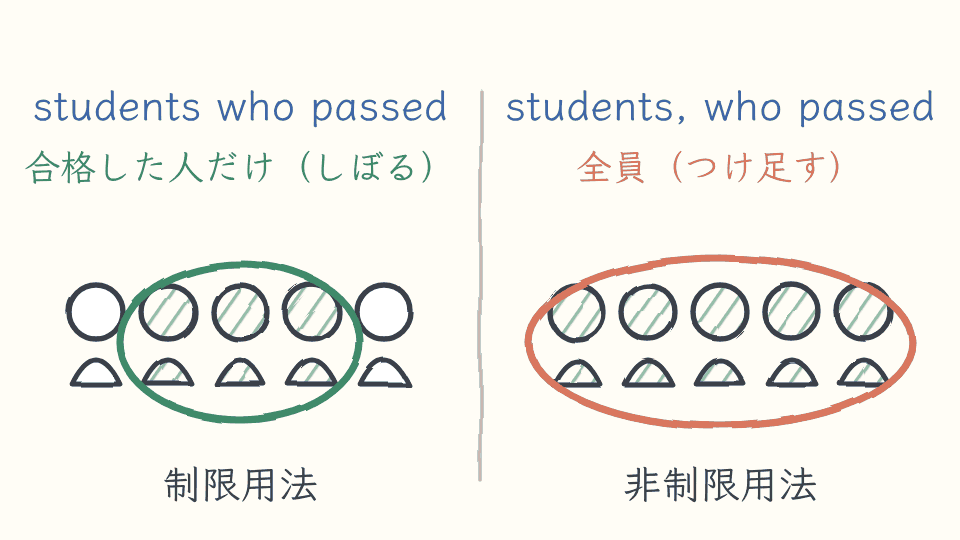
1非制限用法とは
関係詞の前にコンマを置くと、前の名詞に情報をつけ足す働きになります。「そしてその人は〜」「その人は〜なのだが」のように、前から順に訳すとわかりやすくなります。that はこの形では使いません。
I have a brother who lives in Tokyo.
私には東京に住んでいる兄がいる(ほかにも兄がいるかもしれない)。
I have a brother, who lives in Tokyo.
私には兄が1人いて、東京に住んでいる。
2制限用法との意味のちがい
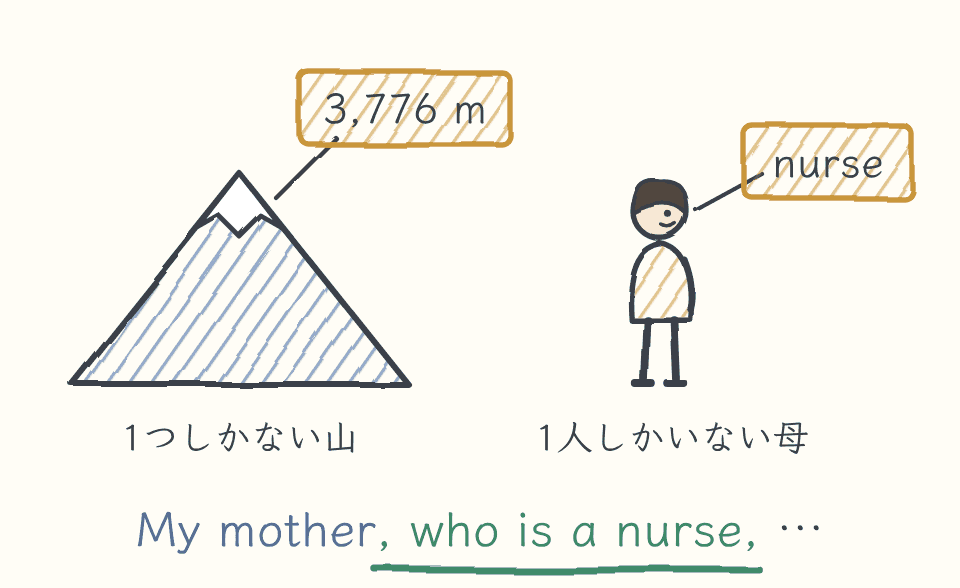
コンマがあるかないかで、文の意味が変わることがあります。また、Mt. Fuji や my mother のように、1つしかないもの・すでにはっきりしているものに説明をつけるときは、非制限用法を使います。
The students who passed the test moved to the next level.
テストに合格した生徒は、次のレベルに進んだ。
The students, who passed the test, moved to the next level.
生徒たちは(全員)テストに合格し、次のレベルに進んだ。
Mt. Fuji, which is 3,776 meters high, is the highest mountain in Japan.
富士山は、高さが3,776メートルで、日本でいちばん高い山だ。
My mother, who is a nurse, often works at night.
私の母は看護師で、よく夜に働いている。
3who / whom / whose / which の非制限用法
前の名詞が人なら who(目的格は whom)、物なら which を使います。「その人の・その物の」は whose です。
| 前の名詞 | 主格 | 目的格 | 所有格 |
|---|---|---|---|
| 人 | , who | , whom | , whose |
| 物・動物 | , which | , which | , whose |
Ms. Tanaka, whose son is a pilot, lives next door.
田中さんは、息子さんがパイロットで、となりに住んでいる。
The new library, which opened last month, is very popular.
新しい図書館は先月開館したが、とても人気がある。
My uncle, whom I visited last summer, runs a small restaurant.
おじは、去年の夏に私が訪ねたのだが、小さなレストランを経営している。
4which が前の文全体を指す
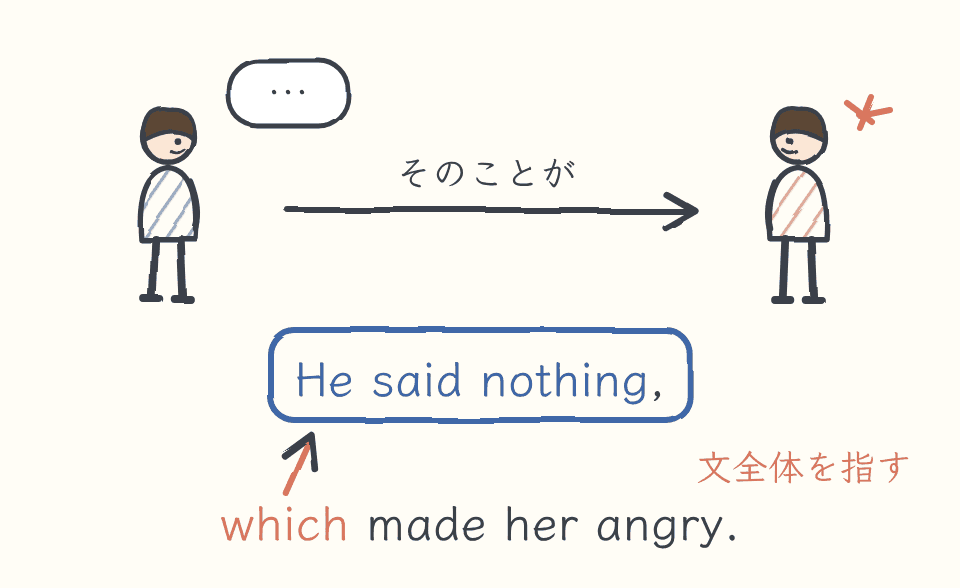
, which は、前の名詞だけでなく、前の文全体(またはその一部)の内容を指すことがあります。「そしてそのことが〜」と訳します。
He said nothing, which made her angry.
彼は何も言わず、そのことが彼女をおこらせた。
It began to rain, which spoiled our picnic.
雨が降り出し、そのせいでピクニックが台なしになった。
She passed the exam, which surprised everyone.
彼女は試験に合格し、そのことにみんながおどろいた。
5where / when の非制限用法と「数量 + of whom / which」
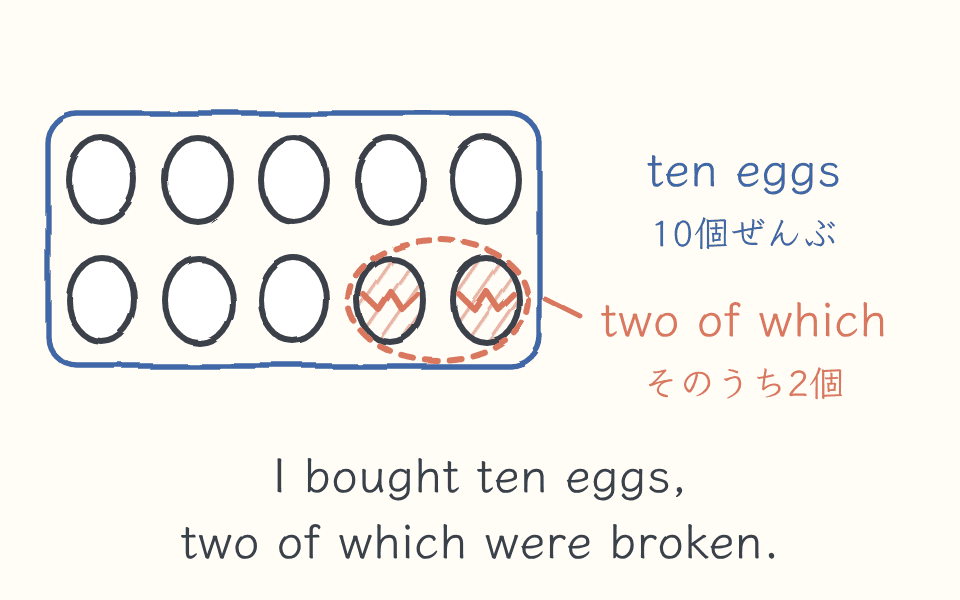
場所には , where(そしてそこで)、時には , when(そしてその時)を使います。また、〈all / some / two など + of whom(人)/ of which(物)〉で、前の名詞の一部や全部について説明できます。
I went to Nara, where I saw many deer.
私は奈良に行き、そこでたくさんのシカを見た。
We arrived at noon, when it began to rain.
私たちは正午に着いたが、ちょうどその時雨が降り出した。
He has three sons, all of whom live abroad.
彼には息子が3人いて、3人とも海外に住んでいる。
I bought ten eggs, two of which were broken.
卵を10個買ったが、そのうち2個は割れていた。
6ニュースの英文と言いかえ
ニュースでは、人や物の説明をコンマではさんで、1つの文にたくさんの情報を入れます。非制限用法は、〈接続詞 + 代名詞〉で言いかえられます。
| 非制限用法 | 言いかえ |
|---|---|
| , who 〜 | and he / she 〜、but he / she 〜 |
| , which 〜 | and it 〜、but it 〜 |
| , where 〜 | and there 〜 |
| , when 〜 | and then 〜 |
The mayor, who took office in April, announced a new plan.
市長は4月に就任したが、新しい計画を発表した。
The typhoon, which hit Okinawa on Monday, is moving north.
その台風は月曜日に沖縄をおそい、今は北へ進んでいる。
The new rule, which was approved last week, will take effect in April.
新しい規則は先週承認され、4月から実施される。
7よくある間違い
| × | ○ | ポイント |
|---|---|---|
| The museum, that opened in 2020, is popular. | The museum, which opened in 2020, is popular. | 非制限用法に that は使わない |
| My father who is a doctor works in Osaka. | My father, who is a doctor, works in Osaka. | 父は1人なのでコンマが必要 |
| I went to Nara, which I saw many deer. | I went to Nara, where I saw many deer. | 「そこで」なら where |
| He has two sisters, both of them are teachers. | He has two sisters, both of whom are teachers. | 文をつなぐには whom |
| She passed the test, what surprised everyone. | She passed the test, which surprised everyone. | 前の文を指すのは which |
8確認問題
( )に入る語を選びなさい。I met Mr. Sato, ( who / which ) told me the news.
答えを見る
who
前の名詞が人なので who です。
( )に入る語を選びなさい。He was late again, ( that / which ) made the teacher angry.
答えを見る
which
前の文全体を指すのは which です。that は非制限用法に使えません。
( )に入る語を選びなさい。We visited Kyoto, ( where / which ) we stayed for three days.
答えを見る
where
「そこで3日間過ごした」なので where です。
( )に適切な語を入れなさい。She has two cats, both of( )are white.
答えを見る
which
物・動物のときは of which です。
日本語にしなさい。My sister, who lives in Kobe, is a teacher.
答えを見る
私の姉(妹)は神戸に住んでいて、先生をしている。
コンマのあとは情報のつけ足しとして、前から順に訳します。
9ニュースで出てきた関係詞
ニュースでは、The mayor, who took office in April, … のように、人や物の説明をコンマではさんで、1つの文に情報をつけ足す形がとてもよく使われます。
Japanese Foreign Minister Toshimitsu Motegi attended a session on energy and economic growth, where participants discussed energy security.
日本の茂木外務大臣は、エネルギーと経済成長についての会議に出席し、そこで参加者たちはエネルギー安全保障について話し合いました。
日本の茂木外務大臣は、エネルギーと経済成長についての会議に出席し、そこで参加者たちはエネルギー安全保障について話し合いました。カンマのあとの where は、前の a session を受けて、「そしてその会議では」と説明を加えます。attend は「〜に出席する」で、後ろにすぐ会議を置きます。