関係詞(whose・what・関係副詞)
whose(所有)、what = the thing(s) which、前置詞 + which、関係副詞 where / when / why / how
1関係代名詞 whose
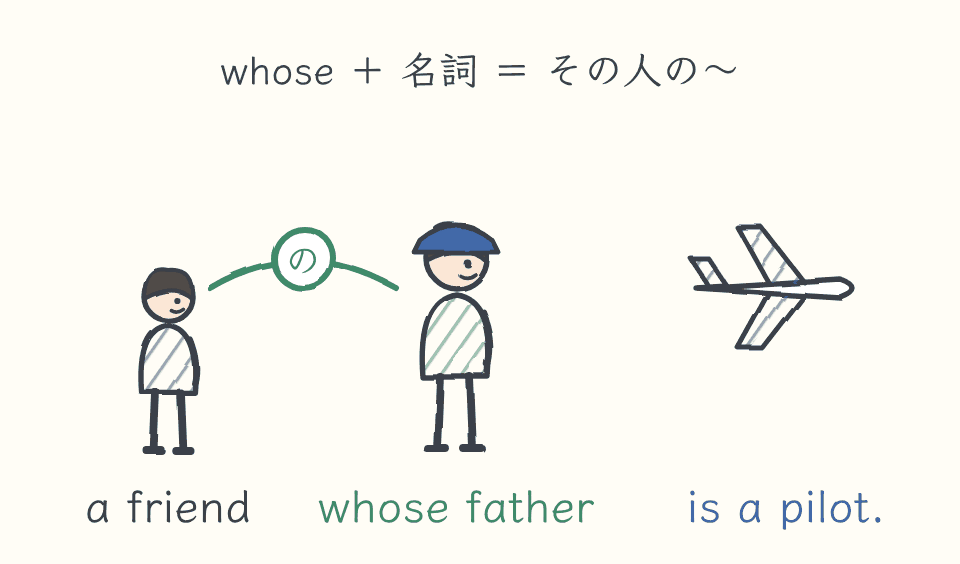
whose は所有格の関係代名詞で、「その〜が…する(である)」という意味で先行詞を説明します。whose のすぐあとには名詞が続き、「whose + 名詞」が関係詞節の中で主語や目的語になります。先行詞は人でも物でもかまいません。
I have a friend who lives in Canada.
私にはカナダに住んでいる友だちがいます。
I have a friend whose father is a pilot.
私にはお父さんがパイロットをしている友だちがいます。
| 先行詞 | 主格 | 所有格 | 目的格 |
|---|---|---|---|
| 人 | who / that | whose | who(m) / that |
| 物・動物 | which / that | whose | which / that |
Look at the house whose roof is red.
屋根が赤いあの家を見てください。
She is the writer whose novel I read last week.
彼女は、私が先週その小説を読んだ作家です。
The company is looking for people whose first language is English.
その会社は、英語を母語とする人を探しています。
2関係代名詞 what
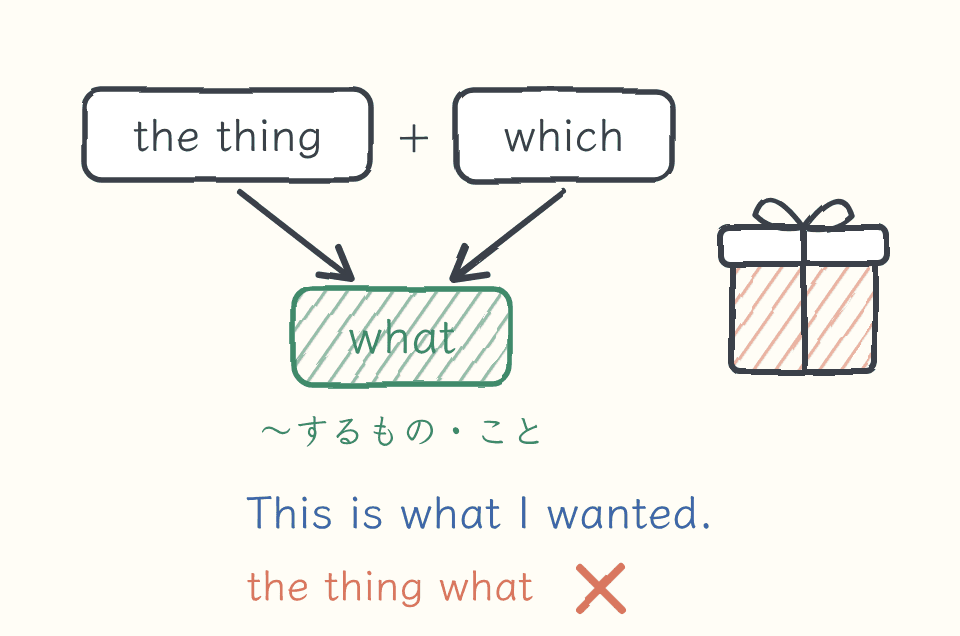
what は先行詞をふくむ関係代名詞で、the thing(s) which と同じ「〜するもの・こと」という意味を表します。前に先行詞を置かず、「what + 主語 + 動詞」のまとまりが、文の中で主語・目的語・補語になります。
| 文の中の働き | 例 | 意味 |
|---|---|---|
| 主語 | What he said is true. | 彼が言ったことは本当だ。 |
| 目的語 | I can't believe what I saw. | 自分が見たことが信じられない。 |
| 補語 | This is what I wanted. | これが私のほしかったものだ。 |
| 前置詞の目的語 | Thank you for what you did. | あなたがしてくれたことに感謝します。 |
What he said is true.
彼が言ったことは本当です。
This is what I wanted for my birthday.
これが、私が誕生日にほしかったものです。
Don't put off what you can do today.
今日できることを先にのばしてはいけません。
what はそれ自体が先行詞をふくむので、前に名詞を置きません。(× the thing what I wanted ○ what I wanted / the thing which I wanted)
3前置詞 + 関係代名詞
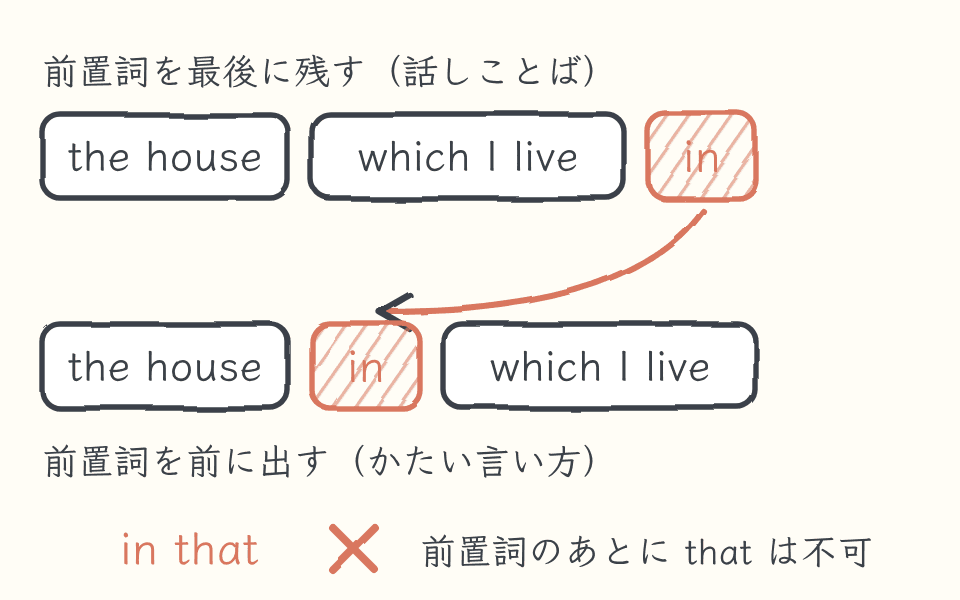
関係詞節の中で関係代名詞が前置詞の目的語になるとき、前置詞は節の最後に残すことも、関係代名詞の前に出すこともできます。前に出す形はややかたい言い方で、書きことばによく使われます。
| 形 | 例 | ポイント |
|---|---|---|
| 前置詞を最後に残す | This is the house which I live in. | 話しことばに多い。which は省略できる |
| 前置詞を前に出す | This is the house in which I live. | かたい言い方。which は省略できない |
| 人が先行詞のとき | the man with whom I talked | 前置詞のあとは whom(who は不可) |
This is the house in which my grandfather was born.
これは祖父が生まれた家です。
The topic which we talked about was difficult.
私たちが話し合った話題は難しいものでした。
He is the person with whom I work.
彼は私がいっしょに働いている人です。
that は前置詞のあとに置けません。(× the house in that I live)前置詞を前に出すときは、which か whom を使います。
4関係副詞 where / when / why / how
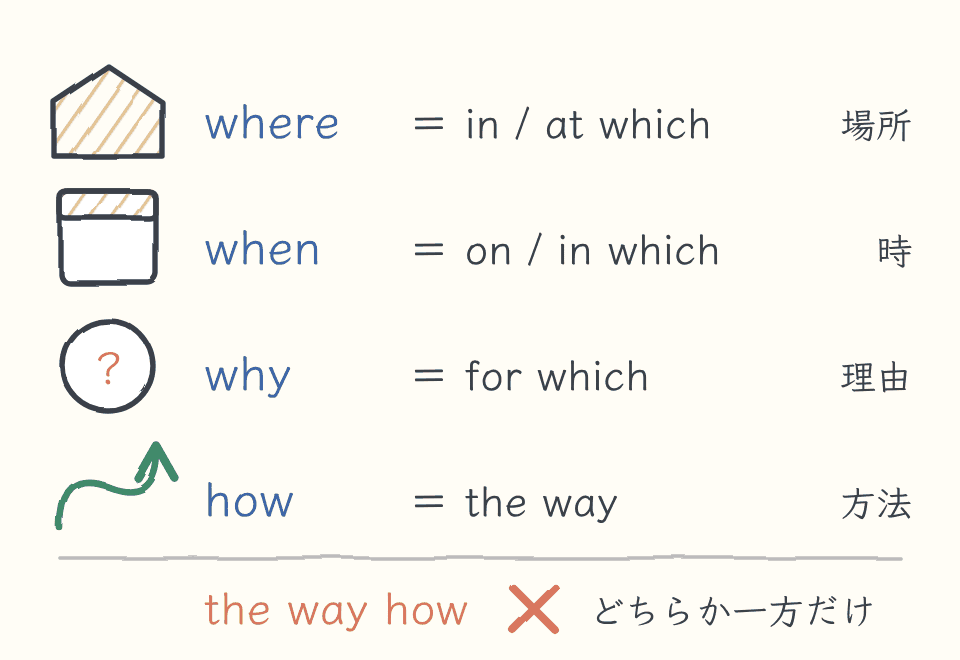
関係副詞は、場所・時・理由・方法を表す先行詞を説明します。関係副詞は「前置詞+which」の働きをしていて、the town where I was born は the town in which I was born と同じ意味です。
| 関係副詞 | 先行詞 | 言いかえ | 例 |
|---|---|---|---|
| where | 場所(place, town, house など) | in / at which | the town where I was born |
| when | 時(day, year, time など) | on / in which | the day when we first met |
| why | 理由(reason) | for which | the reason why he was late |
| how | 方法(先行詞は置かない) | the way (in which) | how she solved the problem |
This is the town where I was born.
ここは私が生まれた町です。
I remember the day when we first met.
私たちが初めて会った日のことを覚えています。
Tell me the reason why you were late.
あなたが遅れた理由を教えてください。
This is how she solved the problem.
このようにして彼女はその問題を解きました。
I like the way he speaks.
私は彼の話し方が好きです。
how は the way と並べて使えません(× the way how)。the way か how のどちらか一方を使います。また、the reason why の the reason や why は、どちらかを省略することもよくあります(That's why I was late. そういうわけで遅れました)。
5関係代名詞と関係副詞の見分け方
先行詞が場所を表す語でも、いつも where になるわけではありません。関係詞のあとの文に、主語や目的語が欠けているかを確かめます。欠けていれば関係代名詞(which / that)、欠けていない完全な文なら関係副詞(where)です。
This is the city which I visited last year.
ここは私が去年おとずれた市です。
This is the city where I lived last year.
ここは私が去年住んでいた市です。
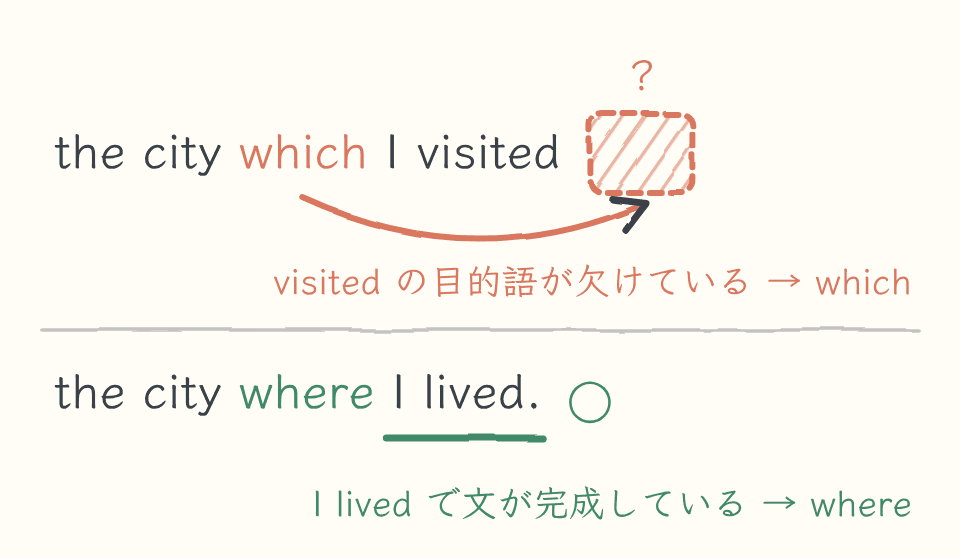
visit は「〜をおとずれる」と目的語をとる動詞なので、which が目的語の役目をします。live は「住む」で目的語をとらないので、「そこで」を表す where を使います。
6ニュースの中の関係詞
ニュースでは、人や場所について情報を足すために関係詞がよく使われます。特に「事故が起きた場所」「〜が発表された日」のような where / when の文はよく出てきます。
Police are investigating the area where the accident happened.
警察は事故が起きた現場を調べています。
Residents whose homes were damaged can apply for support.
家が被害を受けた住民は、支援を申請できます。
The government explained the reason why prices are rising.
政府は物価が上がっている理由を説明しました。
What surprised experts was the speed of the change.
専門家を驚かせたのは、その変化の速さでした。
7よくある間違い
| × まちがい | ○ 正しい形 | ポイント |
|---|---|---|
| I have a friend who father is a doctor. | I have a friend whose father is a doctor. | 所有の意味は whose |
| This is the thing what I wanted. | This is what I wanted. | what は先行詞をふくむ |
| the house in that I live | the house in which I live | 前置詞のあとに that は置けない |
| the man with who I talked | the man with whom I talked | 前置詞のあとは whom |
| This is the city where I visited. | This is the city which I visited. | visit の目的語が欠けているので which |
| This is the house which I was born. | This is the house where I was born. | 文が完成しているので where(in which) |
| This is the way how he did it. | This is how he did it. / This is the way he did it. | the way と how は並べない |
8確認問題
( ) に入る関係詞を書きなさい。I know a girl ( ) mother is a famous singer.
答えを見る
whose
「その母親が」なので所有格の whose。
( ) に入る関係詞を書きなさい。( ) you need now is a good rest.
答えを見る
What
先行詞がなく「〜するもの」なので what。
( ) から正しいものを選びなさい。Kyoto is the city ( which / where ) many tourists visit.
答えを見る
which
visit の目的語が欠けているので which。
( ) から正しいものを選びなさい。Kyoto is the city ( which / where ) my aunt lives.
答えを見る
where
my aunt lives で文が完成しているので where。
前置詞を関係代名詞の前に出して書きかえなさい。This is the hotel which we stayed at.
答えを見る
This is the hotel at which we stayed.
前置詞のあとは which(that は不可)。
英語にしなさい。「これが私がその箱を開けた方法です。」
答えを見る
This is how I opened the box.
This is the way I opened the box. でも正解。the way how は不可。
9ニュースで出てきた関係詞
この単元に関係する英文がニュースに出てきたら、ここに自動で追加されます。