接続詞 that・when・if・because
that・when・if・because = 文と文をつなぐ
1接続詞とは
接続詞は、語と語や、文と文をつなぐ語です。and(そして)、but(しかし)、so(だから)などはすでに学びました。この単元では、that・when・if・because を使って、〈主語 + 動詞〉をふくむまとまりを文の中に入れる言い方を学びます。
I was sick. I stayed home.
私は病気でした。私は家にいました。
I stayed home because I was sick.
病気だったので、私は家にいました。
| 接続詞 | 意味 | 例 |
|---|---|---|
| that | 〜ということ | I think that he is right. |
| when | 〜のとき | When I got home, it was dark. |
| if | もし〜なら | If it rains, we will stay home. |
| because | 〜なので・〜だから | I stayed home because I was sick. |
2接続詞 that
〈動詞 + that + 主語 + 動詞〉で、「〜ということを…」を表します。think(思う)、know(知っている)、hope(望む)、say(言う)などのあとによく使います。この that は省略できます。
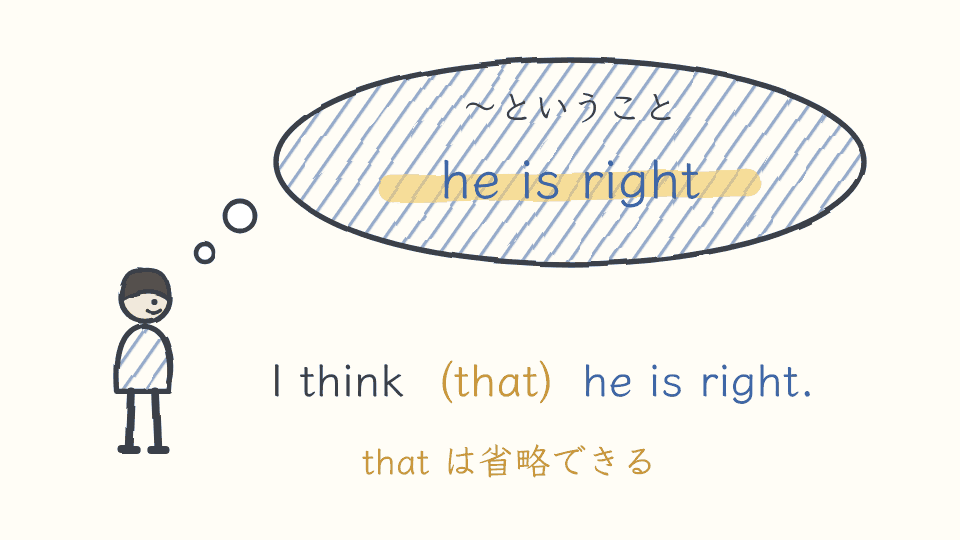
I think that he is right.
私は彼が正しいと思います。
I know that you are busy.
あなたがいそがしいことは知っています。
I hope you will like it.
あなたが気に入ってくれるといいなと思います。
She said that she was tired.
彼女はつかれていると言いました。
I don't think it will rain.
雨は降らないと思います。
「〜ではないと思う」は、英語では I don't think 〜. のように、ふつう think のほうを否定します。また、said のように前の動詞が過去形のときは、that のあとの動詞も過去形にするのがふつうです(She said that she was tired.)。
3接続詞 when
〈when + 主語 + 動詞〉で「〜のとき」を表します。when のまとまりは文の前にも後ろにも置けます。前に置くときは、まとまりの終わりにカンマ(,)をつけます。when の文の中では、未来のことも現在形で表します。
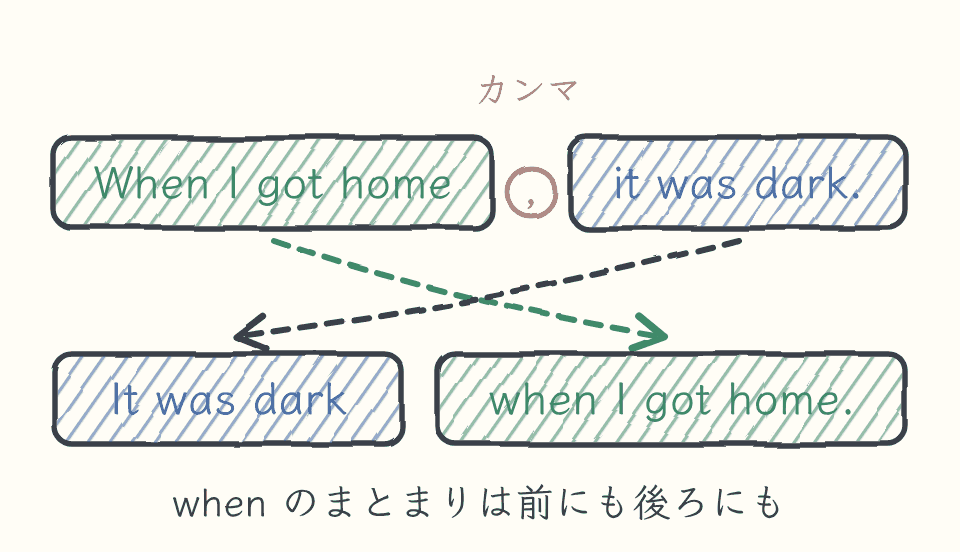
When I got home, it was dark.
私が家に着いたとき、外は暗かった。
I was watching TV when he called me.
彼が電話をくれたとき、私はテレビを見ていました。
My father was a baseball player when he was young.
父は若いころ野球選手でした。
I always wash my hands when I get home.
私は家に着くと、いつも手を洗います。
When you come to Japan, please visit me.
日本に来たら、私のところに来てください。
4接続詞 if
〈if + 主語 + 動詞〉で「もし〜なら」を表します。if のまとまりも、前に置くときはカンマをつけます。if の文の中では、未来のことでも現在形で表します。
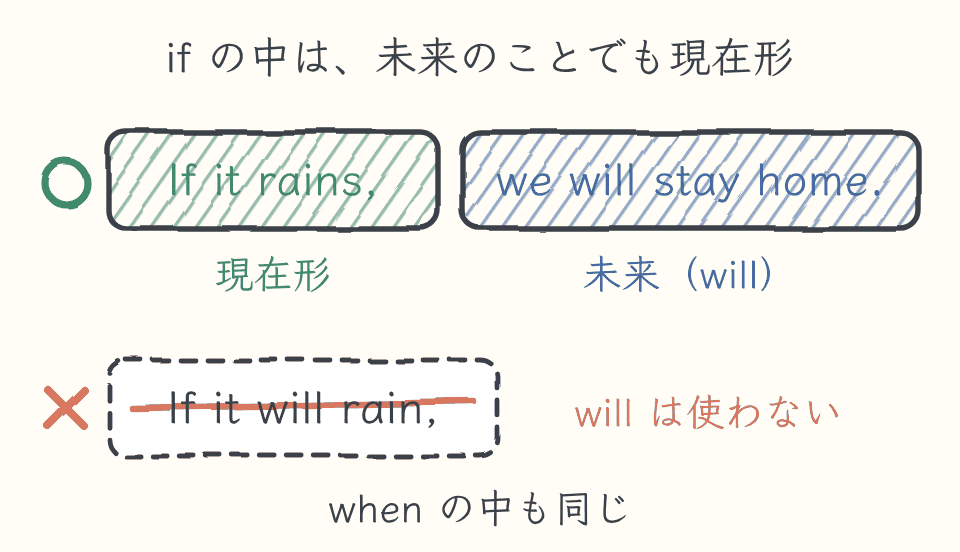
If it rains, we will stay home.
もし雨が降ったら、私たちは家にいます。
If you are tired, you can go home.
もしつかれているなら、家に帰っていいですよ。
Please call me if you need help.
助けが必要なら電話してください。
If you don't hurry, you will miss the bus.
急がないと、バスに乗りおくれますよ。
5接続詞 because
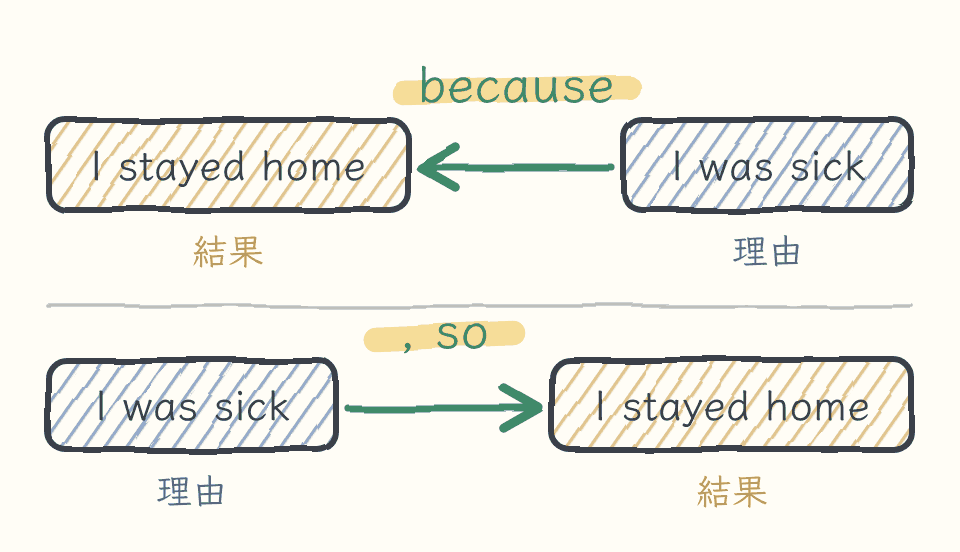
〈because + 主語 + 動詞〉で「〜なので」と理由を表します。Why 〜?(なぜ)とたずねられたときは、Because 〜. と答えられます。so(だから)は、because と反対に、理由のあとに結果を続けます。
I stayed home because I was sick.
病気だったので、私は家にいました。
I was sick, so I stayed home.
私は病気でした。だから家にいました。
I like summer because I can swim in the sea.
海で泳げるので、私は夏が好きです。
Why were you late?
あなたはなぜ遅れたのですか。
Because I missed the bus.
バスに乗りおくれたからです。
6ニュースの中の接続詞
ニュースでは、だれかの発言を伝えるときに〈said that 〜〉の形がよく使われます。予報では if や when を使って「〜したら…」と伝えます。
Officials said that the bridge was safe.
当局は、その橋は安全だと述べました。
The weather agency says that heavy rain will continue until Friday.
気象庁は、大雨が金曜日まで続くと言っています。
If the typhoon comes closer, the trains will stop.
台風がさらに近づけば、電車は止まるでしょう。
The game stopped because it was raining hard.
雨が強く降っていたので、試合は中断されました。
When the earthquake happened, many people were at work.
地震が起きたとき、多くの人が仕事中でした。
7よくある間違い
| × まちがい | ○ 正しい形 | ポイント |
|---|---|---|
| If it will rain tomorrow, we will stay home. | If it rains tomorrow, we will stay home. | if の文の中は未来でも現在形 |
| When he will come, I'll tell him. | When he comes, I'll tell him. | when の文の中も未来でも現在形 |
| Because I was sick, so I stayed home. | I stayed home because I was sick. | because と so をいっしょに使わない |
| I stayed home. Because I was sick. | I stayed home because I was sick. | 書くときは because のまとまりだけで1つの文にしない |
| I think he isn't right. | I don't think he is right. | 「〜ではないと思う」はふつう think を否定する |
Why 〜? の答えとしてなら、Because I was sick. のように because のまとまりだけで答えてかまいません。
8確認問題
( ) に入る語を書きなさい。I think ( ) she is kind.
答えを見る
that
この that は省略することもできる。
( ) に入る語を書きなさい。( ) it is sunny tomorrow, let's go to the beach.(もし明日晴れたら)
答えを見る
If
rain を正しい形にして ( ) に入れなさい。If it ( ) tomorrow, we'll stay home.
答えを見る
rains
if の文の中は未来でも現在形。
because を使って1つの文にしなさい。I went to bed early. I was tired.
答えを見る
I went to bed early because I was tired.
並べかえなさい。( I / when / home / got ), my sister was cooking.
答えを見る
When I got home, my sister was cooking.
英語にしなさい。「私はその話は本当だと思います。」
答えを見る
I think that the story is true.
I think the story is true. でも正解。
9ニュースで出てきた接続詞 that・when・if・because
ニュースでは、だれかの発言を伝えるときに〈said that 〜〉の形がよく使われます。
Mr. Motegi said that the G20 countries use more than 80 percent of the world's energy.
茂木大臣は、G20の国々が世界のエネルギーの8割以上を使っていると述べました。
茂木大臣は、G20の国々が世界のエネルギーの8割以上を使っていると述べました。said that のあとに、言った内容を続けます。more than 80 percent は、8割以上です。