代名詞
one / it / that、another / the other、each / either / neither、再帰代名詞、形式目的語の it
1one・it・that の使い分け
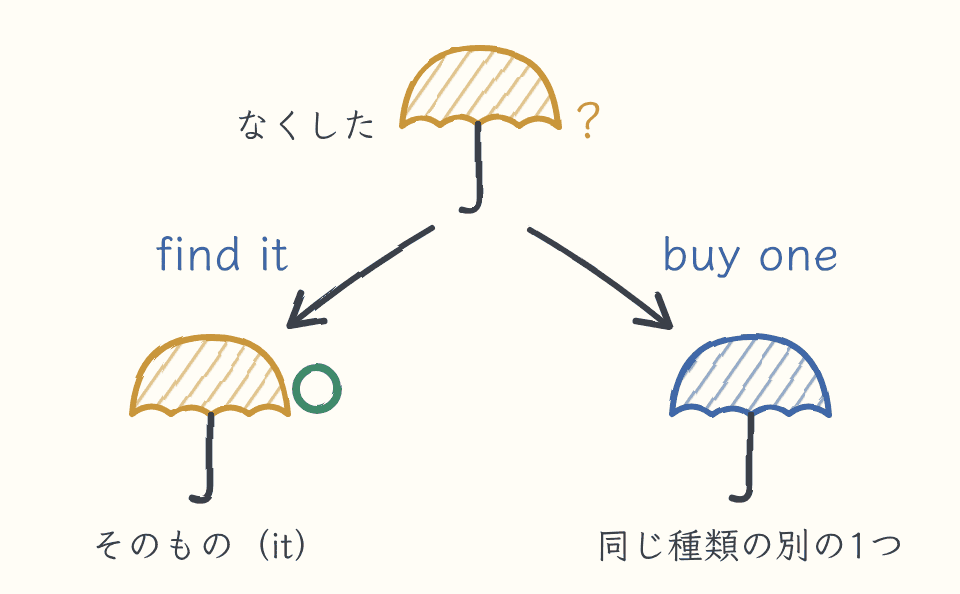
it は「前に出てきたそのもの」を指し、one は「前に出てきたものと同じ種類の不特定の1つ」を指します。a bigger one のように、形容詞をつけることもできます。
I lost my umbrella, so I have to find it.
かさをなくしたので、(その)かさを探さなければならない。
I lost my umbrella, so I have to buy one.
かさをなくしたので、(新しい)かさを1本買わなければならない。
This shirt is too small for me, so I need a bigger one.
このシャツは私には小さすぎるので、もっと大きいものが必要だ。
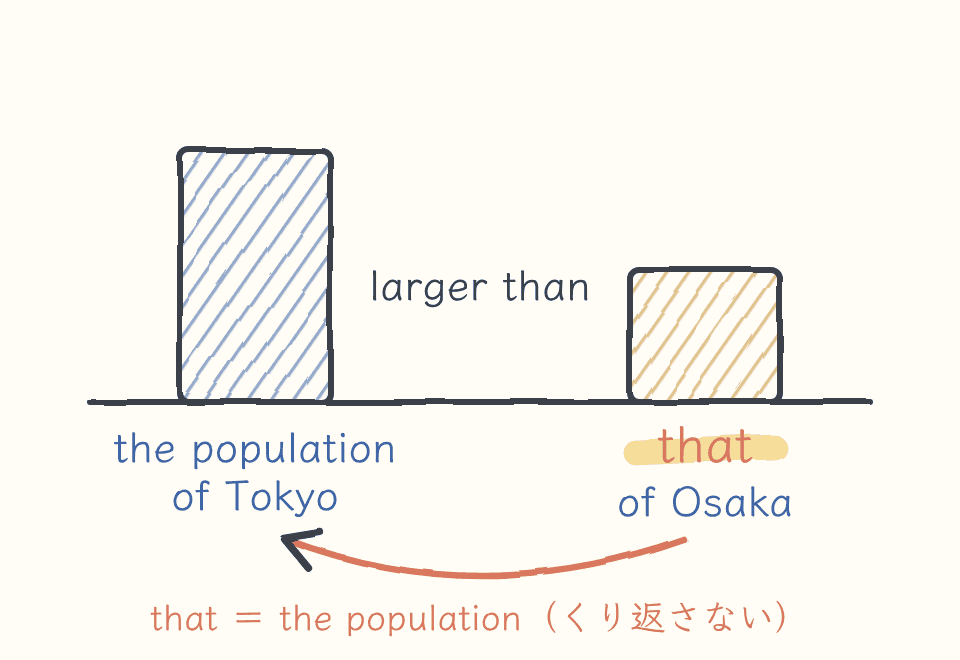
比べる文で、前に出た名詞のくり返しをさけるには that(単数)/ those(複数) を使います。the + 名詞 の代わりで、後ろに of などが続きます。
The population of Tokyo is larger than that of Osaka.
東京の人口は大阪の人口より多い。
The prices in this store are lower than those in that store.
この店の値段は、あの店の値段より安い。
2another・other・the other(s)
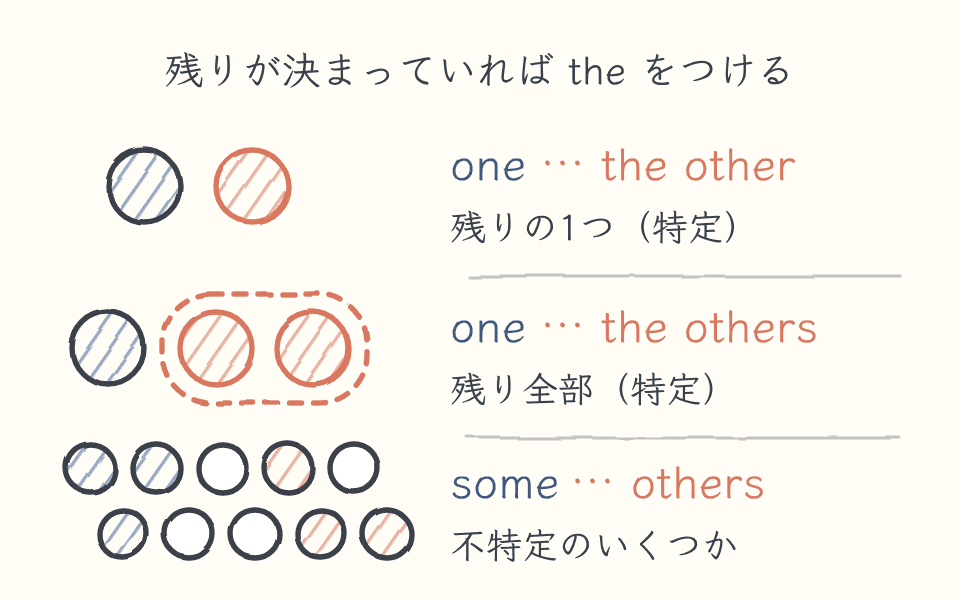
残りが「決まっている(特定できる)」なら the をつけ、「決まっていない」なら the をつけません。
| 形 | 意味 | イメージ |
|---|---|---|
| another(+単数名詞) | もう1つ(の)、別の1つ(の) | 不特定の1つ |
| other + 複数名詞 | ほかの〜 | 不特定のいくつか |
| others | ほかのもの・ほかの人たち | 不特定のいくつか(some 〜, others … の形が多い) |
| the other(+単数名詞) | (2つのうちの)もう一方 | 残りの1つ(特定) |
| the others | 残り全部 | 残りのすべて(特定) |
Can I have another piece of cake?
ケーキをもう1切れもらえますか。
I have two brothers; one is a teacher, and the other is a doctor.
私には兄弟が2人いて、1人は教師で、もう1人は医者だ。
Some students came by bus, and others walked.
バスで来た生徒もいれば、歩いて来た生徒もいた。
Ten people were invited; three came, but the others didn't.
10人が招待され、3人は来たが、残りの人は来なかった。
Saying is one thing, and doing is another.
言うことと行うことは別のことだ。
3each・either・neither・both
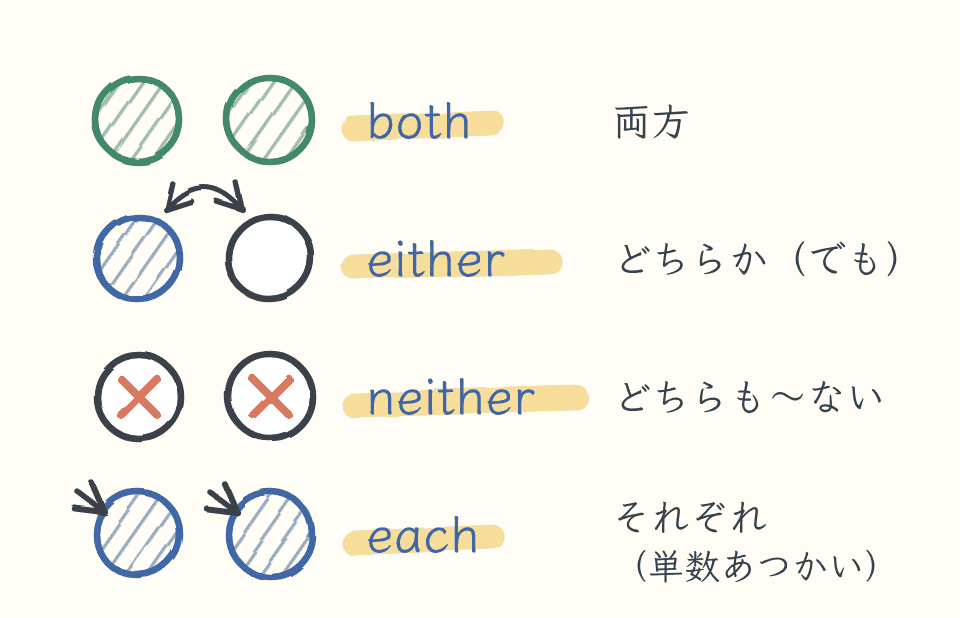
each は「それぞれ(の)」で、each + 単数名詞、each of + 複数名詞 のどちらも単数あつかいです。either は「(2つのうち)どちらか(でも)」、neither は「(2つのうち)どちらも〜ない」、both は「両方」です。3つ以上なら any・none・all を使います。
Each student has a locker.
どの生徒もロッカーを1つ持っている。
Each of the rooms has a TV.
どの部屋にもテレビがある。
You can take either of the two books.
2冊のうち、どちらの本を取ってもいい。
Neither of my parents drinks coffee.
両親のどちらもコーヒーを飲まない。
Both of them passed the exam.
2人とも試験に合格した。
The two players respect each other.
2人の選手はおたがいを尊敬している。
neither of + 複数名詞 のあとの動詞は、かたい文では単数(drinks)にするのがふつうですが、話し言葉では複数(drink)も使われます。each other(おたがい)は代名詞なので、× respect with each other とはしません。
4再帰代名詞(myself など)
-self / -selves のつく代名詞を再帰代名詞といいます。主語と目的語が同じ人・ものになるとき、また「自分で」「〜そのもの」と強調するときに使います。
| 主語 | 再帰代名詞 | 主語 | 再帰代名詞 |
|---|---|---|---|
| I | myself | we | ourselves |
| you(1人) | yourself | you(2人以上) | yourselves |
| he / she / it | himself / herself / itself | they | themselves |
He introduced himself to the class.
彼はクラスのみんなに自己紹介をした。
We enjoyed ourselves at the party.
私たちはパーティーで楽しく過ごした。
Please help yourself to the cookies.
クッキーをご自由に召し上がってください。
She lives by herself.
彼女は1人で暮らしている。
I made this chair myself.
このいすは私が自分で作った。
The idea itself is good.
考えそのものはよい。
5形式目的語の it
find / think / make + O + C の文で、O が to 不定詞や that 節のように長いときは、O の位置に it を置き、本当の目的語を後ろに回します。この it を形式目的語といい、「それ」とは訳しません。
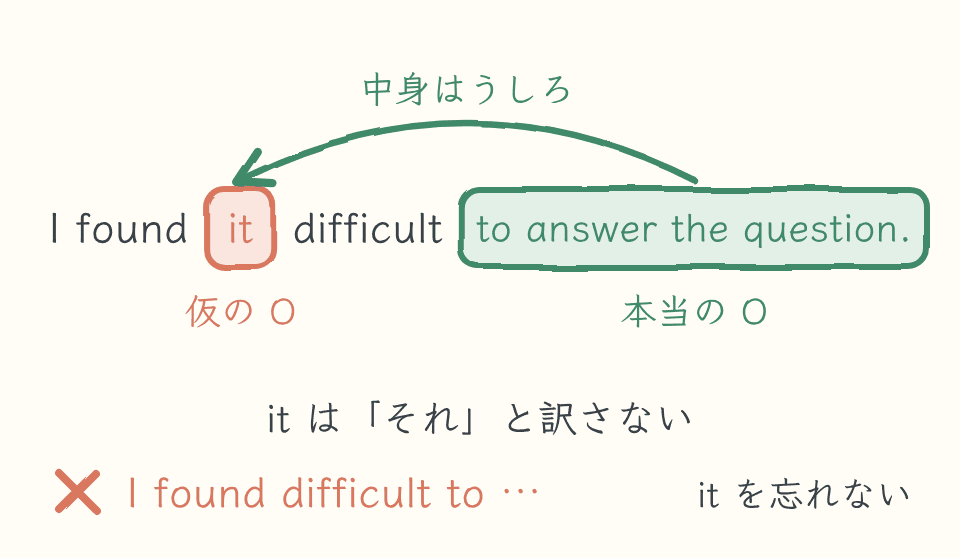
I found it difficult to answer the question.
その質問に答えるのは難しいとわかった。
She makes it a rule to get up at six.
彼女は6時に起きることにしている。
I think it strange that he didn't come.
彼が来なかったのは変だと思う。
Many people take it for granted that clean water is always available.
多くの人は、きれいな水がいつでも手に入るのを当然だと思っている。
The new app makes it easy to pay by phone.
新しいアプリで、スマートフォンでの支払いが簡単になる。
6ニュースの中の代名詞
ニュースでは、each of・neither of で関係する人や会社を1つずつ取り上げたり、that of でくり返しをさけて比べたりする文がよく出てきます。
Neither of the two companies commented on the report.
2つの会社のどちらも、その報道についてコメントしなかった。
Each of the candidates gave a speech in front of the station.
候補者はそれぞれ駅前で演説をした。
This year's rice harvest was larger than that of last year.
今年の米の収穫量は、昨年より多かった。
Officials said they found it hard to predict the storm's path.
当局者は、嵐の進路を予測するのは難しいと述べた。
Some residents left the town, while others decided to stay.
町を離れた住民もいれば、とどまることにした住民もいた。
7よくある間違い
| × まちがい | ○ 正しい形 | ポイント |
|---|---|---|
| I lost my pen, so I bought it. | I lost my pen, so I bought a new one. | なくしたペンそのものは買えない。不特定の1つは one |
| Each students has a locker. | Each student has a locker. | each のあとは単数名詞 |
| Can I have other cup of tea? | Can I have another cup of tea? | 「もう1杯」は another + 単数名詞 |
| I have two sisters; one lives in Tokyo, and another lives in Osaka. | …, and the other lives in Osaka. | 2人のうち残りの1人は the other |
| I found difficult to read this book. | I found it difficult to read this book. | 形式目的語の it を忘れない |
| We enjoyed at the party. | We enjoyed ourselves at the party. | enjoy は目的語が必要 |
8確認問題
( ) に入る語句を書きなさい。I have three pens. One is red, and ( ) are blue.
答えを見る
the others
残り全部(2本)なので the others。
( ) に入る1語を書きなさい。This tea is good. Could I have ( ) cup?
答えを見る
another
並べかえなさい。I ( it / to / found / easy ) use this app.
答えを見る
I found it easy to use this app.
形式目的語の it。
( ) に入る1語を書きなさい。He made the cake by ( ).
答えを見る
himself
by oneself = 1人で、自分だけで。
( ) に入る1語を書きなさい。The climate of Japan is milder than ( ) of Canada.
答えを見る
that
the climate のくり返しをさける。
英語にしなさい。「私の両親のどちらも車を運転しない。」
答えを見る
Neither of my parents drives a car.
話し言葉では drive も使われる。
9ニュースで出てきた代名詞
この単元に関係する英文がニュースに出てきたら、ここに自動で追加されます。