接続詞(unless・whether・同格の that)
接続詞+主語+動詞 で「条件・目的・結果・譲歩・時」を表す/名詞+that =「〜という…」
1従属接続詞とは
従属接続詞は、接続詞+主語+動詞 のかたまり(節)を作り、主節に「条件」「目的」「理由」「譲歩」「時」などの意味をつけ加えます。節は主節の前にも後ろにも置けます。前に置くときはふつうコンマで区切ります。
| 接続詞 | 意味 | 種類 |
|---|---|---|
| whether / if | 〜かどうか | 名詞節 |
| unless | 〜しないかぎり、〜でなければ | 条件 |
| as long as | 〜するかぎりは、〜しさえすれば | 条件 |
| in case | 〜するといけないから、〜に備えて | 条件・用心 |
| so that | 〜するように | 目的 |
| so … that | とても…なので〜 | 結果 |
| though / although | 〜だけれども | 譲歩 |
| even if | たとえ〜だとしても | 譲歩(仮定) |
| while | 〜する間に/〜の一方で | 時・対比 |
| once | いったん〜すると | 時・条件 |
| now that | 今や〜なので | 理由 |
2whether と if(〜かどうか)
whether と if は「〜かどうか」という名詞節を作り、know・ask・wonder などの目的語になります。whether は文の主語や補語にもなりますが、if はふつう動詞の目的語としてだけ使います。
I don't know whether he will come.
彼が来るかどうか、私にはわからない。
Can you tell me if the store is open?
その店が開いているかどうか教えてくれますか。
Whether we win or lose doesn't matter.
勝つか負けるかは問題ではない。
The question is whether the plan will work.
問題は、その計画がうまくいくかどうかだ。
Experts are discussing whether the rule should be changed.
専門家たちは、その規則を変えるべきかどうかを議論している。
「〜かどうか」の名詞節は、未来のことなら will を使います(I don't know whether he will come.)。条件の if(もし〜なら)の節で未来のことでも現在形を使うのとちがうので注意しましょう。また、whether or not とは言えますが、× if or not とは言いません。
3条件を表す unless・as long as・in case
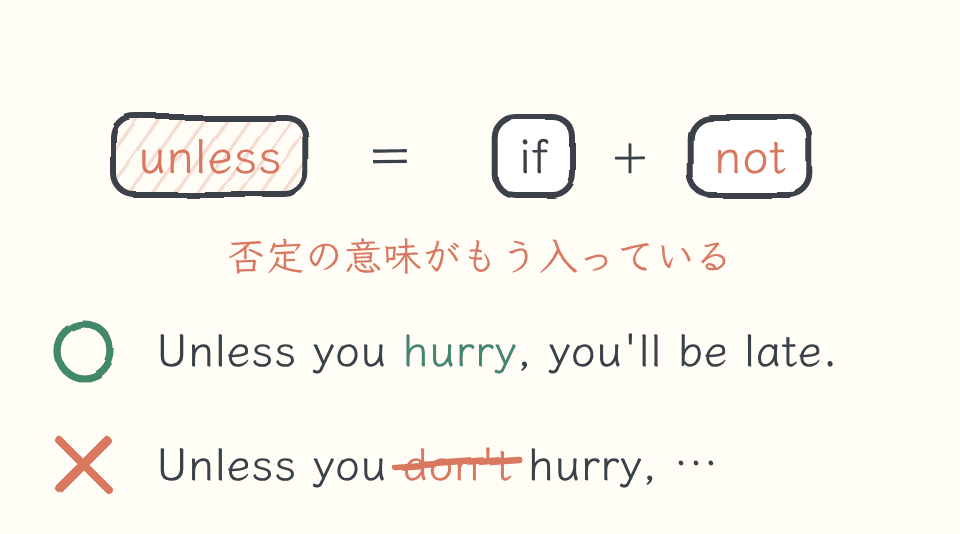
unless は「〜しないかぎり」で、それ自体に否定の意味がふくまれます。as long as は「〜しさえすれば」という条件、in case は「〜するといけないから(備えて)」という用心を表します。どれも未来のことでも節の中は現在形にします。
You won't pass the test unless you study harder.
もっと一生懸命勉強しないと、テストに合格しないだろう。
Unless it rains, the game will be held tomorrow.
雨が降らなければ、試合は明日行われる。
You can stay here as long as you keep quiet.
静かにしているなら、ここにいてかまいません。
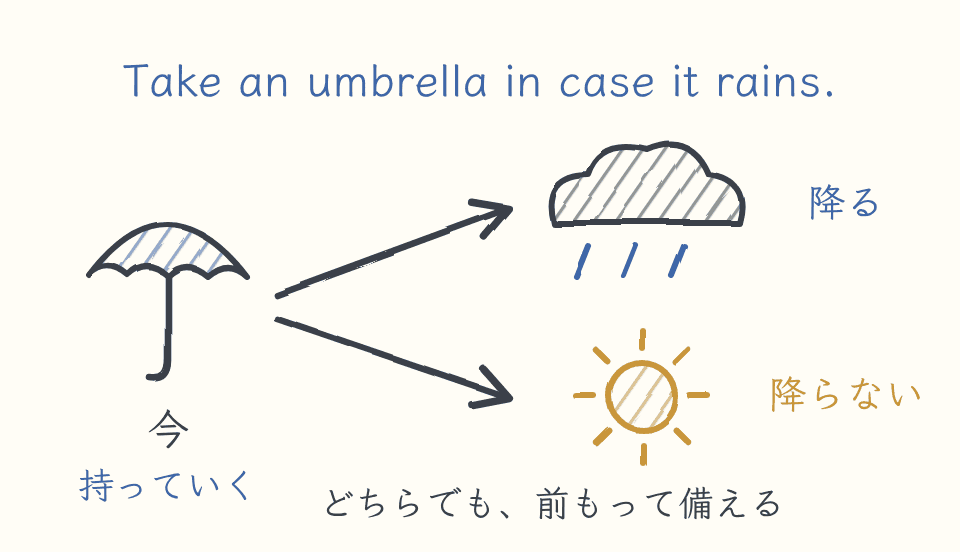
Take an umbrella in case it rains.
雨が降るといけないので、かさを持っていきなさい。
Write down the number in case you forget it.
忘れるといけないから、その番号を書きとめておきなさい。
Trains will run as usual as long as the snow does not get heavier.
雪が強まらないかぎり、電車は通常どおり運行する見込みだ。
in case は「もし〜なら」ではなく、「〜する場合に備えて(前もって)」という意味です。Take an umbrella in case it rains. は、雨が降っても降らなくても、今かさを持っていくということです。
4目的と結果:so that と so … that
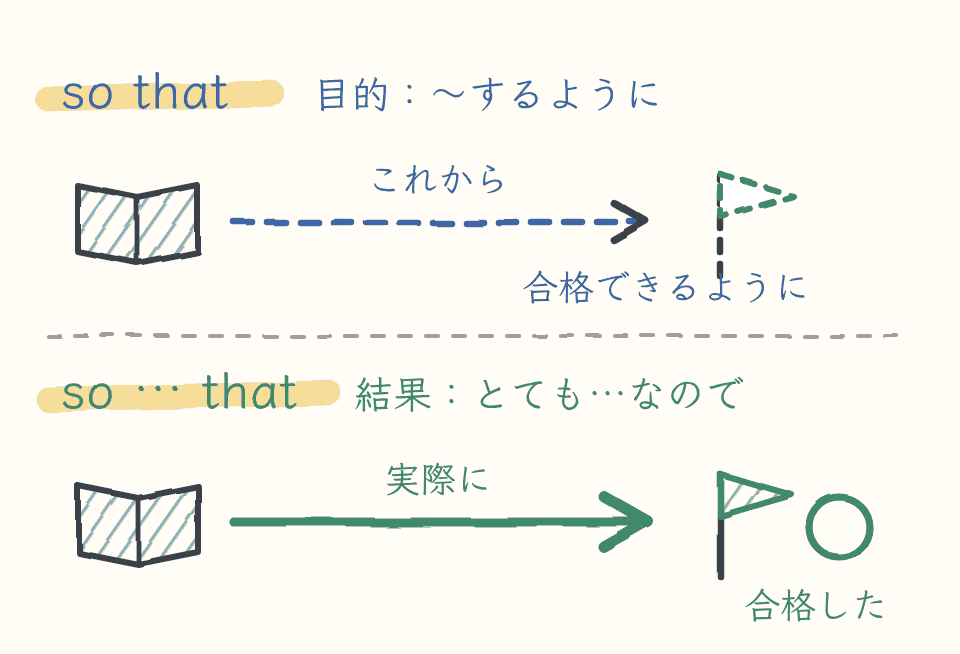
so that S can / will 〜 は「〜するように」という目的を表します。so + 形容詞(副詞)+ that は「とても…なので〜」という結果を表します。名詞をふくむときは such (a) + 形容詞 + 名詞 + that を使います。
| 形 | 意味 | 例 |
|---|---|---|
| so that S can / will / could / would 〜 | 〜するように(目的) | so that everyone could understand |
| so + 形容詞・副詞 + that 〜 | とても…なので〜(結果) | so heavy that I couldn't carry it |
| such (a) + 形容詞 + 名詞 + that 〜 | とても…な〜なので(結果) | such a nice day that we went out |
She spoke slowly so that everyone could understand her.
みんなが理解できるように、彼女はゆっくり話した。
I left early so that I wouldn't miss the train.
電車に乗り遅れないように、私は早く出発した。
The box was so heavy that I couldn't carry it.
箱はとても重かったので、私は運べなかった。
It was such a nice day that we went on a picnic.
とてもよい天気だったので、私たちはピクニックに行った。
He studied hard so that he could pass the exam.
彼は試験に合格できるように一生懸命勉強した。
He studied so hard that he passed the exam.
彼はとても一生懸命勉強したので、試験に合格した。
5譲歩・対比・時:though・even if・while・once・now that
though(although)と even though は「〜だけれども」で、事実について言います。even if は「たとえ〜だとしても」で、本当かどうかわからないこと(仮定)について言います。
Though it was raining, they played soccer.
雨が降っていたけれど、彼らはサッカーをした。
Even though he was tired, he kept working.
彼は疲れていたのに、働き続けた。
Even if it rains tomorrow, the event will go ahead.
たとえ明日雨が降っても、イベントは予定どおり行われる。
while は「〜する間に」のほか、「〜の一方で」という対比も表します。once は「いったん〜すると」、now that は「今や〜なので」という意味です。
While I was cooking, the phone rang.
料理をしている間に、電話が鳴った。
Some people like summer, while others prefer winter.
夏が好きな人もいれば、冬のほうが好きな人もいる。
Once you start, you can't stop.
いったん始めたら、やめられない。
Now that the exams are over, I can relax.
試験が終わったので、もうのんびりできる。
Now that the bridge has reopened, traffic is moving smoothly again.
橋が再開したので、交通は再びスムーズに流れている。
6同格の that
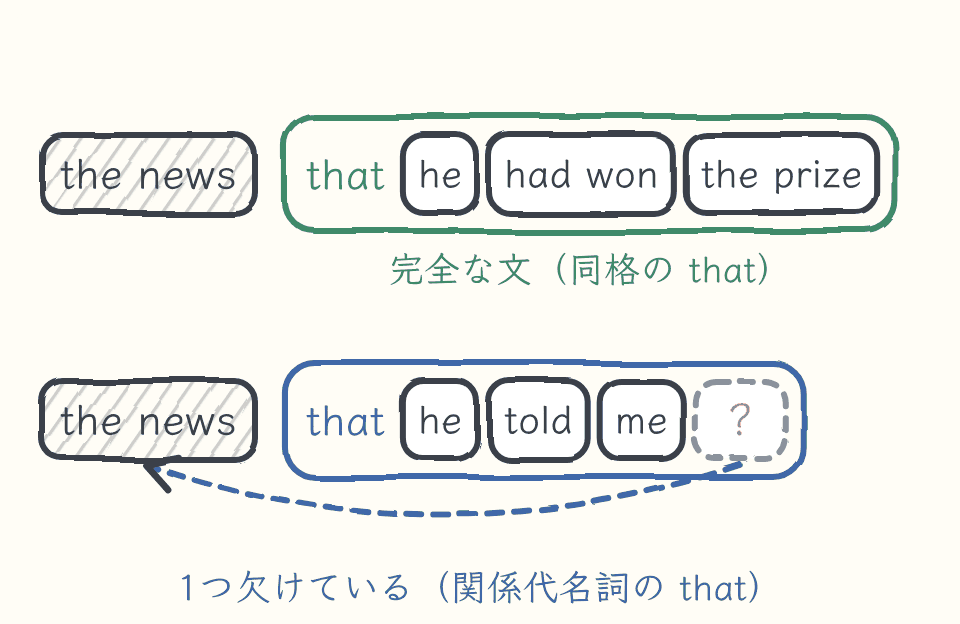
名詞 + that 節 で「〜という(名詞)」と、名詞の中身を説明する使い方を同格の that といいます。that のあとには、主語も目的語もそろった完全な文が続きます。この点が、あとの文に名詞が1つ欠けている関係代名詞の that とのちがいです。
| よく使われる名詞 | 意味 |
|---|---|
| the fact that 〜 | 〜という事実 |
| the news that 〜 | 〜という知らせ |
| the idea that 〜 | 〜という考え |
| the possibility that 〜 | 〜という可能性 |
| the rumor that 〜 | 〜といううわさ |
| the belief that 〜 | 〜という信念 |
I was surprised at the news that he had won the prize.
彼がその賞をとったという知らせに私は驚いた。
There is a possibility that the meeting will be canceled.
会議が中止になる可能性がある。
The fact that she lied made me sad.
彼女がうそをついたという事実が、私を悲しませた。
The rumor that the store would close turned out to be false.
その店が閉店するといううわさは、うそだとわかった。
The news that he had won the prize surprised everyone.
彼がその賞をとったという知らせは、みんなを驚かせた。
The news that he told me surprised everyone.
彼が私に話した知らせは、みんなを驚かせた。
7よくある間違い
| × まちがい | ○ 正しい形 | ポイント |
|---|---|---|
| Unless you don't hurry, you'll be late. | Unless you hurry, you'll be late. | unless に否定の意味がふくまれている |
| Take an umbrella in case it will rain. | Take an umbrella in case it rains. | in case の節は未来でも現在形 |
| I don't know if or not he will come. | I don't know whether or not he will come. | if or not とは言わない |
| If he comes or not is not important. | Whether he comes or not is not important. | 文の主語になるのは whether |
| It was so a nice day that we went out. | It was such a nice day that we went out. | a + 形容詞 + 名詞 なら such |
| Despite it was raining, they played. | Though it was raining, they played. | despite は前置詞。節は続けられない |
8確認問題
( ) に入る1語を書きなさい。You'll miss the bus ( ) you leave now.
答えを見る
unless
「今出発しないと」。
in case を使って1文にしなさい。Take a map. You may get lost.
答えを見る
Take a map in case you get lost.
並べかえなさい。She saved money ( could / so / buy / she / that ) a new bike.
答えを見る
She saved money so that she could buy a new bike.
誤りを直しなさい。It was so cold day that we stayed home.
答えを見る
It was such a cold day that we stayed home.
It was so cold that we stayed home. でも正解。
日本語にしなさい。Now that you are eighteen, you can vote.
答えを見る
あなたはもう18歳なのだから、投票できます。
英語にしなさい。「私は彼が無事だという知らせを聞いた。」
答えを見る
I heard the news that he was safe.
同格の that。
9ニュースで出てきた接続詞
この単元に関係する英文がニュースに出てきたら、ここに自動で追加されます。