不定詞
to + 動詞の原形 = 意味上の主語・完了不定詞・too 〜 to / enough to
1不定詞の3つの用法(復習)
不定詞〈to + 動詞の原形〉には、名詞・形容詞・副詞の働きをする3つの用法があります。副詞的用法は、目的のほかに、感情の原因や結果も表します。
| 用法 | 働き | 例 |
|---|---|---|
| 名詞的用法 | 〜すること | My dream is to become a doctor. |
| 形容詞的用法 | 〜するための・〜すべき | I have a lot of homework to do. |
| 副詞的用法(目的) | 〜するために | She went to the station to meet her aunt. |
| 副詞的用法(感情の原因) | 〜して(うれしい など) | I'm glad to hear that. |
| 副詞的用法(結果) | (その結果)〜する | He grew up to be a famous pianist. |
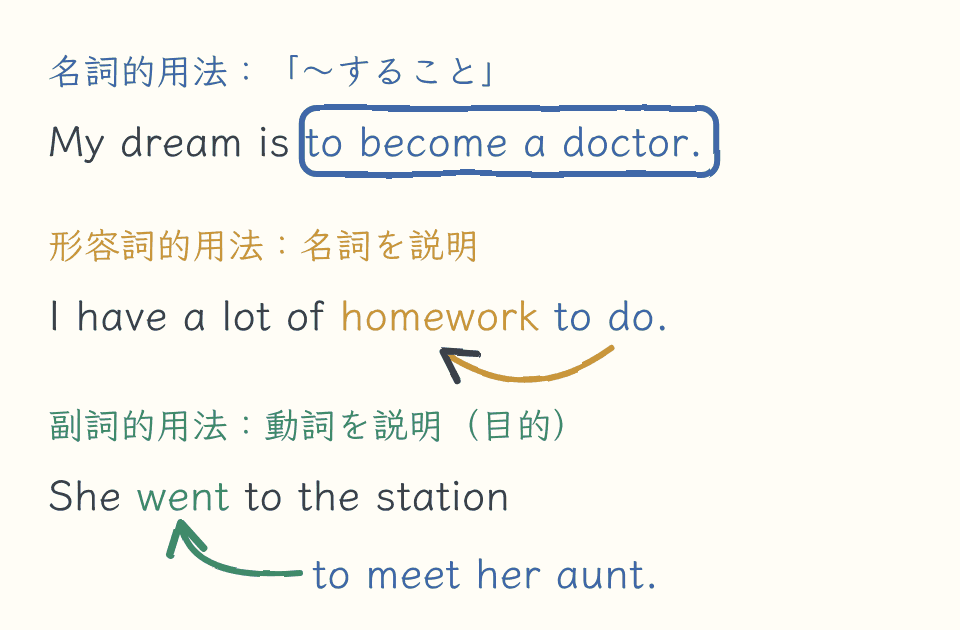
My dream is to become a doctor.
私の夢は医者になることです。
I have a lot of homework to do.
私にはやるべき宿題がたくさんある。
I'm glad to hear that.
それを聞いてうれしいです。
He grew up to be a famous pianist.
彼は成長して有名なピアニストになった。
2It is … (for 人) to 〜 と of 人
長い不定詞を主語にするかわりに It を置き、不定詞を後ろに回します。だれがするか(意味上の主語)は for 人 で示します。ただし、kind(親切な)や careless(不注意な)など、人の性質を表す形容詞のときは of 人 を使います。
| for 人 を使う形容詞 | of 人 を使う形容詞 |
|---|---|
| important, necessary, easy, difficult, possible | kind, nice, careless, foolish, wise, rude |
It is important for us to learn English.
私たちが英語を学ぶことは大切です。
It is difficult for children to understand this rule.
子どもがこのきまりを理解するのはむずかしい。
It was kind of you to help me.
手伝ってくれてありがとう(親切でしたね)。
It was careless of me to leave my umbrella on the train.
電車にかさを置き忘れるなんて、私は不注意だった。
3too 〜 to …/〜 enough to …
〈too + 形容詞 + to 〜〉は「…すぎて〜できない」、〈形容詞 + enough to 〜〉は「〜できるほど…だ」です。enough は形容詞の後ろに置きます。
This box is too heavy for me to carry.
この箱は重すぎて私には運べない。
This box is so heavy that I can't carry it.
この箱はとても重いので、私には運べない。
She is old enough to drive.
彼女は運転できる年齢だ。
He was kind enough to show me the way.
彼は親切にも道を教えてくれた。
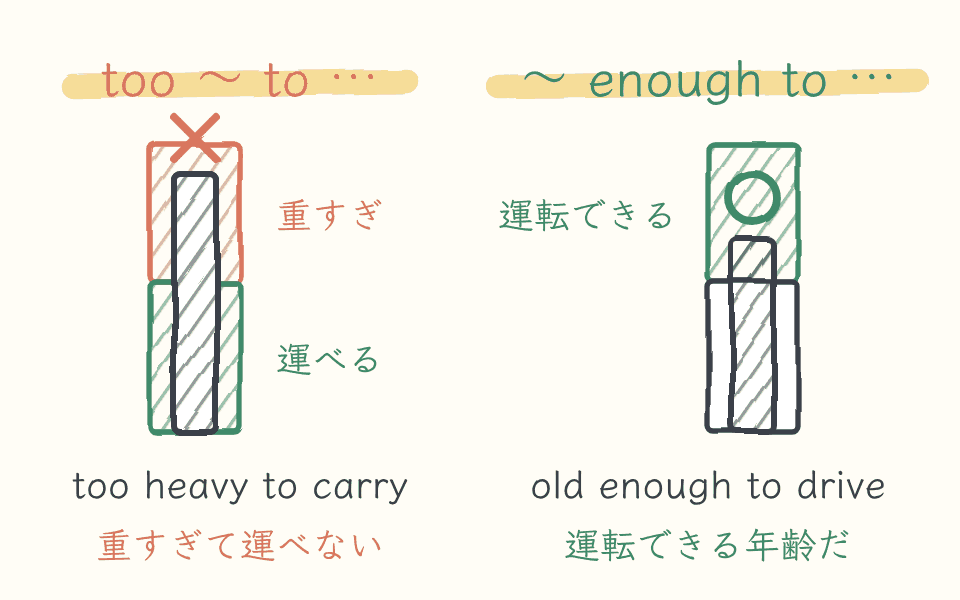
too 〜 to … の文で、この例のように文の主語が to のあとの動詞の目的語になるときは、it をつけません。× This box is too heavy to carry it.
4完了不定詞
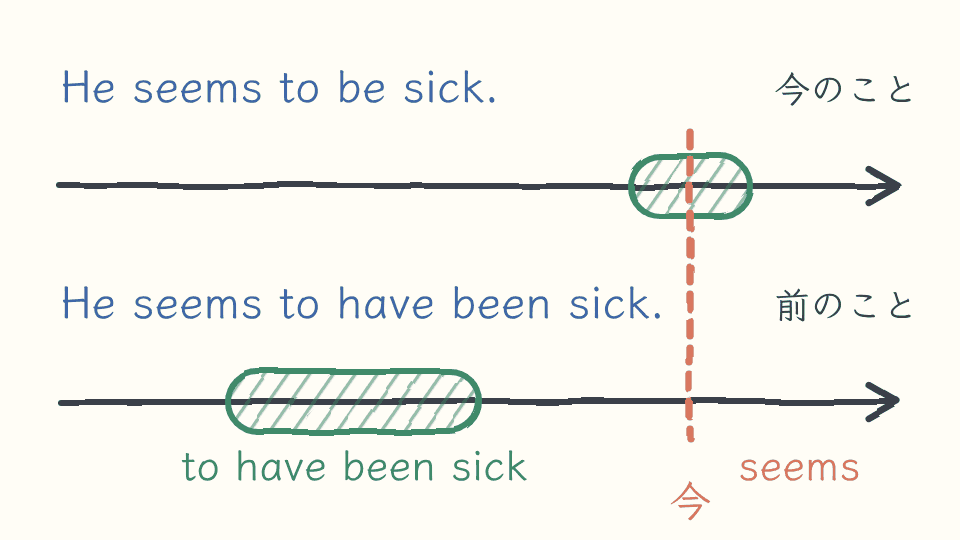
〈to have + 過去分詞〉は、文の動詞より前の時を表します。seem(〜のようだ)や be said to(〜と言われている)とよくいっしょに使います。
He seems to be sick.
彼は(今)病気のようだ。
He seems to have been sick.
彼は(以前)病気だったようだ。
She is said to have lived in Paris.
彼女はパリに住んでいたと言われている。
The fire is believed to have started in the kitchen.
火事は台所から出たとみられている。
5動詞 + 人 + to 〜
〈動詞 + 人 + to 〜〉で「人に〜するように…する」「人が〜することを…する」を表します。ニュースでは allow、force、encourage などがよく使われます。
| 動詞 | 意味 |
|---|---|
| allow 人 to 〜 | 人が〜することを許す・可能にする |
| force 人 to 〜 | 人に(むりに)〜させる |
| encourage 人 to 〜 | 人に〜するようすすめる・はげます |
| expect 人 to 〜 | 人が〜すると予想する・期待する |
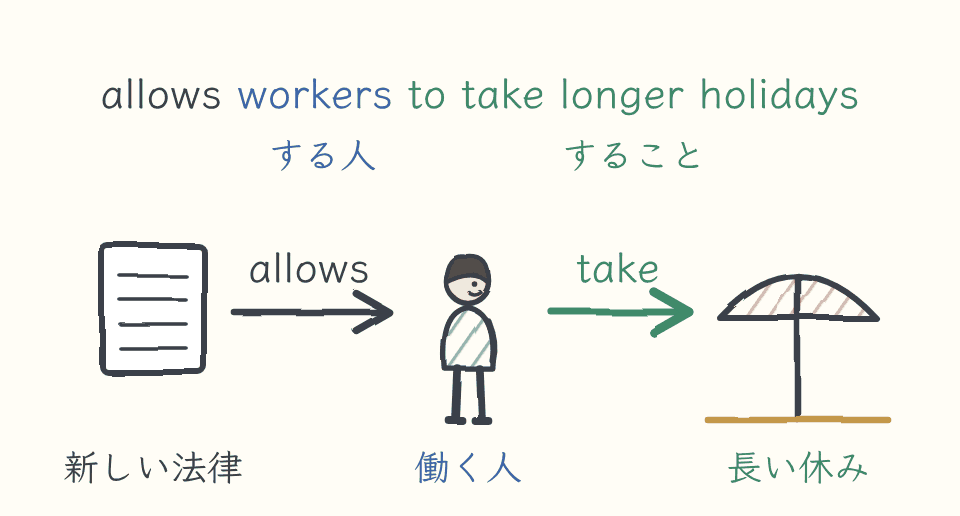
The new law allows workers to take longer holidays.
新しい法律で、働く人はより長い休みがとれるようになる。
The heavy rain forced the organizers to cancel the event.
大雨のため、主催者はイベントを中止せざるをえなかった。
Experts expect prices to rise next year.
専門家は来年、物価が上がると予想している。
6不定詞を使った決まった表現
不定詞を否定するときは、to の直前に not を置きます。また、文全体にかかる決まった言い方も覚えておきましょう。
I got up early so as not to miss the train.
電車に乗りおくれないように早く起きた。
To tell the truth, I forgot about the test.
実を言うと、テストのことを忘れていた。
I happened to meet an old friend at the station.
駅でたまたま昔の友だちに会った。
- to tell the truth(実を言うと)
- to be honest(正直に言うと)
- needless to say(言うまでもなく)
- to begin with(まず第一に)
- so as to 〜 / in order to 〜(〜するために)
7よくある間違い
| × | ○ | ポイント |
|---|---|---|
| This box is too heavy to carry it. | This box is too heavy to carry. | 主語が carry の目的語なので it はいらない |
| It was kind for you to help me. | It was kind of you to help me. | 人の性質を表す形容詞は of 人 |
| He is enough old to drive. | He is old enough to drive. | enough は形容詞の後ろ |
| I went to the store for buying milk. | I went to the store to buy milk. | 目的は不定詞で表す |
| She seems to be sick yesterday. | She seems to have been sick yesterday. | 前のことは完了不定詞 |
8確認問題
( )に入る語を選びなさい。It was very nice( for / of )you to invite me.
答えを見る
of
nice は人の性質を表すので of 人 です。
( )に入る語を入れなさい。This tea is( )hot to drink.(熱すぎて飲めない)
答えを見る
too
too 〜 to … で「…すぎて〜できない」です。
並べかえなさい。He is( enough / to / tall / reach )the shelf.
答えを見る
He is tall enough to reach the shelf.
形容詞 + enough to 〜 の語順です。
ほぼ同じ意味になるように書きかえなさい。It seems that he was busy last week. → He seems( )( )( )busy last week.
答えを見る
to have been
文の動詞より前のことなので完了不定詞にします。
英語にしなさい。「おくれないように、私はタクシーに乗った。」(so as not to を使って)
答えを見る
I took a taxi so as not to be late.
not は to の直前に置きます。
9ニュースで出てきた不定詞
この単元に関係する英文がニュースに出てきたら、ここに自動で追加されます。