分詞構文の使い分け
分詞構文 = 〜ing・過去分詞で、時・理由・結果・様子を1文にまとめる
1分詞構文の基本と読み方
分詞構文は、〜ing(現在分詞)や過去分詞で始まる語句で、接続詞と主語を使わずに文に情報を足す形です。意味(時・理由・様子・結果など)は接続詞がないので、前後の内容から判断します。分詞の意味上の主語は、ふつう主節の主語と同じです。
| 意味 | 分詞構文 | 接続詞を使って書くと |
|---|---|---|
| 時 | Walking along the river, I met an old friend. | While I was walking along the river, … |
| 理由 | Feeling tired, she went to bed early. | Because she felt tired, … |
| 様子(付帯状況) | He sat on the bench, reading a newspaper. | … and he was reading a newspaper. |
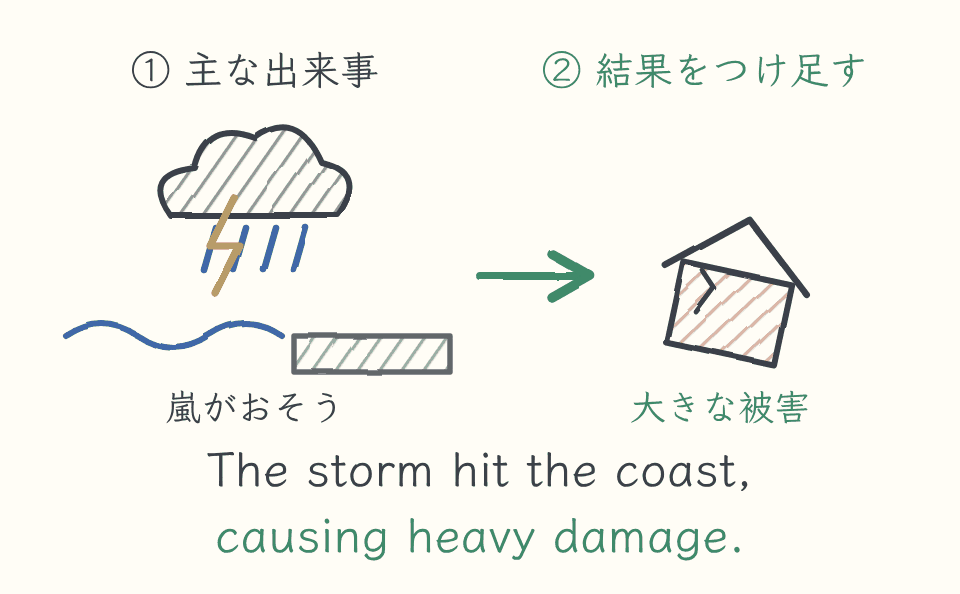
| 結果 | The storm hit the coast, causing heavy damage. | … and it caused heavy damage. |
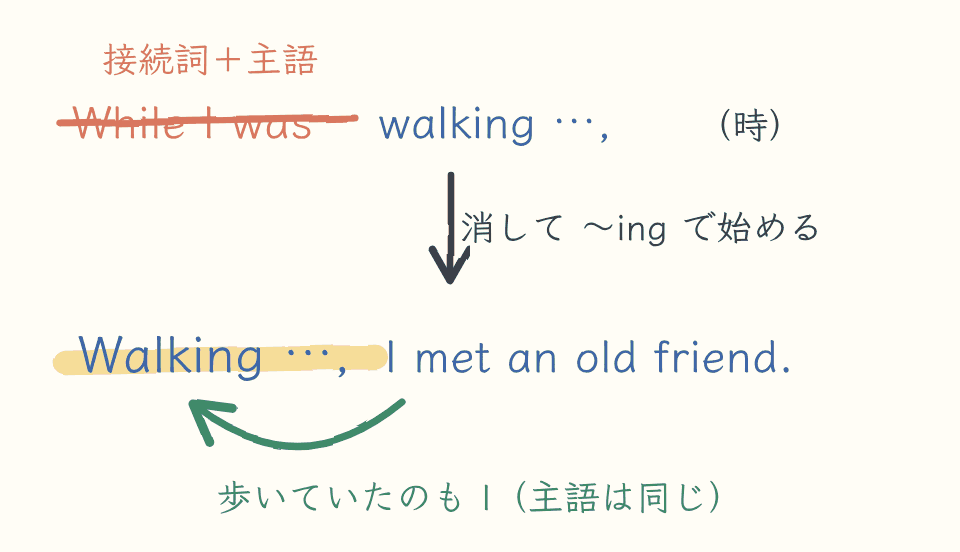
Walking along the river, I met an old friend.
川沿いを歩いていると、古い友人に会った。
Feeling tired, she went to bed early.
疲れていたので、彼女は早く寝た。
2文末の分詞構文(結果・様子)
報道では、主な出来事を先に言い、そのあとに分詞構文で結果や様子をつけ足す形がよく使われます。「〜し、…した」「〜して、…しながら」と、前から順に読みます。〈, saying 〜〉は「〜と述べて」「〜として」と理由や発言を足す形です。
The storm hit the coast, causing heavy damage.
嵐は沿岸をおそい、大きな被害をもたらした。
Prices rose for the third month in a row, reaching a record high.
物価は3か月連続で上がり、過去最高に達した。
The company cut 500 jobs, saying demand had fallen.
その会社は、需要が落ちたとして500人分の人員を削減した。
Thousands of fans waited outside the stadium, holding signs.
何千人ものファンが、プラカードを持ってスタジアムの外で待った。
The yen fell sharply, making imported goods more expensive.
円が大きく下がり、輸入品が値上がりした。
3文頭の分詞構文と過去分詞
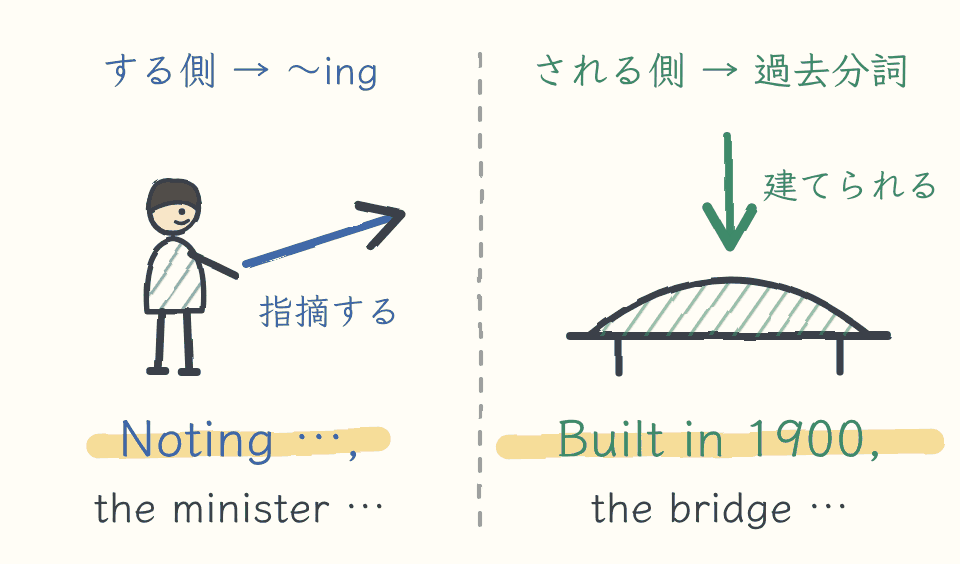
文頭の分詞構文は、主節の前に状況や理由を示します。主語が「〜される」側なら、過去分詞で始めます(Faced with 〜 = When it was faced with 〜)。
Noting that energy use is rising, the minister called for action.
エネルギー使用が増えていると指摘したうえで、大臣は対策を求めた。
Faced with criticism, the company changed its plan.
批判を受けて、その会社は計画を変えた。
Built in 1900, the bridge needs major repairs.
1900年に建てられたその橋は、大規模な修理が必要だ。
Asked about the delay, a spokesperson declined to comment.
遅れについて聞かれ、広報担当者はコメントを控えた。
4完了形と否定の分詞構文
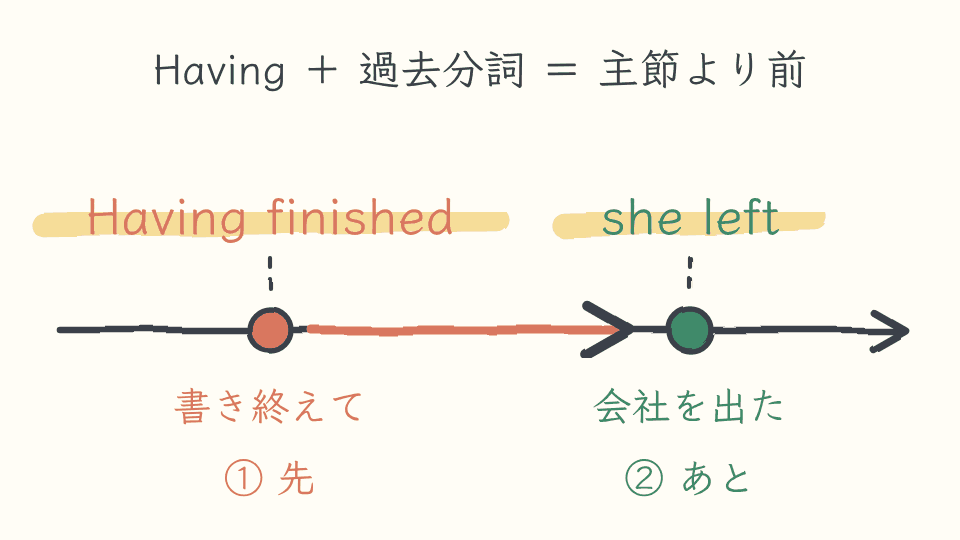
主節より前に起きたことは〈Having + 過去分詞〉で表します。否定は分詞の前に not を置きます。
| 形 | 例 | 意味 |
|---|---|---|
| Having + 過去分詞 | Having finished the report, … | 報告書を書き終えてから(主節より前) |
| Not + 〜ing | Not knowing what to do, … | どうしたらいいかわからなかったので |
| Having been + 過去分詞 | Having been told the news, … | その知らせを聞かされていたので |
Having finished the report, she left the office.
報告書を書き終えて、彼女は会社を出た。
Not knowing what to do, he called his manager.
どうしたらいいかわからず、彼は上司に電話した。
Having lived in Osaka for ten years, he knows the city well.
大阪に10年住んでいたので、彼はその街をよく知っている。
5独立分詞構文・with の形・慣用表現
分詞の意味上の主語が主節の主語とちがうときは、分詞の前にその主語を置きます(独立分詞構文)。〈with + 名詞 + 分詞〉は「〜を…した状態で」と様子を表します。また、主語に関係なく使う慣用的な言い方もあります。
Weather permitting, the event will be held outdoors.
天気がよければ、イベントは屋外で行われる。
All things considered, the project was a success.
すべてを考えると、その計画は成功だった。
The train being delayed, we took a taxi.
電車が遅れていたので、私たちはタクシーに乗った。
He gave the speech with his hands shaking.
彼は手をふるわせながらスピーチをした。
She listened with her eyes closed.
彼女は目を閉じて聞いた。
- generally speaking(一般的に言えば)
- judging from 〜(〜から判断すると)
- considering 〜(〜を考えると)
- given 〜(〜を考慮すると)
- based on 〜(〜にもとづいて)
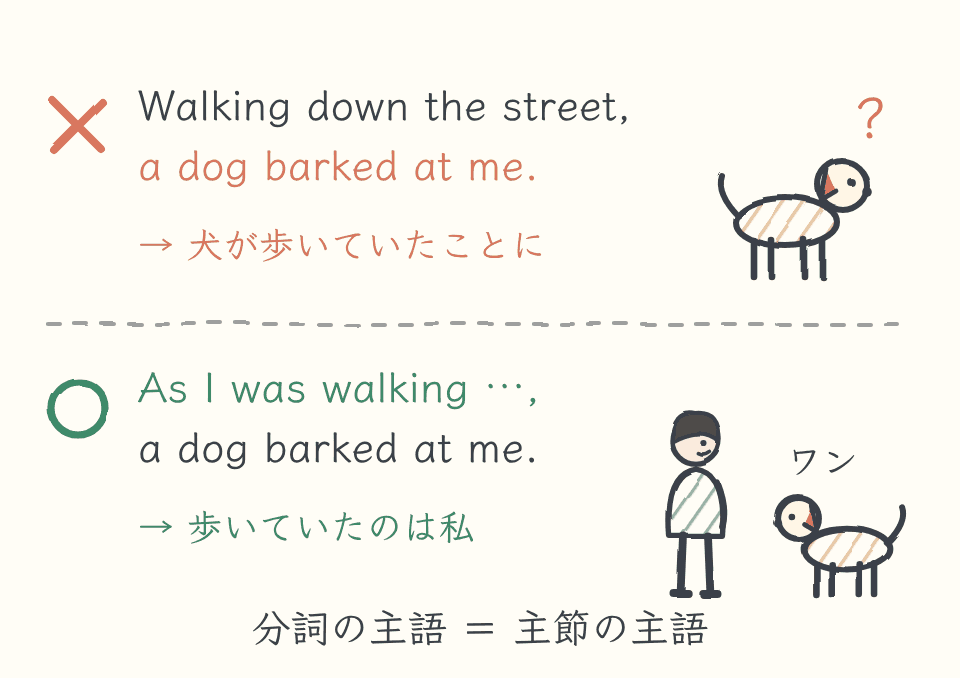
6よくある間違い(主語のずれ)
分詞構文の意味上の主語は、主節の主語と同じでなければなりません。ずれていると、おかしな意味になります。
| × | ○ | ポイント |
|---|---|---|
| Walking down the street, a dog barked at me. | As I was walking down the street, a dog barked at me. | 犬が歩いていたことになってしまう |
| Built in 1900, people still use the bridge. | Built in 1900, the bridge is still in use. | 建てられたのは橋なので、橋を主語に |
| Knowing not what to do, he called his manager. | Not knowing what to do, he called his manager. | not は分詞の前 |
| With his hands shake, he gave the speech. | With his hands shaking, he gave the speech. | with + 名詞 + 分詞 |
7確認問題
( ) tired, I went to bed early.(feel)
答えを見る
Feeling
( ) in 1900, the building is very old.(build)
答えを見る
Built
建物は「建てられた」側なので過去分詞です。
( ) ( ) what to say, she remained silent.(何と言えばいいかわからず)
答えを見る
Not knowing
分詞構文に書きかえる:After he had finished his work, he went home.
答えを見る
Having finished his work, he went home.
和訳:The earthquake hit the region, destroying many houses.
答えを見る
地震がその地域をおそい、多くの家が壊れた。
8ニュースで出てきた分詞構文の使い分け
この単元に関係する英文がニュースに出てきたら、ここに自動で追加されます。