名詞構文
名詞のかたまりを〈主語+動詞〉に直して読む
1名詞構文とは
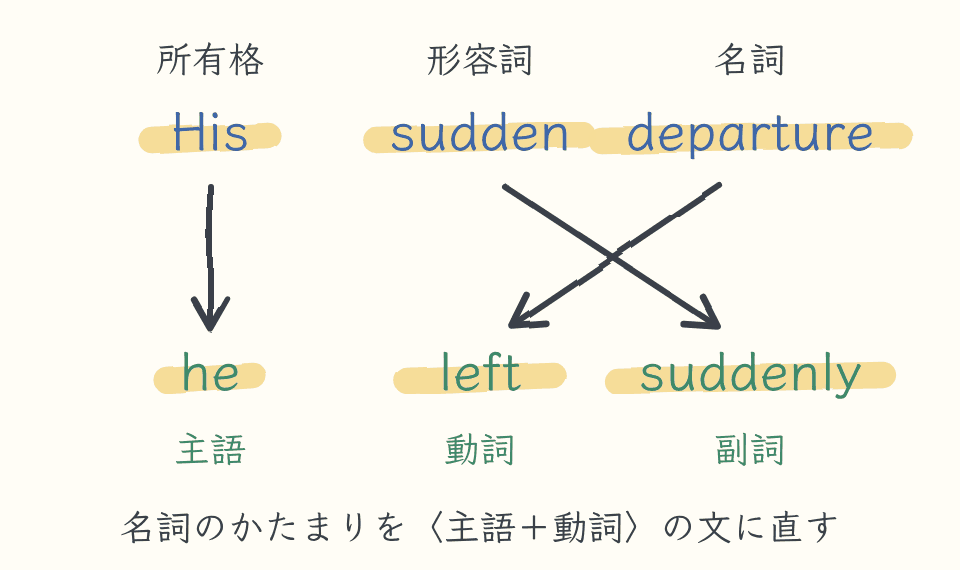
英語、とくにニュースや論説では、動詞や形容詞を名詞にした形で内容をまとめて言うことがよくあります。〈主語 + 動詞〉の文に直すと、意味がつかみやすく、自然な日本語にできます。
His sudden departure surprised us.
彼が突然去ったので、私たちは驚いた。
We were surprised because he left suddenly.
彼が突然去ったので、私たちは驚いた。
| 名詞の表現 | 文に直すと | 意味 |
|---|---|---|
| his arrival | he arrived | 彼が到着したこと |
| the rise in prices | prices rose | 物価が上がったこと |
| her ability to speak French | she can speak French | 彼女がフランス語を話せること |
2動詞から名詞へ
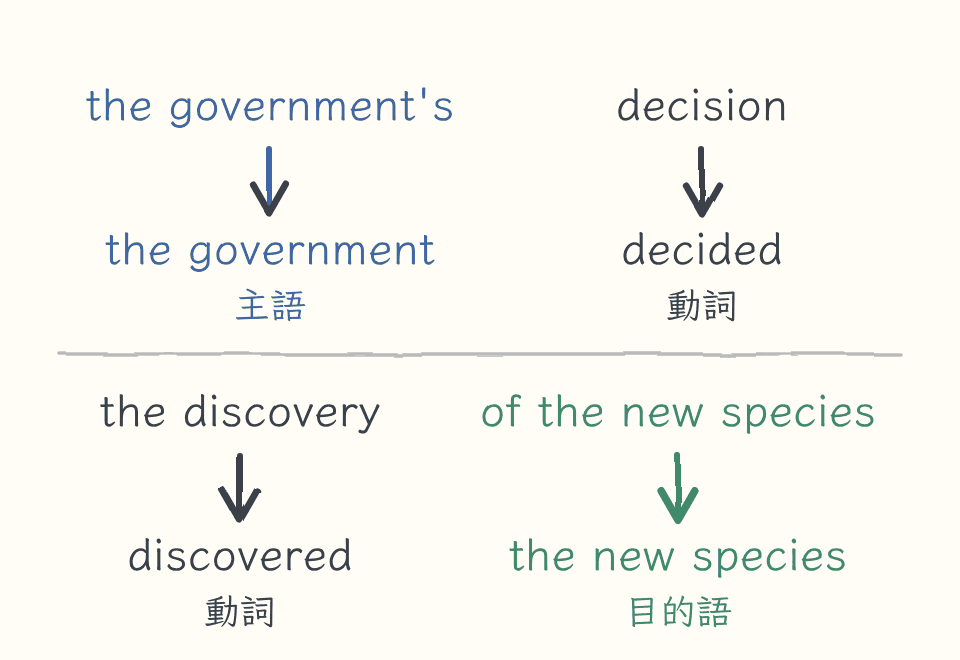
名詞の前の所有格(〜's, his など)は主語、名詞のあとの of 〜 は目的語にあたることが多いです。形容詞は副詞に直して考えます(his sudden departure → he left suddenly)。
| 動詞 | 名詞 |
|---|---|
| arrive(到着する) | arrival |
| decide(決める) | decision |
| discover(発見する) | discovery |
| grow(成長する) | growth |
| fail(失敗する) | failure |
| refuse(断る) | refusal |
Many people were surprised by the government's decision.
政府の決定に、多くの人が驚いた。
The discovery of the new species was reported in a science journal.
その新種が発見されたことが、科学雑誌で報じられた。
The rise in prices worries many families.
物価が上がっていることが、多くの家庭を心配させている。
Japan's population decline is a serious problem.
日本の人口が減っていることは、深刻な問題だ。
The growth of online shopping has changed our lives.
ネットショッピングが広まって、私たちの生活は変わった。
3形容詞から名詞へ
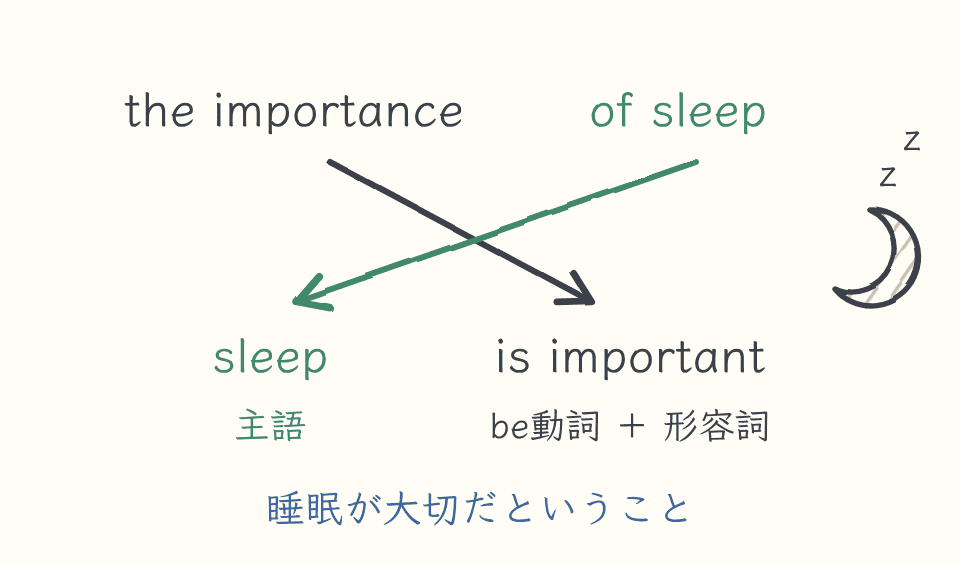
形容詞を名詞にした形は、〈主語 + be動詞 + 形容詞〉に直して読みます。
| 形容詞 | 名詞 | 文に直すと |
|---|---|---|
| able(できる) | ability | her ability to swim → she is able to swim |
| kind(親切な) | kindness | his kindness → he is kind |
| important(大切な) | importance | the importance of sleep → sleep is important |
| difficult(難しい) | difficulty | the difficulty of the test → the test is difficult |
Her ability to speak French helped her get the job.
彼女はフランス語が話せたので、その仕事につけた。
I was surprised at his kindness.
彼がとても親切だったので驚いた。
The importance of sleep is often forgotten.
睡眠が大切だということは、忘れられがちだ。
4「〜する人」の名詞で動作を表す
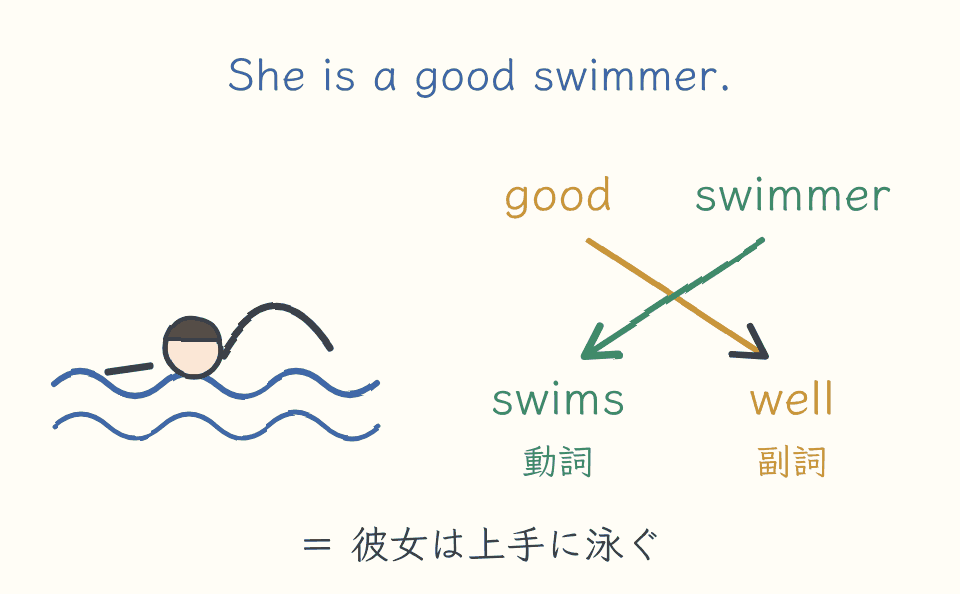
a good swimmer(上手に泳ぐ人)のように、〈形容詞 + 「〜する人」の名詞〉で、その人の動作のしかたを表します。〈主語 + 動詞 + 副詞〉に直すと意味がわかります。
She is a good swimmer.
彼女は泳ぎがうまい。(= She swims well.)
My father is an early riser.
父は早起きだ。(= He gets up early.)
He is a careful driver.
彼は注意深く運転する。(= He drives carefully.)
Tom is a fast learner.
トムは覚えるのが速い。(= He learns fast.)
5〈have / take / make + a + 名詞〉
動詞1語で言える動作を、〈have / take / make + a + 名詞〉で言うことがあります。名詞の前に形容詞をつけて、くわしく言えるのが特徴です。
Let's take a break.
ひと休みしよう。
I had a long talk with my friend.
私は友だちと長く話した。
She made a speech at the ceremony.
彼女は式でスピーチをした。
6よくある間違い
| × | ○ | ポイント |
|---|---|---|
| his arrive at the station | his arrival at the station | 所有格のあとは名詞 |
| Her able to speak French helped her. | Her ability to speak French helped her. | 形容詞 able の名詞は ability |
| She is a good swimming. | She is a good swimmer. | 「〜する人」の名詞を使う |
| (訳)彼の突然の出発が私たちを驚かせた。 | (訳)彼が突然去ったので、私たちは驚いた。 | 〈主語+動詞〉に直して訳すと自然 |
7確認問題
〈主語+動詞〉の文に直す:his arrival at the station
答えを見る
he arrived at the station
He made a quick ( ).(decide を名詞に)
答えを見る
decision
She is a good ( ).(= She cooks well.)
答えを見る
cook
cooker は「調理器具」の意味なので、人には使いません。
自然な日本語に:The growth of tourism has helped the town.
答えを見る
観光業が成長したおかげで、その町は助かっている。
英訳:彼は早起きだ。(riser を使って)
答えを見る
He is an early riser.
8ニュースで出てきた名詞構文
この単元に関係する英文がニュースに出てきたら、ここに自動で追加されます。