be動詞
am / are / is =「〜です」「〜にいる・ある」
1be動詞とは
be動詞は、主語と後ろの語をイコールでつなぐ働きをします。「AはBです」という文の「です」にあたる語で、am・are・is の3つがあります。
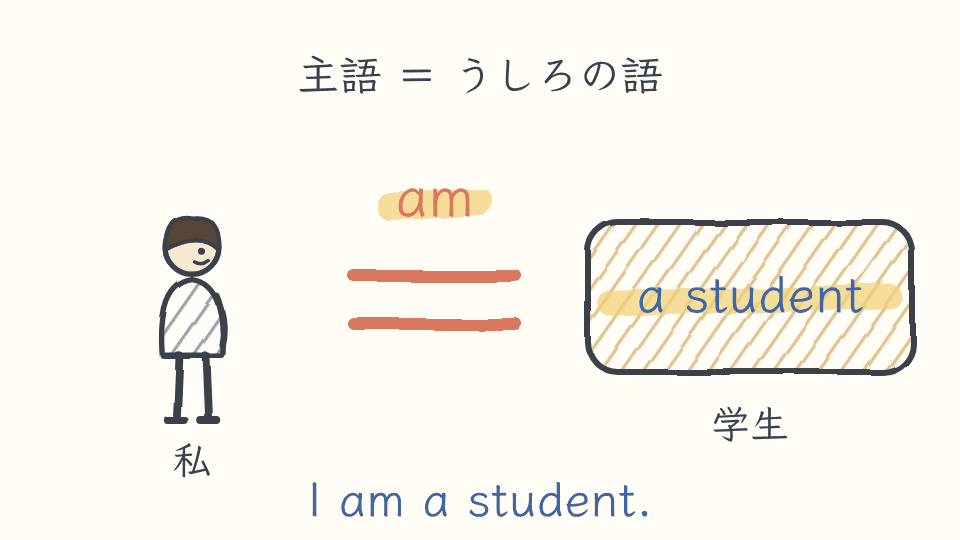
I am a student.
私は学生です。
This is my bag.
これは私のかばんです。
Ms. Sato is our English teacher.
佐藤先生は私たちの英語の先生です。
be動詞のあとには、名詞(student、bag など)だけでなく、様子を表す語(happy、busy、tall など)も置けます。
I am happy.
私はうれしいです。
You are kind.
あなたは親切です。
2主語による使い分け
be動詞は、主語によって形が決まっています。主語が1人・1つなら am か is、2人・2つ以上なら are です(you は1人でも are)。Ken and Aya のように2人の名前をつないだ主語も、複数なので are を使います。
| 主語 | be動詞 | 短縮形 |
|---|---|---|
| I | am | I'm |
| you(あなた・あなたたち) | are | you're |
| we, they(複数) | are | we're, they're |
| he, she, it(3人称単数) | is | he's, she's, it's |
| Ken, my father, this など(1人・1つ) | is | (that is → that's) |
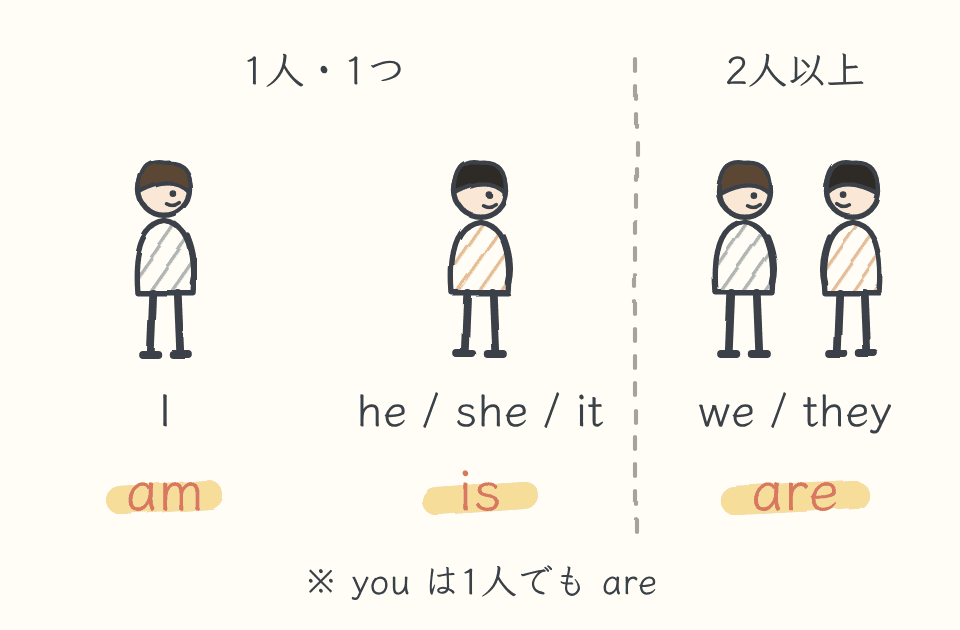
I'm from Japan.
私は日本の出身です。
He is my brother.
彼は私の兄(弟)です。
We are classmates.
私たちはクラスメートです。
Ken and Aya are in the same class.
ケンとアヤは同じクラスです。
My father is a doctor.
父は医者です。
3「〜です」と「〜にいる・ある」
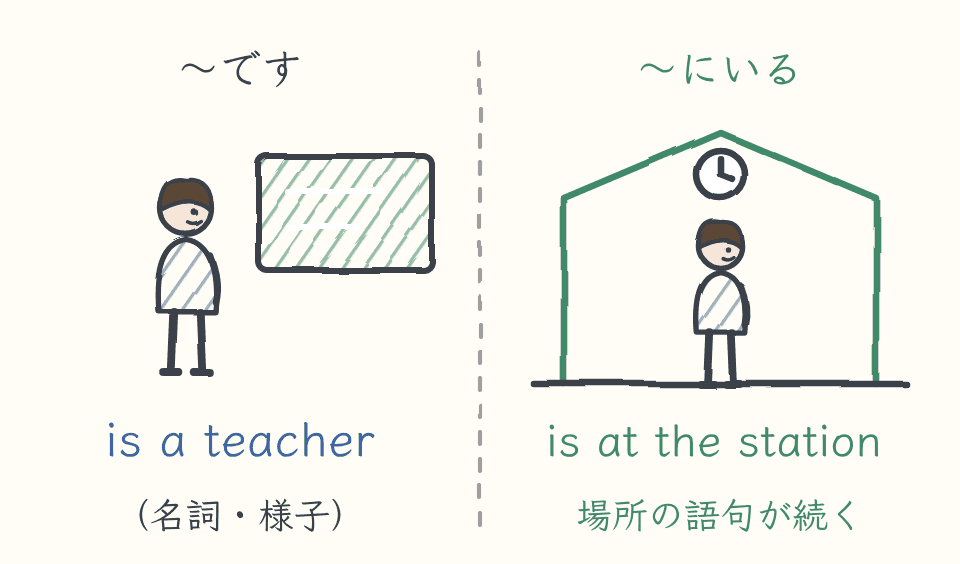
be動詞のあとに場所を表す語句(in the park、at home など)が続くと、「〜にいる」「〜にある」という意味になります。
He is a teacher.
彼は先生です。
He is at the station.
彼は駅にいます。
| 場所を表す語 | 意味 | 例 |
|---|---|---|
| in | 〜の中に | in the box(箱の中に) |
| on | 〜の上に(くっついて) | on the desk(机の上に) |
| under | 〜の下に | under the chair(いすの下に) |
| near | 〜の近くに | near the school(学校の近くに) |
| next to | 〜のとなりに | next to the bank(銀行のとなりに) |
| in front of | 〜の前に | in front of the station(駅の前に) |
Your bag is on the desk.
あなたのかばんは机の上にあります。
My cat is under the table.
私のねこはテーブルの下にいます。
The post office is next to the bank.
郵便局は銀行のとなりにあります。
The bus stop is in front of the school.
バス停は学校の前にあります。
4否定文
「〜ではありません」「〜にいません」という否定文は、be動詞のあとに not を置きます。is not は isn't、are not は aren't と短くできます。am not には短い形がないので、I'm not を使います。
I'm not tired.
私はつかれていません。
This isn't my pen.
これは私のペンではありません。
They aren't at home now.
彼らは今、家にいません。
The library isn't open today.
図書館は今日は開いていません。
5疑問文と答え方
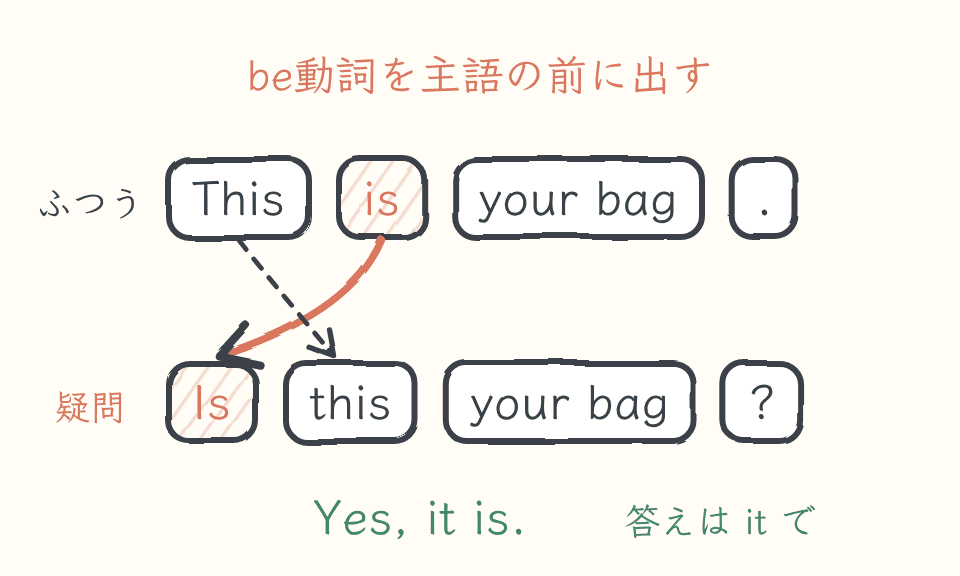
「〜ですか」とたずねる疑問文は、be動詞を主語の前に出し、最後に「?」をつけます。答えるときも be動詞を使います。this や that でたずねられたら、答えでは it を使います。
| たずね方 | 「はい」の答え | 「いいえ」の答え |
|---|---|---|
| Are you 〜? | Yes, I am. | No, I'm not. |
| Is he 〜? / Is she 〜? | Yes, he is. / Yes, she is. | No, he isn't. / No, she isn't. |
| Is this 〜? / Is that 〜? | Yes, it is. | No, it isn't. |
| Are they 〜? | Yes, they are. | No, they aren't. |
Is this your bag?
これはあなたのかばんですか。
Yes, it is.
はい、そうです。
No, it isn't.
いいえ、ちがいます。
Are you a new student?
あなたは新しい生徒ですか。
Yes, I am.
はい、そうです。
Is your mother at home?
お母さんは家にいますか。
No, she isn't.
いいえ、いません。
6ニュースの中の be動詞
天気や案内のニュースでは、「今日の天気は〜です」「〜は開いています」のように、今の様子を伝えるときに be動詞がよく使われます。
It is sunny in Tokyo today.
今日の東京は晴れです。
It is very cold in Sapporo this morning.
今朝の札幌はとても寒いです。
The new library is open to everyone.
新しい図書館はだれでも利用できます。
The museum is closed on Mondays.
その博物館は毎週月曜日が休館です。
7よくある間違い
| × まちがい | ○ 正しい形 | ポイント |
|---|---|---|
| I is a student. | I am a student. | I のときはいつも am |
| He are my friend. | He is my friend. | he, she, it は is |
| Ken and Aya is in the gym. | Ken and Aya are in the gym. | 2人なので複数。are を使う |
| I amn't busy. | I'm not busy. | am not には短い形がない |
| Are you Ken? ― Yes, I'm. | Yes, I am. | 答えの最後は短縮形にしない |
| Is this your pen? ― Yes, this is. | Yes, it is. | this / that は答えで it にする |
「〜にいる」の意味でも be動詞を忘れないようにしましょう。× I in the park. ではなく ○ I am in the park. です。
8確認問題
( ) に入る be動詞を書きなさい。My brother ( ) a high school student.
答えを見る
is
my brother は1人なので is。
( ) に入る be動詞を書きなさい。Ken and I ( ) in the same class.
答えを見る
are
Ken and I は2人なので複数。
否定文にしなさい。I am hungry.
答えを見る
I'm not hungry.
I am not hungry. でも正解。
疑問文にして、Yes で答えなさい。That is your bike.
答えを見る
Is that your bike? ― Yes, it is.
答えでは that を it にかえる。
英語にしなさい。「私の母は今、家にいます。」
答えを見る
My mother is at home now.
「家にいる」は be at home。
9ニュースで出てきたbe動詞
この単元に関係する英文がニュースに出てきたら、ここに自動で追加されます。